Filing taxes when you are self-employed means nobody is withholding money from your paycheck automatically. For the 2026 tax year, standard deductions have shifted, and new rules from the One, Big, Beautiful Bill (OBBB) may affect your bottom line.
Here is exactly how to handle your filings without the headache.
1. The Core Baseline: What You Owe
As a freelancer or remote independent contractor, you face two types of federal taxes: Income Tax and Self-Employment Tax.
Read More…Tax Saving Tips for Remote Workers in India (2026-27): Save Thousands Easily!
Self-Employment Tax (SECA)
Because you are both the employer and the employee, you cover the full 15.3% for Social Security and Medicare.
- The Threshold: You must file Schedule SE if your net earnings hit $400 or more.
- The Math: You only pay this tax on 92.35% of your net business profit.
- The Cap: The 12.4% Social Security portion only applies to the first $184,500 of your net earnings in 2026.
2026 Federal Income Tax Standard Deductions
Your income tax is calculated after taking a standard or itemized deduction. For 2026, standard deductions are:
- Single / Married Filing Separately: $16,100
- Head of Household: $24,150
- Married Filing Jointly: $32,200
Read More….https://taxassistant.org/2026-standard-deduction-rates/
2. Your Tax Season Cheat Sheet
| Form | Purpose | Who sends/files it? |
| Form 1099-NEC | Reports non-employee compensation. | Sent to you by clients who paid you $600+ |
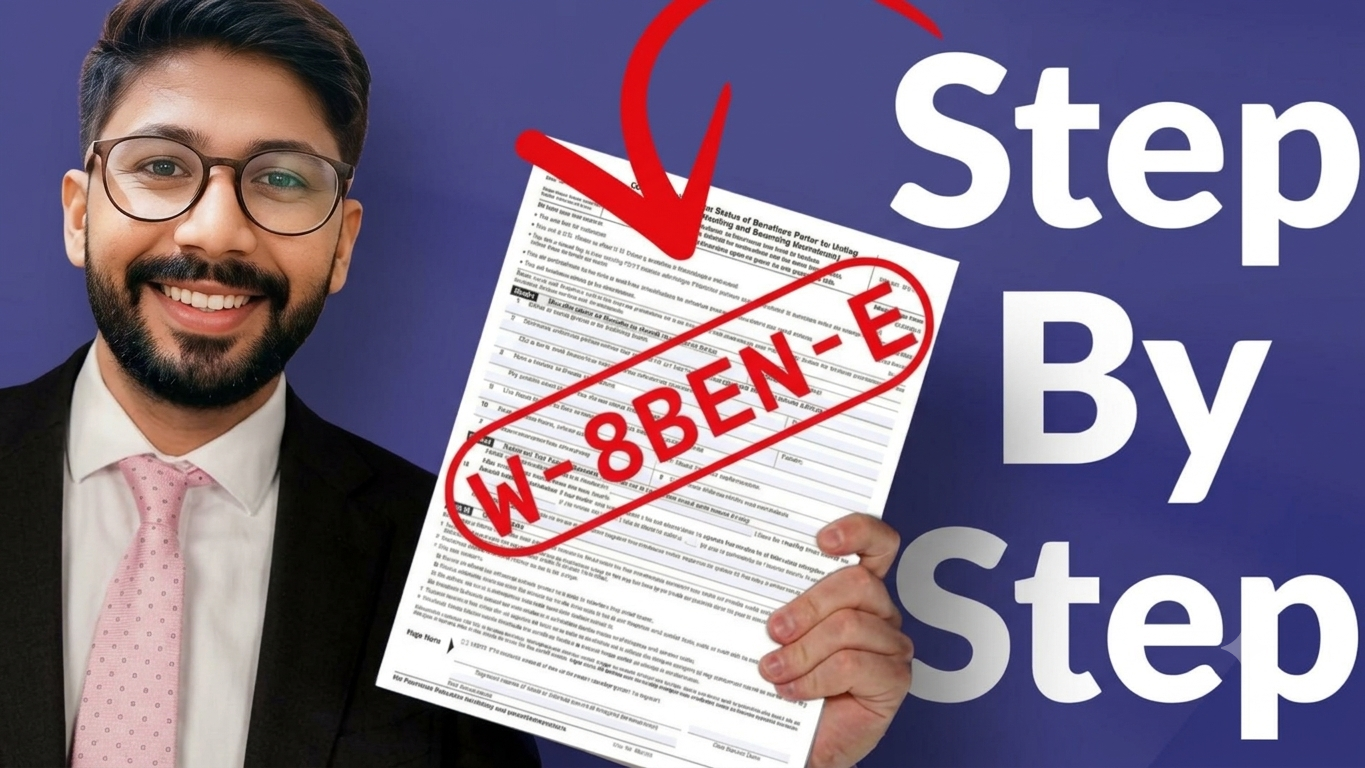
| Schedule C | Calculates your net business profit or loss. | Filed by you with your 1040 |
| Schedule SE | Calculates your 15.3% self-employment tax. | Filed by you with your 1040 |
| Form 1040-ES | Vouchers for paying quarterly estimated taxes. | Used by you throughout the year |
3. Step-by-Step Filing Process
[Step 1: Gather Income]
Collect all 1099s and track untracked income.
       │
       ▼
[Step 2: Tally Write-Offs]
Isolate business expenses (software, hardware, travel).
       │
       ▼
[Step 3: File Schedule C]
Subtract expenses from income to find your taxable Net Profit.
       │
       ▼
[Step 4: File Schedule SE]
Calculate self-employment tax (and write off 50% of it on Form 1040).
4. Key Write-Offs to Lower Your Bill
Do not leave money on the table. Make sure to claim these common deductions:
- Home Office: If a space in your home is used exclusively for work, deduct a percentage of your rent, utilities, and internet.
- Health Insurance: If you’re self-employed and cannot get coverage via a spouse, you can deduct 100% of your health insurance premiums.
- 2026 Service Deductions: Under recent updates, if you operate in qualified service industries involving tips or overtime-equivalent hours, you may qualify for deductions up to $25,000 for tips or $12,500 for overtime (phases out if you earn over $150,000).
The Pay-As-You-Go Rule: If you expect to owe $1,000 or more in taxes, you must make Quarterly Estimated Tax Payments (April, June, September, January). Waiting until April to pay everything will result in IRS underpayment penalties.
Yes, absolutely. This is one of the most common points of confusion for new freelancers.
The IRS treats personal deductions and business deductions as completely separate:
Business Deductions (Schedule C): These are subtracted directly from your gross freelance income to determine your actual business profit. You get to take these no matter what.
Personal Deductions (Form 1040): Once your business profit is combined with any other income, you then choose between itemizing personal deductions (like mortgage interest or charitable donations) or taking the standard deduction ($16,100 for single filers in 2026).
If you expect to owe $1,000 or more in federal taxes when you file, the IRS requires quarterly payments. If you skipped them, you will likely owe an underpayment penalty.
The penalty is calculated as an interest charge on the amount you should have paid from the date the quarterly payment was due. However, you can completely avoid this penalty if you meet one of the Safe Harbor rules:
The 100% Rule: You paid at least 100% of the total tax shown on your previous year’s tax return (or 110% if your Adjusted Gross Income was over $150,000).
The 90% Rule: You paid at least 90% of the current year’s total tax liability through withholding or estimated payments.
If you realize you missed your payments midway through the year, the best move is to pay as much as you can immediately to stop the interest from compounding.
It depends entirely on the states involved, but it usually comes down to where your physical feet are touching the ground while you work.
The General Rule: You pay income tax to the state where you physically perform the work (your home state).
The Exceptions (“Convenience of the Employer” Rules): A handful of states (including New York, Pennsylvania, New Jersey, Nebraska, and Delaware) enforce a rule where if your employer is based there, they will tax your income unless working from home is an absolute necessity required by the employer, rather than just a convenience to you.
If you do find yourself being taxed by both states, your home state will almost always offer a resident tax credit on your return so that you aren’t paying double taxes on the exact same dollar.
Editing by Suresh
Disclaimer:
I am an AI, not a Certified Public Accountant (CPA) or a tax attorney. Tax laws—especially with recent 2026 updates like the One, Big, Beautiful Bill (OBBB)—can be complex and highly dependent on your specific location, income bracket, and business structure. This information is for educational purposes only and should not be taken as professional financial or legal advice. Always consult with a qualified tax professional before filing.

Suresh holds a Master of Commerce (M.Com) degree and is a dedicated personal finance researcher and writer. Combining his advanced academic background in commerce with deep industry research, he covers complex topics like taxation, banking systems, credit analysis, and personal finance strategies. As the founder of Tax Assistant (taxassistant.org), Suresh is committed to translating complicated financial guidelines and economic data into simple, accurate, and actionable educational resources for everyday readers.