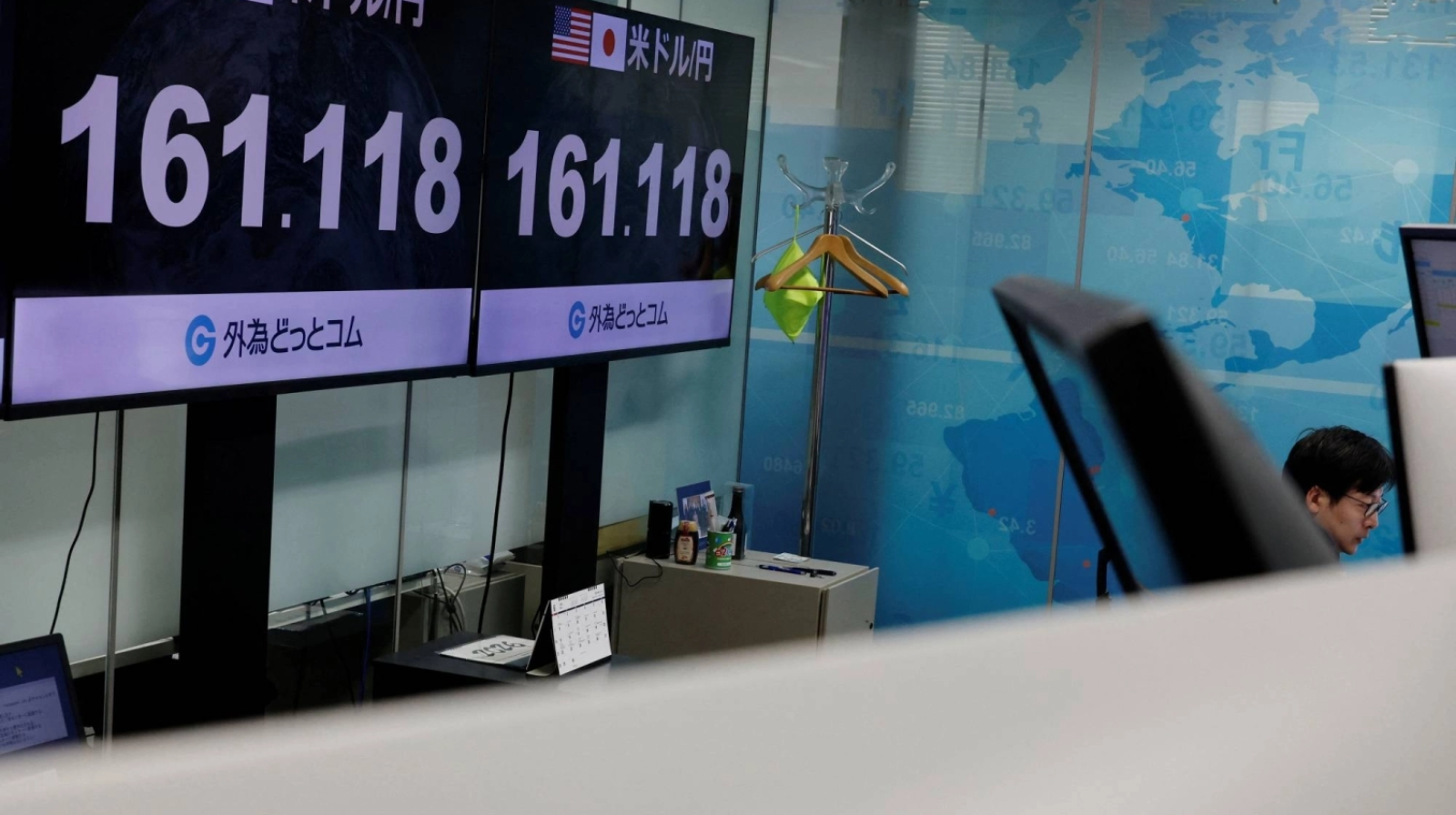
The Japanese yen plunged past ¥161 to the dollar overnight, nearing levels not seen since December 1986. While the currency pulled back slightly before breaking a multi-decade record, the dramatic drop has put financial authorities on high alert.
Thank you for reading this post, don't forget to subscribe!Key Currency Movements
- The Drop: The yen hit a low of ¥161.80 against the dollar in New York on Thursday afternoon.
- The Threshold: If the yen crosses ¥161.95 (the level that triggered government intervention in July 2024), it will hit its weakest point in nearly 40 years.
- The Recovery: By Friday afternoon in Tokyo, the yen had stabilized somewhat, trading in the ¥161.30 to ¥161.40 range.
Government Reaction: Verbal Warnings vs. Action
While Finance Minister Satsuki Katayama stated on Friday, “When we act, we will act decisively,” analysts noted that the current verbal warnings feel less aggressive than those issued earlier this year.
By comparison, during the April/May slump:
- Katayama had warned that “decisive action… is nearing.”
- Vice Minister Atsushi Mimura issued a “final warning” to investors.
- The Finance Ministry ultimately spent ¥11.73 trillion ($73 billion) between April 28 and May 27 to prop up the currency.
Why Intervention Might Fail This Time
Economists are skeptical that another massive cash injection will work under current market conditions.
“They wouldn’t be able to reverse the weak-yen trend even if they were to intervene.”
— Soichiro Tateishi, Economist at the Japan Research Institute
Tateishi points out that the spring intervention succeeded largely because it took place during Golden Week when thin trading volumes gave government actions maximum leverage. Today, there is no underlying upward pressure on the yen to sustain a rally.
Central Bank Moves Fail to Help
| Economic Factor | Current Status | Impact on the Yen |
| BOJ Interest Rates | Raised to 1% on Tuesday (highest since 1995). | Negligible. Markets had already priced in the hike, and BOJ Deputy Gov. Shinichi Uchida offered no guidance on future increases. |
| U.S. Federal Reserve | Investors are factoring in potential U.S. rate increases. | Negative. Higher U.S. rates continue to draw capital away from Japan. |
What’s Next?
Despite the muted market reaction, the pressure is on the Bank of Japan to act again. A recent Bloomberg survey revealed that 90% of analysts expect another BOJ rate hike before the end of 2026, with December being the most anticipated timeline.
Editing by katie willimas