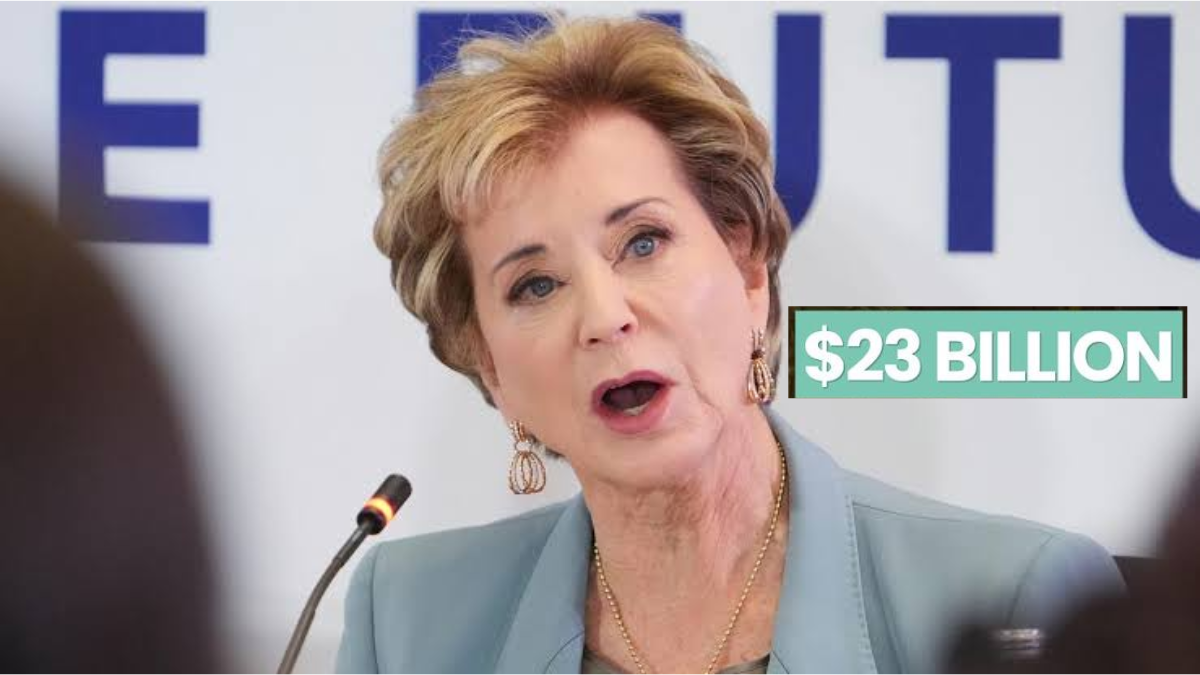
A landmark seven-year legal battle over fraudulent student loans has reached a decisive milestone. Following a key federal appeals court ruling, over 450,000 defrauded student loan borrowers are now set to receive $23 billion in total debt relief.
Represented by the Project on Predatory Student Lending (PPSL), Sweet v. McMahon (formerly Sweet v. Cardona and Sweet v. DeVos) stands as the largest settlement against the U.S. government in history.
What the Lawsuit Was About
Under the federal Borrower Defense to Repayment rule, students who were misled by their schools—primarily for-profit colleges that misrepresented job placement rates, credit transfers, or degree value—can apply to have their federal student debt discharged.
For years, hundreds of thousands of claims languished without a decision. In 2019, affected borrowers filed a class-action lawsuit to force the Department of Education to process these applications.
How the Settlement Works
A formal settlement was approved in late 2022 establishing two key categories of affected borrowers:
1. Class Members (Applied on or before June 22, 2022)
- Exhibit C Schools: Borrowers who attended one of 151 listed predatory institutions automatically qualified for full debt cancellation, refunds of past payments, and credit repair.
- Non-Exhibit C Schools: Assigned individual decision deadlines; missed deadlines triggered automatic full relief.
2. Post-Class Applicants (Applied June 23 – Nov 15, 2022)
- Settled under strict decision deadlines: the Department of Education had until early 2026 to review these applications.
- If the Department failed to issue a decision by the deadline, the borrower automatically qualified for Full Settlement Relief.
| Category | Eligibility Rule | Relief Type |
| Exhibit C Schools | Attended one of the 151 listed institutions | Automatic Full Debt Cancellation & Refunds |
| Non-Exhibit C Schools | Assigned individual decision deadlines | Case-by-case review or automatic relief if missed |
The Latest Ruling: Why 170,000 More Borrowers Get Relief
In late 2025, the Department of Education appealed to extend decision deadlines, arguing that processing 200,000 post-class claims was an unrealistic administrative burden.
In July 2026, a federal appeals panel denied the extension request. Because the Department failed to make individual decisions before the court-ordered deadlines expired, more than 170,000 post-class applicants now automatically receive full loan discharges.
Important Notice Dates & Action Steps
| Group | Unadjudicated Deadline | Eligibility Notice Sent | Relief Delivery Timeline |
| Exhibit C Post-Class | Jan 28, 2026 | ~March 30, 2026 | Within 1 year of notice(Final Deadline: June 15, 2027)” |
| Non-Exhibit C Post-Class | April 15, 2026 | ~June 15, 2026 | Within 1 year of notice |
What You Should Do Now:
- Search Your Inbox: Look for an official email notification from
noreply@studentaid.gov(check spam and junk folders). - Missing Your Notice? If you applied between June 23, 2022, and November 15, 2022, but haven’t received confirmation, email PPSL at
info@ppsl.organd CCsweet@ed.gov. Include your full name, primary email address, borrower defense application number, and submission date. - No Monthly Payments Due: Borrowers awaiting discharge are placed in forbearance and are not obligated to make payments during processing.
- Fluctuating Balances: Temporary balance changes or spikes on loan servicer dashboards are a normal part of the discharge process as accounts are unwound.
Note on New Applications: The deadline to join the Sweet v. McMahon class closed on November 15, 2022. However, any borrower defrauded by a college can still submit a standard Borrower Defense application atStudentAid.gov.
You are eligible if you filed a borrower defense to repayment application on or before November 15, 2022, alleging that your school misled or defrauded you:
Class Members: Submitted an application on or before June 22, 2022.
Post-Class Applicants: Submitted an application between June 23, 2022, and November 15, 2022.
Because the federal appeals court denied the Department of Education’s request to delay decision deadlines, you qualify for automatic full relief if you did not receive a decision on your application by the required deadline:
Exhibit C Schools: Deadline was January 28, 2026.
Non-Exhibit C Schools: Deadline was April 15, 2026.
If no decision was issued by those dates, your covered federal loans will be fully discharged, and you may be eligible for refunds on past payments.
First, check all your primary, spam, and junk folders for messages from noreply@studentaid.gov. If you applied between June 23, 2022, and November 15, 2022, and still haven’t received a notice:
Send an email to the Project on Predatory Student Lending at info@ppsl.org and CC sweet@ed.gov.
Include your full legal name, email address on file, borrower defense application number, and the date you applied.
No. The Department of Education places loans subject to settlement discharge into forbearance or deferment while processing your relief. You are not required to make payments on these loans, and processing typically completes within one year from the date of your relief notice.
Yes, but not under this settlement. Anyone who believes their school misled them or engaged in fraudulent conduct can still file a new borrower defense application at StudentAid.gov
. However, new applications will not be covered by the automatic relief terms or processing deadlines established in Sweet v. McMahon.

Suresh holds a Master of Commerce (M.Com) degree and is a dedicated personal finance researcher and writer. Combining his advanced academic background in commerce with deep industry research, he covers complex topics like taxation, banking systems, credit analysis, and personal finance strategies. As the founder of Tax Assistant (taxassistant.org), Suresh is committed to translating complicated financial guidelines and economic data into simple, accurate, and actionable educational resources for everyday readers.