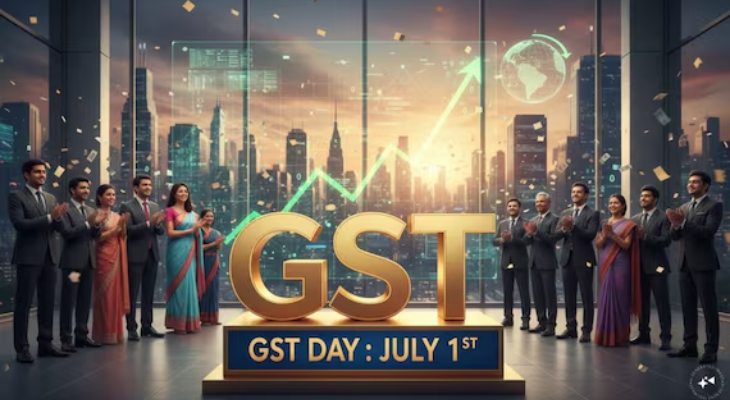
India is celebrating its ninth GST Day, marking nearly a decade since the historic launch of the Goods and Services Tax (GST) on July 1, 2017. What began as a monumental experiment to replace 17 indirect taxes and 13 cesses with a unified “One Nation, One Tax” framework has now matured into a high-tech fiscal engine driving India’s economic growth.
Thank you for reading this post, don't forget to subscribe!The big story this year? The massive success of GST 2.0, the next-generation tax reforms rolled out in 2025.
By The Numbers: Then vs. Now
The growth of the GST ecosystem over the last nine years highlights the massive formalization of the Indian economy:
| Metric | At Launch (2017-18) | Today (2025-26) |
| Registered Taxpayers | 66.5 Lakh | 1.65 Crore (as of May 2026) |
| Annual Gross Collections | ₹7.4 Lakh Crore | ₹22.27 Lakh Crore |
| April–May Collections | — | ₹4.37 Lakh Crore (2026 alone) |
Understanding GST 2.0: The Next-Gen Indirect Tax Reforms
As the Goods and Services Tax (GST) completes its historic nine years in India, the government has transitioned into GST 2.0. The next-generation reforms, which heavily restructured the tax framework, have aimed to create a more transparent, predictable, and data-driven compliance system for both large corporations and small business owners.
The recent data highlights a significant formalization of the Indian economy, driving active taxpayer registrations to a record high.
Read More…….Tax Saving Tips for Remote Workers in India (2026-27): Save Thousands Easily!
Analyzing the Numbers: The Massive Growth Pattern
When comparing the initial launch of the unified tax regime in 2017-18 to the metrics compiled up to May 2026, the growth of India’s indirect tax base stands out clearly:
Taxpayer Base Expansion: Registered active taxpayers have grown dramatically from 66.5 Lakh at launch to a staggering 1.65 Crore as of May 2026. This broad expansion indicates that millions of small businesses and freelancers have officially integrated into the invoice-based formal economy.
Revenue Collections: Annual gross collections reached an all-time high of ₹22.27 Lakh Crore in FY 2025-26 compared to just ₹7.4 Lakh Crore during its debut fiscal year. The momentum remains robust, with collections for April and May 2026 alone touching ₹4.37 Lakh Crore
Core Structural Adjustments Under GST 2.0
The massive structural overhaul introduces procedural ease and limits the multi-tier complexity that previously confused small businesses:
1.Slab Consolidation: The multi-tier structure has predominantly transitioned towards two key primary slabs: 5% and 18%.
2. Luxury and Sin Tax: A strict 40% premium rate has been enforced on luxury items and sin goods (such as tobacco products, online gaming, and aerated drinks) to maintain structural fairness and protect tax buoyancy.
3. Procedural Easing for MSMEs: Registration protocols, automated scrutiny, and refund structures have been simplified to drastically lower regular compliance costs for small startups and independent agencies.
The Shift to GST 2.0: What Changed?
The 2025 overhaul fundamentally streamlined India’s complex multi-tier tax structure, making it simpler for businesses and fairer for consumers.
- Slab Consolidation: The system transitioned to two primary tax slabs: 5% and 18%.
- The “Sin” & Luxury Tax: A premium 40% rate was locked in for luxury and demerit goods, including tobacco, online gaming, lotteries, aerated drinks, yachts, and private aircraft.
- Consumer & Healthcare Relief: Essential medicines and insurance policies are now exempt from GST, offering major financial relief to Indian households.
- Manufacturing Boost: Corrections to inverted duty structures and lower rates on core sectors like cement and handicrafts have driven down production costs.
Powering “Cooperative Federalism” & Tech
At the heart of this journey is the GST Council, which continues to serve as a unique forum where the Centre and States make consensus-based decisions.
Supporting these policy shifts is a cutting-edge digital infrastructure. Today, the GSTN portal handles registrations, refunds, and compliance automatically. The integration of Artificial Intelligence (AI) and Machine Learning (ML) allows tax authorities to flag evasion and high-risk taxpayers seamlessly, ensuring honest businesses face zero manual harassment.
Big Wins for MSMEs & Startups
Compliance burdens have dropped drastically for small businesses thanks to targeted policy updates:
- Higher Thresholds: The registration bar doubled from ₹20 lakh to ₹40 lakh for goods suppliers.
- Expanded Composition Scheme: The limit was raised to ₹1.5 crore for easier compliance.
- Frictionless Filing: Features like the QRMP Scheme (Quarterly Return Monthly Payment) and SMS-based NIL return filing have saved small business owners hundreds of hours.
The Bottom Line
Nine years in, GST is no longer just a tax system—it is the backbone of India’s formal economy. As the nation celebrates GST Day 2026, the success of GST 2.0 signals a predictable, transparent, and growth-oriented future on the road toward a Viksit Bharat (Developed India).
Under the GST 2.0 reforms implemented in 2025, the tax structure was significantly simplified into two primary tax slabs: 5% and 18%. However, luxury and “sin” items—such as tobacco, online gaming, aerated drinks, lotteries, yachts, and private aircraft—are taxed at a higher rate of 40%.
Small and medium enterprises benefit from several compliance reliefs:
Higher Threshold: The GST registration threshold for goods suppliers is doubled from ₹20 lakh to ₹40 lakh.
Composition Scheme: The threshold limit for the simplified Composition Scheme is expanded to ₹1.5 crore.
Simpler Filing: Features like the Quarterly Return Monthly Payment (QRMP) scheme and SMS-based NIL return filing reduce administrative overhead.
Smoother Processes: Streamlined, faster online registration for low-risk applicants and lower pre-deposit requirements for filing appeals.
Over its 9-year journey (2017 to 2026), the tax ecosystem has experienced massive formalization and growth:
Taxpayer Base: The number of registered taxpayers more than doubled, growing from 66.5 lakh in 2017 to 1.65 crore by May 2026.
Annual Collections: Gross annual collections tripled, rising from approximately ₹7.4 lakh crore in fiscal year 2017-18 to nearly ₹22.27 lakh crore in fiscal year 2025-26.

"Suresh Kumar Saini is an experienced Tax Assistant and finance writer. He specializes in US & Canada Tax Guide, Indian Income Tax laws, GST compliance, and personal finance, helping freelancers and remote workers optimize their taxes."