As an Indian freelancer or remote worker earning in foreign currencies like USD, EUR, or GBP, getting paid by international clients is exciting. However, when it comes to compliance, sending a random, basic bill generated from a free online template isn’t enough.
Thank you for reading this post, don't forget to subscribe!Under Indian tax and GST laws, exporting your professional services requires a specific legal document known as a Tax Invoice. Creating a valid invoice protects you from legal disputes, ensures your clients can clear payments smoothly, and keeps you compliant with the Income Tax Department and GST regulations.
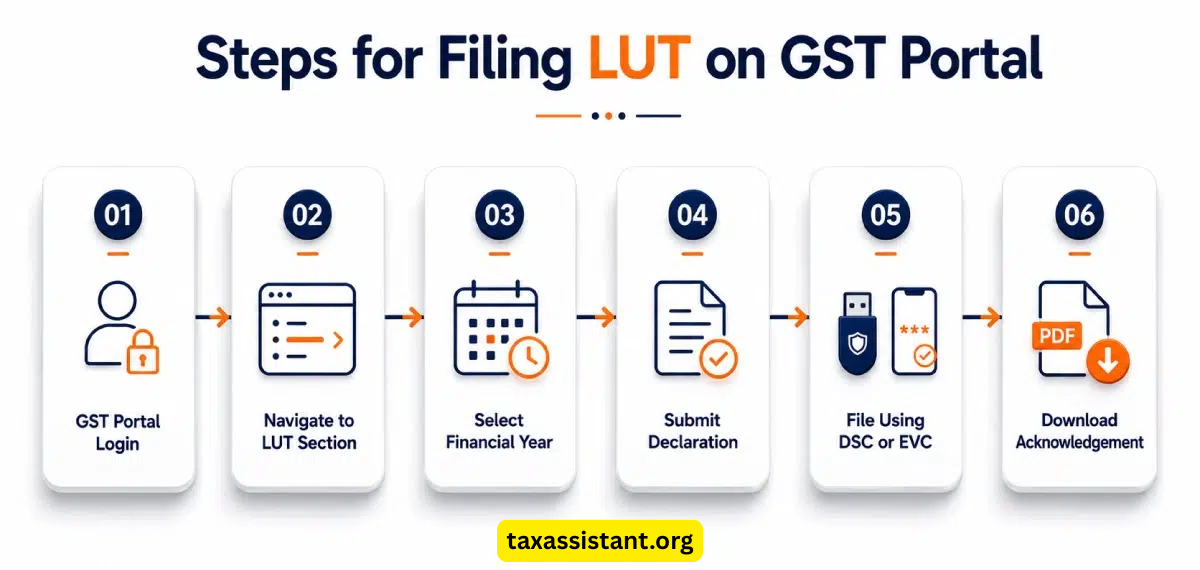
Reed More…https://taxassistant.org/how-to-file-lut-gst-portal-export-of-services/
In this guide, we will break down exactly what elements you must include to create a legally valid tax invoice for international clients.
1. Why a Standard Invoice Isn’t Enough for Foreign Clients
When you provide services to a client located outside India, the transaction is classified as an Export of Services. According to Rule 46 of the CGST Rules, every registered taxpayer making a supply of services must issue a “Tax Invoice”.
Even if you have filed a Letter of Undertaking (LUT) and your GST rate is 0%, you are still making a “supply”. Therefore, issuing a structured tax invoice is a mandatory legal compliance step under Section 31 of the GST Act.
2. Mandatory Elements of an International Tax Invoice
To ensure your invoice is 100% legally compliant in India and acceptable to global corporate accounting teams, it must contain the following specific details:
A. Your Professional Details (The Supplier)
.Your accurate legal name or business/trade name.
.Your complete registered business or home address.
.Your 15-digit GSTIN (GST Registration Number).
.Contact details (Email address and phone number).
B. Client Details (The Recipient)
.The exact corporate legal name of your international client.
.Their complete billing address (including the country name).
Tip: If your client has a local tax registration number in their home country (like a VAT number in the UK or an EIN in the US), it is highly recommended to add it for corporate clarity.
C. Invoice Metadata (Numbering and Dates)
Unique Invoice Number: It must be a consecutive, unique serial number containing only alphabets, numerals, or special characters (like hyphens or slashes). It cannot exceed 16 characters. (Example: INV/2026-27/005).
Date of Issue: The exact calendar date on which the invoice is generated and sent to the client.
D. The Magic Declaration (LUT Mention)
Since you are exporting services under 0% GST, you must explicitly print a legal declaration at the bottom of the invoice.
Choose the appropriate line based on your status:
If you have filed an LUT: “Supply of services meant for export under bond or Letter of Undertaking without payment of integrated tax.” (You must also print your LUT ARN number here).
If you have NOT filed an LUT: “Supply of services meant for export on payment of integrated tax.” (In this case, you will charge 18% IGST and claim a refund later).
E. Service Details and Valuation
Description of Services: Clear details of the work delivered (e.g., “Web Development Services for May 2026” or “UI/UX Mobile App Design”). Avoid vague descriptions like “Consulting” or “Freelance Work”.
HSN/SAC Code: For services, you must mention the 6-digit SAC (Services Accounting Code). For example, 998314 is commonly used for Information Technology (IT) design and development services.
Currency and Value: Mention the total project rate in foreign currency (e.g., $1,500 USD) along with its conversion value or clear banking terms.
F. Payment and Bank Details
International payments can get stuck if your banking data is incomplete. Always include:
Your exact Bank Account Name, Account Number, and Type (Savings/Current).
The IFSC Code of your local branch.
The SWIFT Code (or BIC) of your bank—this is absolutely mandatory for receiving wire transfers from abroad.
3. Best Practices for Freelancers Managing International Invoices
Keep a Copy of FIRC: Whenever a foreign client pays you, your bank will process the foreign currency and credit INR to your account. Always request a Foreign Inward Remittance Certificate (FIRC) or BRC from your bank. This is your ultimate legal proof to the GST department that the service was genuinely exported.
The 30-Day Rule: According to GST regulations, you must raise your tax invoice within 30 days from the date of completion of the service.
Digital Signatures: While a physical signature scanned onto a PDF works, using a secure Digital Signature Certificate (DSC) or an electronic signature makes your document highly professional and legally tamper-proof.
Conclusion
Creating a valid tax invoice is a fundamental step toward running a professional and legally compliant freelancing or remote work business in India. By ensuring your invoices include your GSTIN, SAC codes, and the necessary LUT declarations, you eliminate the risk of facing sudden audits or tax compliance issues.
Answer: You can raise the invoice in foreign currency (like USD). However, for your internal bookkeeping and GST returns (GSTR-1), you must convert that amount into INR using the official RBI reference exchange rate applicable on the date of the invoice.
Answer: If your annual turnover is below ₹20 Lakhs and you haven’t voluntarily registered for GST, you cannot issue a “Tax Invoice” containing a GSTIN or LUT declaration. You will simply issue a standard Commercial Bill or Invoice. Once you cross the registration threshold, shifting to a structured Tax Invoice format becomes mandatory.
Answer: Freelance content writers typically use SAC code 998391 (Other technical and professional services), while digital marketers and SEO specialists often use 998365 (Advertising space or time).
Editing by katie willimas