If your savings are currently sitting in a traditional big-bank account, you might be leaving significant money on the table. While a traditional savings account is a convenient spot to stash short-term cash and emergency funds, the return on your balance could be surprisingly low.
Understanding what qualifies as a “good” interest rate can make a substantial difference in how quickly your money grows.
The 2026 Savings Landscape: Average vs. Top-Tier
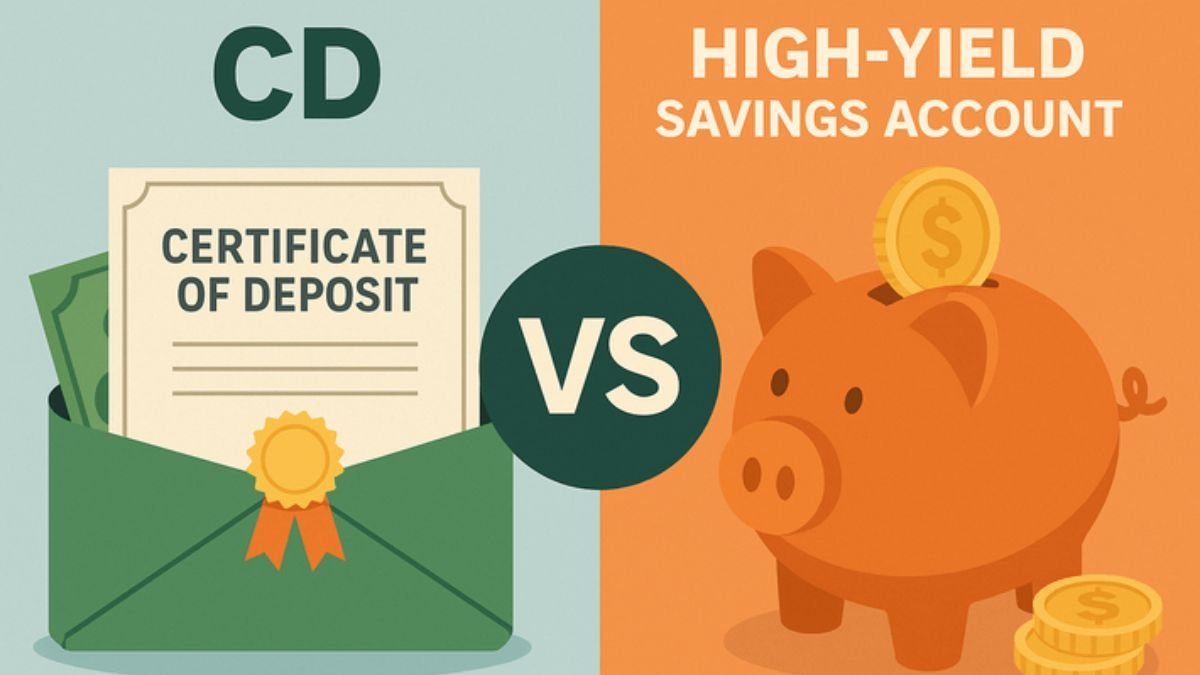
The average national savings account interest rate in the U.S. rests at a modest 0.38% APY. However, the best High-Yield Savings Accounts (HYSAs) offer rates upwards of 4.00% APY—over 10 times the national average.
Why it matters: On a $10,000 balance over one year, an average rate of 0.38% yields roughly $38. A high-yield rate of 4.00% APY earns around $400 for doing absolutely nothing differently.
A Quick Look Back: Average Rates Over Time
While today’s national average seems low, savings rates have fluctuated significantly over the past decade:
| Year | Average National Rate | Top High-Yield APY |
|---|---|---|
| 2026 | 0.38% | 4.25%-4.50% |
| 2025 | 0.47% | 4.50%-5.00% |
| 2024 | 0.52% | 5.00%-5.25% |
| 2023 | 0.24% | 4.50%-5.00% |
| 2022 | 0.06% | 3.00%-3.80% |
| 2021 | 0.07% | 0.50%-0.60% |
| 2020 | 0.05% | 050%-0.70% |
High-Yield Accounts
The top-performing savings accounts hover around 4.00% to 4.15% APY. Here are a few notable options:
- Forbright Bank Growth Savings (Up to 4.15% APY): New account holders can earn up to 4.15% APY with a $1,000 qualifying deposit boost; the ongoing standard rate is 3.85% APY.
- Bask Interest Savings Account (Up to 4.10% APY): Offers a 3.75% APY baseline, with bonus boosts available for completing specific account activities. No monthly fees or minimum balances.
- CIT Bank Platinum Savings (Up to 4.10% APY): Features a 6-month promotional boost. A balance of $5,000 or more is required to earn the standard top tier (balances under $5,000 earn 0.25% APY).
- Valley Direct High-Yield Savings (Up to 4.00% APY): Available for new customers with a $1,000 minimum opening deposit and zero monthly maintenance fees.
4 Things to Check Before Opening an Account
- Annual Percentage Yield (APY) & Compounding: APY accounts for compound interest (earning interest on your interest). Daily compounding yields more over time than simple monthly calculations.
- Balance Tiers & Minimums: Watch out for minimum deposit rules. Some accounts require $1,000 or $5,000 to unlock top rates or avoid maintenance fees.
- Liquidity & Access: Check how easy it is to withdraw funds. Online-only banks usually require transfers to external accounts, which can take 1–3 business days.
- “FDIC Insurance: Always ensure the bank is FDIC-insured, which protects your deposits up to $250,000 per depositor.”
- Variable Rates & Promotions: High-yield rates are variable and change with market conditions. Promotional rate boosts frequently expire after 6 months.
High-yield savings accounts (HYSAs) function the same as traditional savings accounts—providing a safe, liquid place for emergency funds and short-term savings—but they pay significantly higher Annual Percentage Yields (APYs). While traditional accounts at brick-and-mortar banks average 0.38% APY, top HYSAs (primarily from online banks) offer 4.00% APY or higher. Online banks can pass these higher yields to customers because they operate with lower overhead costs.
Interest Rate: The simple, non-compounded annual base rate the bank pays on your balance.
APY: The total percentage return you earn in a year taking into account compound interest—earning interest on both your principal balance and previously accumulated interest.
Example: A account with a 3.92% base interest rate compounded daily yields an effective return of 4.00% APY, adding extra interest over the course of a year.
Savings account yields are variable rates, meaning banks can adjust them up or down at any time without advance notice. These rates are strongly tied to benchmark economic figures, such as the Federal Reserve’s federal funds rate. When the Fed raises rates to combat inflation, savings yields rise; when the Fed cuts rates, savings APYs typically decrease.
Promotional rate boosts (like a 0.25% to 0.35% boost for the first 6 months) can maximize short-term earnings, but they require attention to the fine print:
The Post-Promo Rate: Check what the APY drops to once the promotional period ends.
Qualifying Rules: Ensure you meet deposit minimums (e.g., depositing $1,000+ or maintaining a $5,000 balance) or activity requirements to earn the advertised boost.
Yes, as long as the bank is FDIC-insured (or NCUA-insured for credit unions). Insurance protects your deposits up to $250,000 per depositor, per insured bank, for each account ownership category in the event of a bank failure. Always verify FDIC coverage before opening an account with an online financial institution.

Suresh holds a Master of Commerce (M.Com) degree and is a dedicated personal finance researcher and writer. Combining his advanced academic background in commerce with deep industry research, he covers complex topics like taxation, banking systems, credit analysis, and personal finance strategies. As the founder of Tax Assistant (taxassistant.org), Suresh is committed to translating complicated financial guidelines and economic data into simple, accurate, and actionable educational resources for everyday readers.