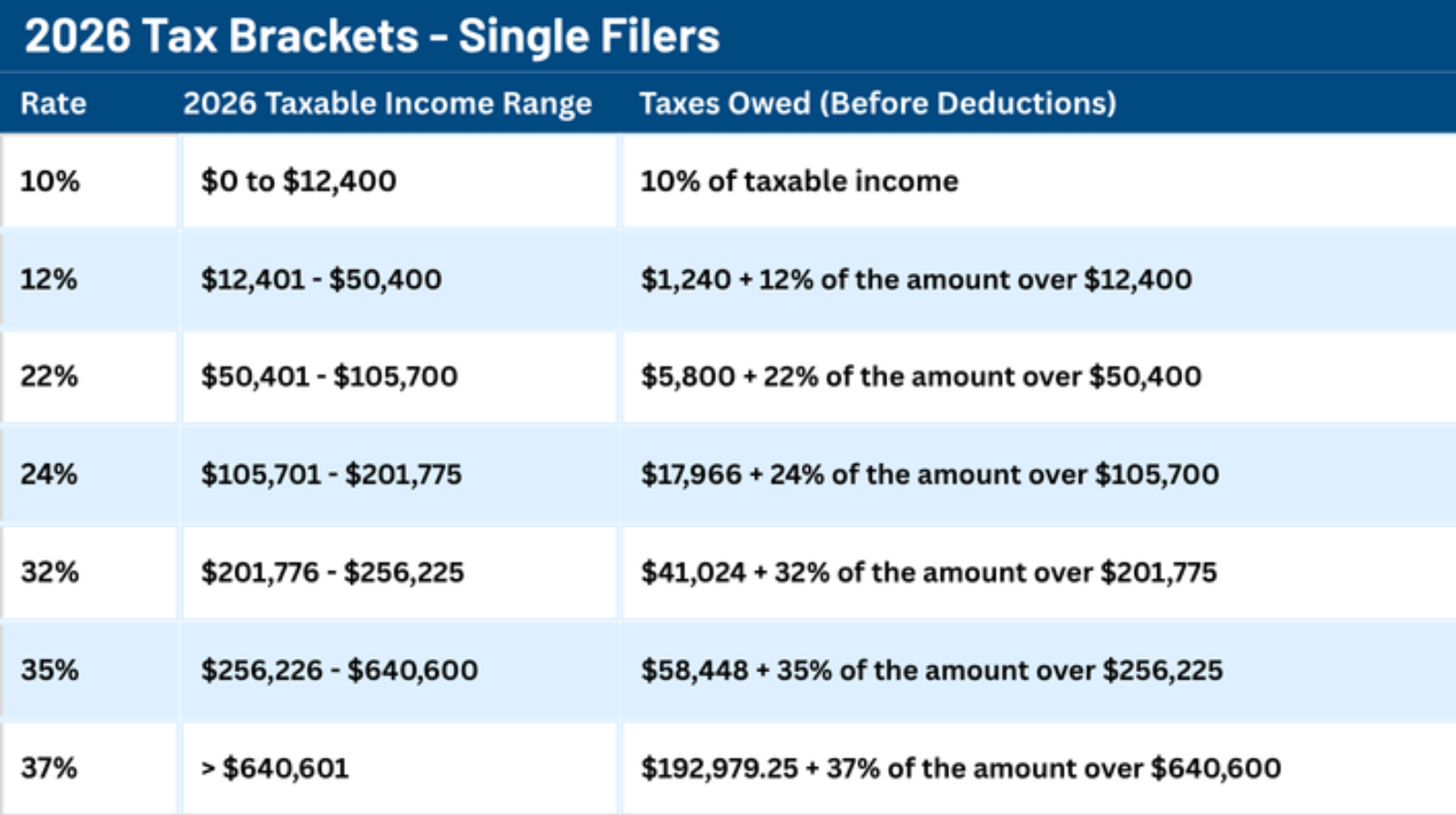
The IRS has finalized the inflation-adjusted tax brackets for the 2026 tax year (the taxes you will file in early 2027). While the core tax percentages remain unchanged, the income thresholds have increased to prevent “bracket creep.”
The 2026 Tax Brackets
Note: These rates apply to your taxable income (gross income minus deductions), not your total overall salary.
| Tax Rate | Single Filers | Married Filing Jointly |
| 10% | Up to $12,400 | Up to $24,800 |
| 12% | $12,401 to $50,400 | $24,801 to $100,800 |
| 22% | $50,401 to $105,700 | $100,801 to $211,400 |
| 24% | $105,701 to $201,775 | $211,401 to $403,550 |
| 32% | $201,776 to $256,225 | $403,551 to $512,450 |
| 35% | $256,226 to $640,600 | $512,451 to $768,700 |
| 37% | Over $640,600 | Over $768,700 |
2026 Standard Deductions
The standard deduction automatically reduces your taxable income, saving you money from day one. The amounts for 2026 are:
Read More….How to Apply for an ITIN (Form W-7): A Complete Step-by-Step Guide
- Single: $16,100
- Married Filing Jointly: $32,200
- Head of Household: $24,150
- Married Filing Separately: $16,100
Quick Example: How Progressive Tax Works
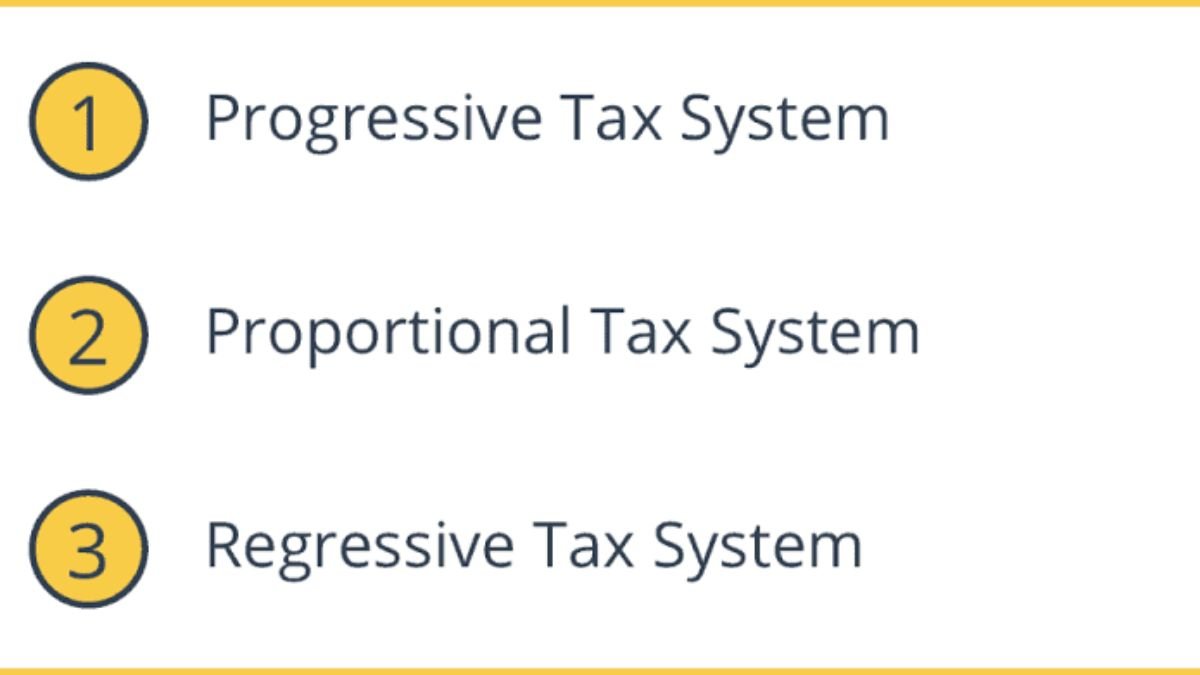
Because the U.S. uses a marginal tax system, you aren’t taxed at one flat rate.
If you are a single filer with $60,000 in taxable income, you fall into the 22% bracket—but you only pay 22% on the portion of your income that crosses into that bracket.
- You pay 10% on the first $12,400.
- You pay 12% on the amount between $12,401 and $50,400.
- You pay 22% only on the final dollar amount over $50,400.

Suresh holds a Master of Commerce (M.Com) degree and is a dedicated personal finance researcher and writer. Combining his advanced academic background in commerce with deep industry research, he covers complex topics like taxation, banking systems, credit analysis, and personal finance strategies. As the founder of Tax Assistant (taxassistant.org), Suresh is committed to translating complicated financial guidelines and economic data into simple, accurate, and actionable educational resources for everyday readers.