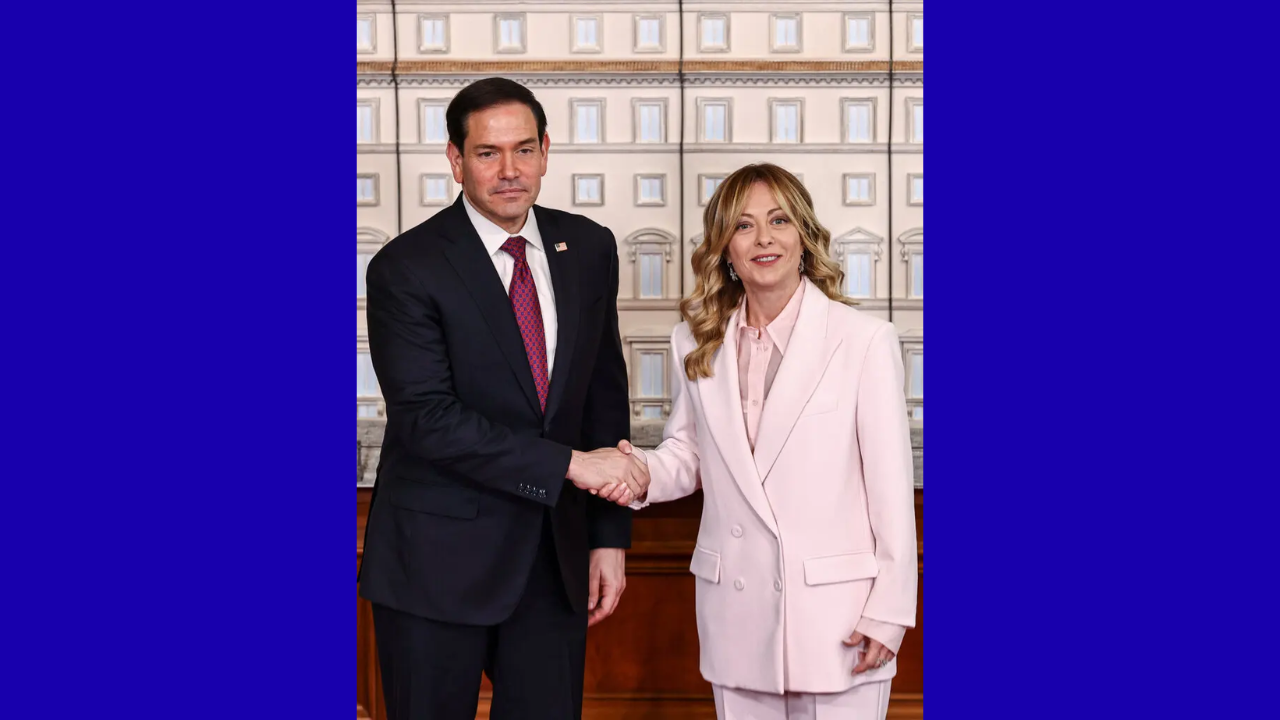
On Friday, May 8, 2026, U.S. Secretary of State Marco Rubio arrived in Rome for a critical summit with Italian Prime Minister Giorgia Meloni. Once seen as ideological allies, the two leaders are now navigating a period of “rocky” relations, with Rubio tasked with repairing a partnership strained by recent geopolitical disagreements.
The Core Conflict: Iran and the Middle East
The primary source of friction is Italy’s refusal to support the current U.S. military campaign against Iran.
- The “Illegal” Label: Prime Minister Meloni has categorized the conflict as “illegal,” a move that prompted President Trump to publicly criticize her leadership.
- The Sigonella Standoff: In March, Italy barred U.S. bombers from using the Sigonella air base in Sicily for offensive sorties, insisting on parliamentary oversight for any mission launched from Italian territory.
Broader Diplomatic & Economic Stakes
The meeting isn’t just about military strategy; it’s a multifaceted attempt to prevent a total diplomatic breakdown.
- Troop Withdrawals: Washington has threatened to pull U.S. forces from Italy and Spain, mirroring the recent withdrawal of 5,000 personnel from Germany.
- The Vatican Factor: Following Rubio’s meeting with Pope Leo XIV on Thursday, the Secretary is attempting to soothe the fallout from the administration’s public disputes with the Holy See over the ethics of the war.
- Trade and Energy: Meloni is under intense domestic pressure to mitigate the economic impact of the Strait of Hormuz closure and potential U.S. tariffs on Italian exports.
The Path Forward
While the atmosphere remains tense, Rubio and Foreign Minister Antonio Tajani focused on areas of mutual interest, such as Mediterranean maritime security and logistics. Whether Meloni can reclaim her status as the “bridge” between the U.S. and Europe remains uncertain as the two nations’ foreign policies continue to drift apart.

Suresh holds a Master of Commerce (M.Com) degree and is a dedicated personal finance researcher and writer. Combining his advanced academic background in commerce with deep industry research, he covers complex topics like taxation, banking systems, credit analysis, and personal finance strategies. As the founder of Tax Assistant (taxassistant.org), Suresh is committed to translating complicated financial guidelines and economic data into simple, accurate, and actionable educational resources for everyday readers.