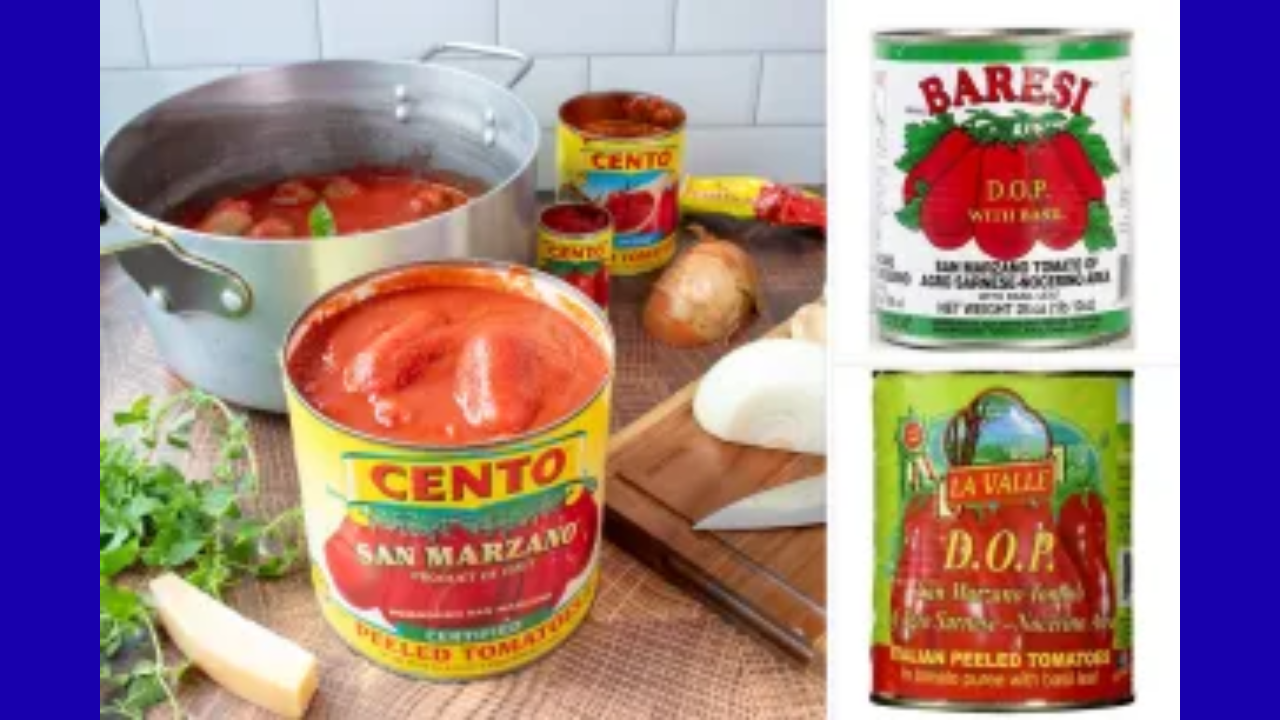
A class-action lawsuit filed on May 4, 2026, has put Cento Fine Foods—one of the most recognizable Italian food brands in the U.S.—under the microscope. The legal challenge centers on allegations that the company’s “Certified San Marzano” labeling is a deceptive marketing tactic.
The Dispute: “Certified” vs. “DOP”
The lawsuit, filed in the Northern District of California, alleges that Cento is misleading consumers into paying premium prices for tomatoes that lack the prestigious DOP (Protected Designation of Origin) status.
- The Accusation: Plaintiffs argue that Cento’s tomatoes are not authenticated by the San Marzano Tomato Consortium, the official governing body in Italy. They claim the “Certified” stamp on the can is a self-created label rather than a legal certification.
- The Quality Gap: The suit describes true San Marzano tomatoes as the “Ferrari” of the culinary world, grown exclusively in the volcanic soil of Mount Vesuvius. The plaintiffs claim Cento’s product is an “inferior” substitute that doesn’t meet these rigorous geographical and botanical standards.
Cento’s Response: “Meritless”
Cento has moved quickly to defend its reputation, calling the lawsuit “entirely without merit.” Their defense rests on two main pillars:
- Independent Verification: Cento acknowledges they don’t use the Consortium’s seal but maintains their tomatoes are grown in the correct region (Campania) and are verified by Agri-Cert, an independent third-party agency.
- Transparency Tools: The company points to its “Find My Field” online tracking system, which allows customers to use production codes to trace their specific can back to the Italian field where it was harvested.
A Familiar Legal Battle
This isn’t the first time Cento has faced this specific firestorm. A nearly identical lawsuit was dismissed by a New York judge in 2020. In that ruling, the court found that a “reasonable consumer” wouldn’t be deceived as long as the product was verified by some reputable body, even if it wasn’t the specific Italian Consortium.
The Bottom Line: For now, the $25 million question remains whether “Certified” implies a specific government-backed pedigree or simply a high-quality product verified by a third party. If you’re shopping for the “real deal,” look for the circular yellow and red DOP seal alongside the Consortium’s identification number.

Suresh holds a Master of Commerce (M.Com) degree and is a dedicated personal finance researcher and writer. Combining his advanced academic background in commerce with deep industry research, he covers complex topics like taxation, banking systems, credit analysis, and personal finance strategies. As the founder of Tax Assistant (taxassistant.org), Suresh is committed to translating complicated financial guidelines and economic data into simple, accurate, and actionable educational resources for everyday readers.