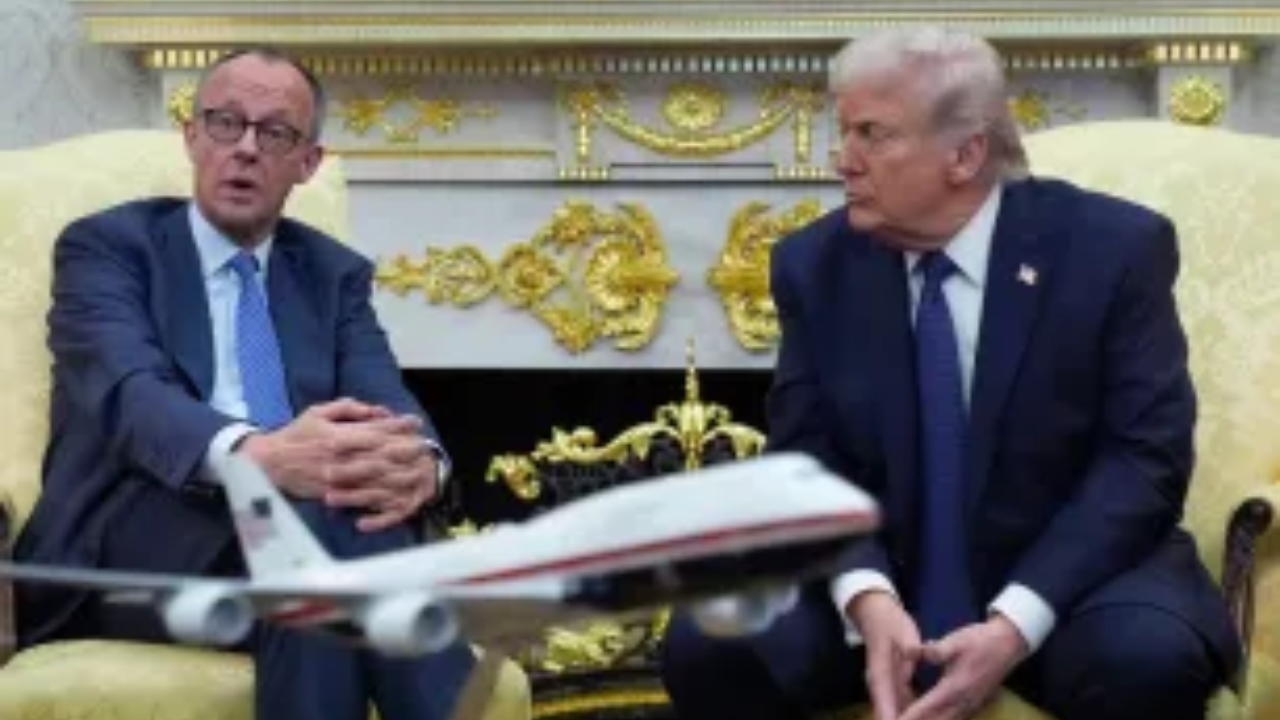
The diplomatic rift between Washington and Berlin has hit a new low, as President Trump threatens to slash the 36,000+ U.S. troop presence in Germany. The move follows a sharp public “feud” with Chancellor Friedrich Merz over the ongoing conflict with Iran.
Why the Tensions Are Boiling Over
- Questioning Strategy: Suggesting the U.S. lacked a clear “exit strategy.”
- Public Criticism: Claiming Washington was being “humiliated” by Tehran’s leadership.
- Economic Pressure: Highlighting the severe impact of the closed Strait of Hormuz on the German economy.
The Threat: Reviewing the U.S. Footprint
- The Accusation: Trump hit back at Merz, claiming the Chancellor was too soft on Iran’s nuclear program.
- The Timeline: A decision on the withdrawal is expected in the “next short period of time.”
The Strategic Risk
While the rhetoric is focused on personal friction, the logistical reality is complex. Germany serves as the backbone for American operations abroad:
- Ramstein Air Base and Landstuhl Medical Center are indispensable for Middle Eastern logistics and casualty care.
- EUCOM and AFRICOM headquarters are both located on German soil.

Suresh holds a Master of Commerce (M.Com) degree and is a dedicated personal finance researcher and writer. Combining his advanced academic background in commerce with deep industry research, he covers complex topics like taxation, banking systems, credit analysis, and personal finance strategies. As the founder of Tax Assistant (taxassistant.org), Suresh is committed to translating complicated financial guidelines and economic data into simple, accurate, and actionable educational resources for everyday readers.