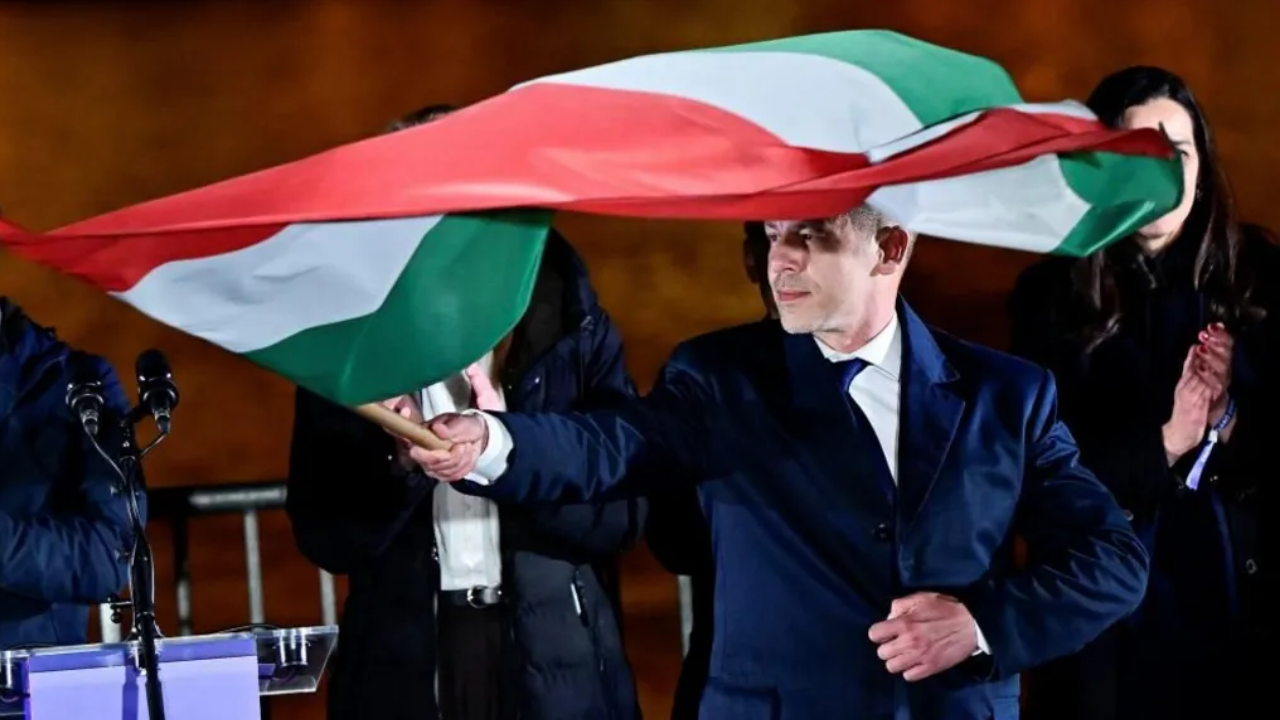
The Hungarian political landscape has shifted dramatically today, May 9, 2026, as Péter Magyar officially took the oath of office, ending Viktor Orbán’s 16-year leadership. Magyar’s Tisza party secured a historic supermajority in the April elections, and the new PM is wasted no time in framing this transition as a full-scale “regime change.”
Thank you for reading this post, don't forget to subscribe!The Scene at Kossuth Square
Rather than a traditional, somber ceremony, the inauguration was transformed into a massive public festival.
- The Atmosphere: Tens of thousands gathered in front of the Parliament building for what was dubbed a “Regime Change Party,” featuring live performances and a celebratory air.
- Symbolic Gestures: In a move signaling a sharp departure from his predecessor, the European Union flag was re-hoisted on the Parliament facade for the first time in over a decade.
Immediate Priorities
With 141 seats in the 199-member assembly, Magyar’s government holds the power to enact swift reforms. Key areas of focus include:
- Restoring Ties: A diplomatic push to unlock €17 billion in frozen EU funds by addressing long-standing rule-of-law concerns.
- Accountability: The establishment of a new National Asset Recovery office to investigate public spending from the previous era.
- Inclusion: The new parliament is the most diverse in the country’s history, including its first Roma vice-president, Krisztián Kőszegi.
The Big Picture: While Viktor Orbán moves to the sidelines for the first time since 1990, the world is watching to see how quickly Magyar can transition from a government critic to an effective head of state.

"Suresh Kumar Saini is an experienced Tax Assistant and finance writer. He specializes in US & Canada Tax Guide, Indian Income Tax laws, GST compliance, and personal finance, helping freelancers and remote workers optimize their taxes."