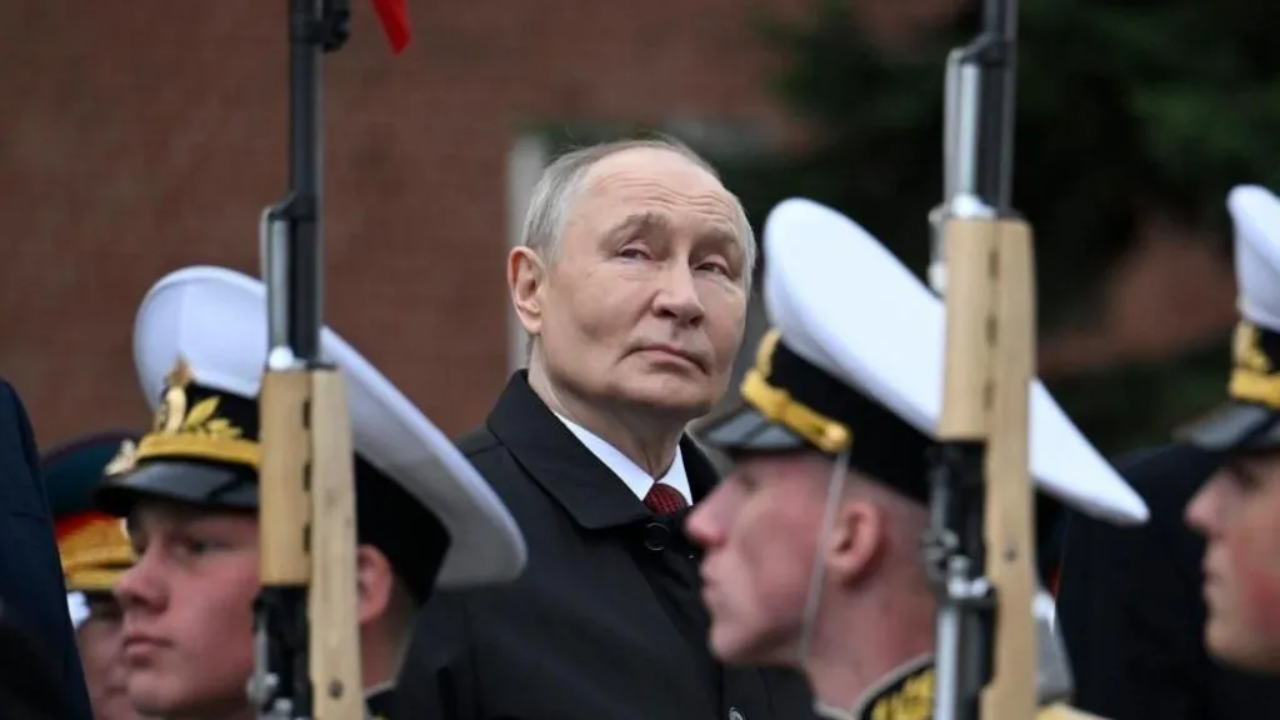
President Vladimir Putin delivered a defiant address at a noticeably diminished Victory Day parade in Moscow. While the holiday traditionally honors the Soviet triumph over Nazi Germany, the Kremlin used the platform to cast the ongoing war in Ukraine as an existential struggle against Western intervention.
Thank you for reading this post, don't forget to subscribe!1. Blistering Anti-Western Sentiment
Putin’s speech pivoted away from historical remembrance to focus on modern grievances. He accused NATO of being an “aggressive force” directly orchestrating the conflict in Ukraine.
- The Message: He framed Russian troops as the modern-day successors to the Red Army, fighting to “protect the motherland” from Western encroachment.
- The Tone: Despite international pressure, Putin remained unyielding, declaring that Russia’s cause is “just” and that victory is inevitable.
2. A Visible Lack of Military Might
The parade itself was a shadow of its former self, reflecting the heavy toll of the four-year conflict:
- No Heavy Hardware: For the first time in years, the iconic display of tanks and missiles was absent. The ground procession was limited to marching troops, while nuclear capabilities were shown via video screens rather than physical transport.
- Abbreviated Schedule: The ceremony lasted only 45 minutes, significantly shorter than the multi-hour spectacles of the past.
- Security Lockdown: Fear of Ukrainian drone strikes led to a massive security presence and localized internet blackouts throughout the capital.
3. The “Trump Truce” Backdrop
The event took place under a fragile three-day ceasefire reportedly brokered by U.S. President Donald Trump.
- Strategic Silence: While the guns were quiet for the holiday, the diplomatic atmosphere remained cold.
- Zelenskyy’s Response: The Ukrainian President remarked that Kyiv’s decision not to disrupt the event was a nod to U.S. diplomacy, rather than any softening toward Moscow.
Shifting Symbols
In a telling change of protocol, the traditional seating of WWII veterans was supplemented by soldiers from the frontlines in Ukraine. By placing these groups side-by-side, the Kremlin continues its effort to merge the identity of the current war with the “Great Patriotic War” of the 1940s.
Analysis: The absence of military hardware and the reliance on a foreign-brokered ceasefire suggest a Kremlin that is increasingly wary of its own domestic security and the logistical strain of a protracted war of attrition.

"Suresh Kumar Saini is an experienced Tax Assistant and finance writer. He specializes in US & Canada Tax Guide, Indian Income Tax laws, GST compliance, and personal finance, helping freelancers and remote workers optimize their taxes."