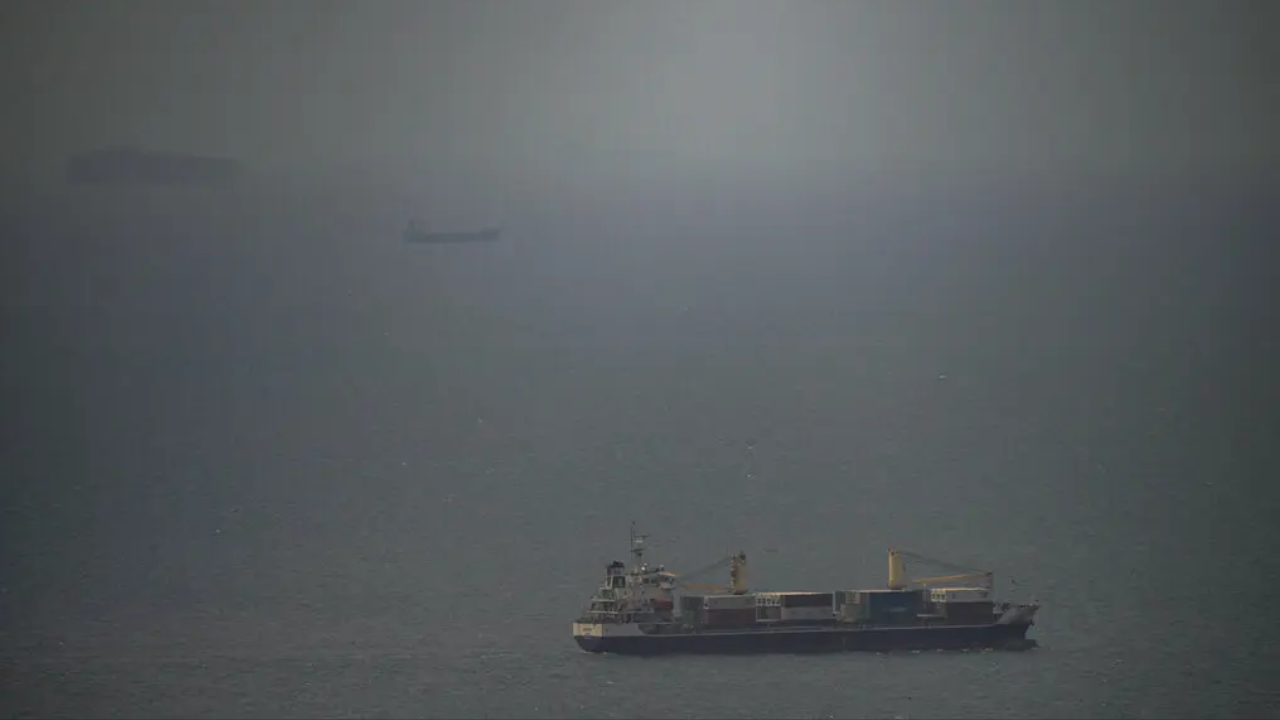
The fragile ceasefire in the Middle East has hit a dangerous deadlock. Despite an eleventh-hour extension of the truce by President Donald Trump, the Strait of Hormuz is now effectively under a total Iranian blockade.
1. First Ship Seizures Since War Began
- MSC Francesca: A Panama-flagged container ship.
- Epaminondas: A Liberia-flagged vessel operated by Greece.
- The Charge: Iranian state media (Tasnim) claims the ships were “violating regulations” and attempting to exit the strait “covertly.” Both were escorted to Iranian shores.
2. Kinetic Attacks and “Red Lines”
- One vessel reported its bridge was “heavily damaged” by an Iranian gunboat.
- The IRGC has declared any “disorder” in the strait a “red line,” essentially asserting sovereign control over the international passage.
3. The Blockade Standoff
The crisis is a “tit-for-tat” economic war between Washington and Tehran:
- The U.S. Position: President Trump is maintaining a naval blockade on all Iranian ports, which the White House claims is costing Tehran $500 million per day.
- The Iranian Response: Top negotiator Mohammad Baqer Qalibaf called the U.S. blockade a “flagrant breach” of the ceasefire. Iran vows the strait will remain closed to global traffic as long as its own ports are strangled.
4. Economic Aftershocks
The maritime “grip” is being felt instantly across global markets:
- Oil Prices: Brent crude surged above $100 per barrel for the first time in two weeks.
- Shipping Congestion: Only a handful of vessels (primarily those delivering food to Iran) have successfully transited. Hundreds of other tankers are idling in the Gulf of Oman, with many firms aborting transits entirely due to the threat of mines and fast-attack boats.
The Bottom Line: While the bombing has paused, the “Straitjacket” on global trade is tightening. With the U.S. Navy intercepting Iranian tankers in the Indian Ocean and Iran seizing commercial ships in the Strait, the “ceasefire” exists in name only.

Suresh holds a Master of Commerce (M.Com) degree and is a dedicated personal finance researcher and writer. Combining his advanced academic background in commerce with deep industry research, he covers complex topics like taxation, banking systems, credit analysis, and personal finance strategies. As the founder of Tax Assistant (taxassistant.org), Suresh is committed to translating complicated financial guidelines and economic data into simple, accurate, and actionable educational resources for everyday readers.