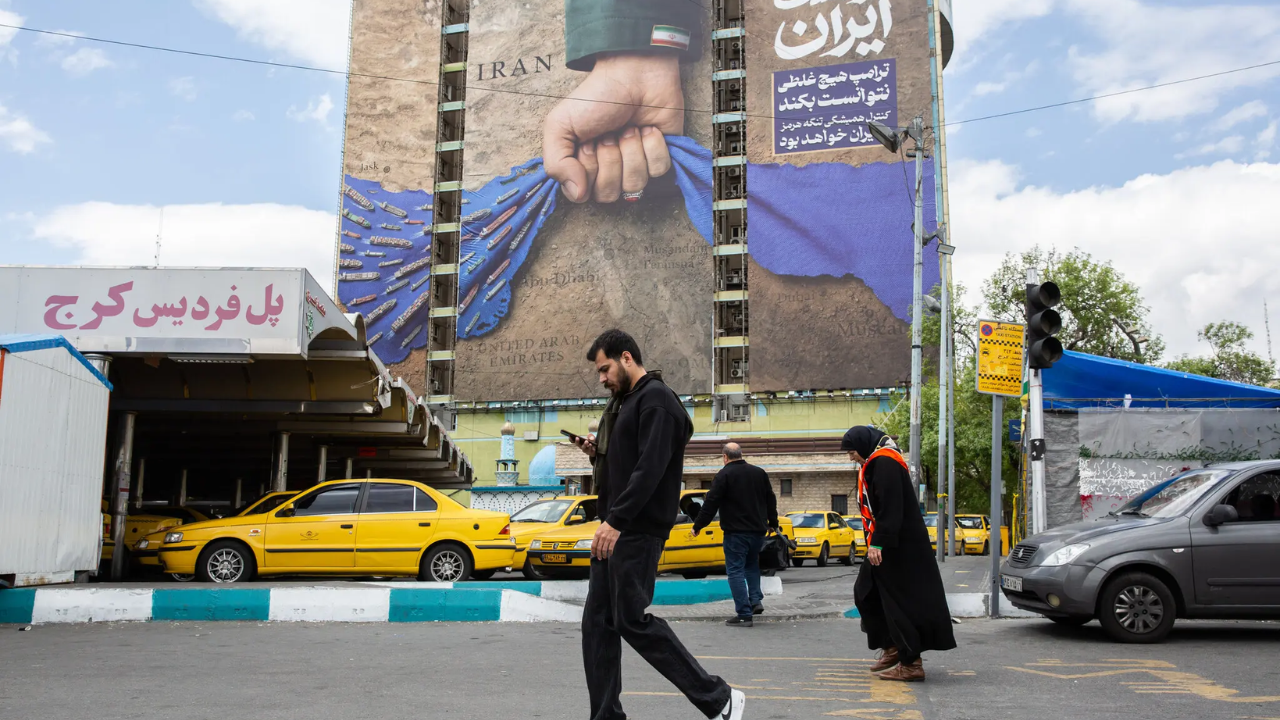
The Trump administration’s strategy to “blockade the blockaders” has turned the Strait of Hormuz into the world’s most dangerous maritime bottleneck. As of April 2026, the White House has pivoted toward a total naval siege of Iranian ports to force a reopening of the waterway. However, military analysts and regional experts remain deeply skeptical that traditional naval pressure can solve an asymmetric crisis.
The Asymmetric “Anti-Navy” Problem
- The Minefield Gap: Clearing the Strait is not a matter of firepower, but of time. The Pentagon’s estimate that mine-clearing could take six months suggests that even if the U.S. “wins” a surface engagement, the water remains unusable for commercial tankers.
- Cost-Benefit Imbalance: Iran utilizes $20,000 “suicide” drones and shore-based missiles to threaten $2 billion U.S. destroyers. Experts argue that a U.S. blockade does little to neutralize these mobile, land-based threats hidden along the Iranian coastline.
Economic Blowback
- The $150 Barrel: With crude prices hitting historic highs, the U.S. strategy is testing the patience of allies in Europe and Asia.
- The “Ghost” Fleet: Analysts note that Iran has become adept at circumventing traditional blockades through ship-to-ship transfers and “dark” registries, making a physical naval line less effective than it was in the 20th century.
The Diplomatic Deadlock
The administration’s “Maximum Pressure 2.0” assumes that Iran will trade its closure of the Strait for an end to the U.S. blockade. However, geopolitical experts at the CFR warn of a “staircase to nowhere”:
- Credibility at Stake: Iran’s leadership views the Strait as their only true leverage against Western sanctions. Giving it up without massive concessions is seen as political suicide for the regime.
- Legal Friction: By seizing Iran-linked vessels in international waters, the U.S. is stretching the definitions of maritime law, potentially alienating the very international coalition needed to police the Gulf.
The Consensus
The prevailing expert view is that the Strait of Hormuz cannot be “opened” by a blockade; it can only be opened by a de-escalation. Until a “Strait for Sanctions” deal is reached, the waterway remains effectively closed by the high cost of insurance and the persistent threat of asymmetric strikes—regardless of how many U.S. carriers are stationed nearby.
The Bottom Line: A blockade is a tool of attrition, but the Strait of Hormuz requires a tool of precision. Experts fear the current strategy may result in a “frozen conflict” that keeps global energy markets in a state of permanent volatility.

Suresh holds a Master of Commerce (M.Com) degree and is a dedicated personal finance researcher and writer. Combining his advanced academic background in commerce with deep industry research, he covers complex topics like taxation, banking systems, credit analysis, and personal finance strategies. As the founder of Tax Assistant (taxassistant.org), Suresh is committed to translating complicated financial guidelines and economic data into simple, accurate, and actionable educational resources for everyday readers.