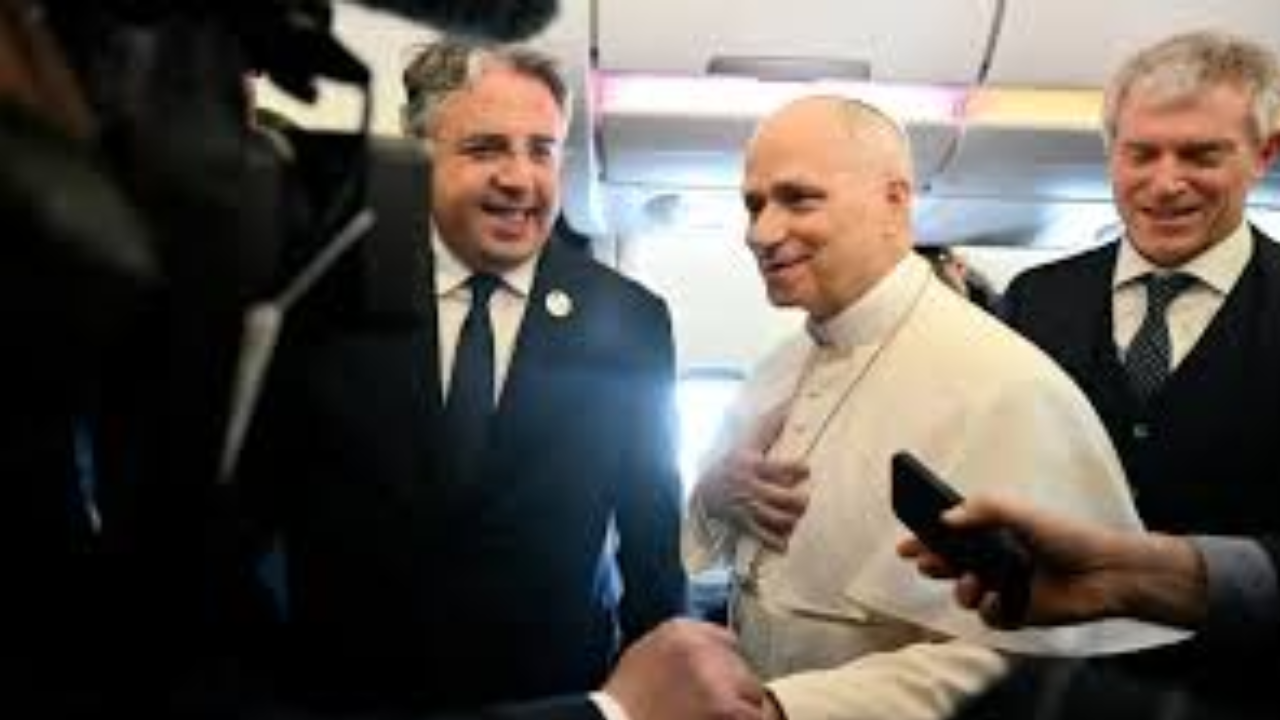
The tension between President Donald Trump and Pope Leo XIV reached a fever pitch this week, marking one of the most direct rhetorical confrontations between a U.S. President and the Holy See in modern history. The friction, which has been simmering since the Pope’s election in 2025, boiled over following the Vatican’s recent statements on U.S. foreign policy.
The Spark: Diplomacy vs. Strength
Trump’s Retort: “Weak on Crime”
- Policy Criticism: Trump labeled the Pope “terrible for Foreign Policy” and “WEAK on Crime,” suggesting that the Vatican’s push for pacifism was emboldening “bad actors” globally.
- Political Labeling: By calling the Pontiff “too liberal,” Trump signaled to his base that the Holy See had abandoned its spiritual mission in favor of a partisan agenda.
- The Iran Connection: The President claimed the Pope was inadvertently supporting Iran’s nuclear ambitions—a charge the Vatican dismissed, noting the Pope’s consistent prayers for a “world free from nuclear threat.”
The Vatican Response
“I do not look at my role as being political… but I will continue to speak out loudly against war. I have no fear.”
A Divided Congregation
The public feud is having a measurable impact on the American electorate. Recent data from April 2026 highlights a significant shift in Catholic approval ratings for the President:
| Demographic | Early 2025 Approval | April 2026 Approval |
| White Catholics | 59% | 36% |
| Hispanic Catholics | 31% | 23% |
While the White House has since attempted to pivot, framing the President as a “healing figure,” the direct collision between the Oval Office and the Apostolic Palace remains a defining—and deeply polarizing—moment of 2026.

Suresh holds a Master of Commerce (M.Com) degree and is a dedicated personal finance researcher and writer. Combining his advanced academic background in commerce with deep industry research, he covers complex topics like taxation, banking systems, credit analysis, and personal finance strategies. As the founder of Tax Assistant (taxassistant.org), Suresh is committed to translating complicated financial guidelines and economic data into simple, accurate, and actionable educational resources for everyday readers.