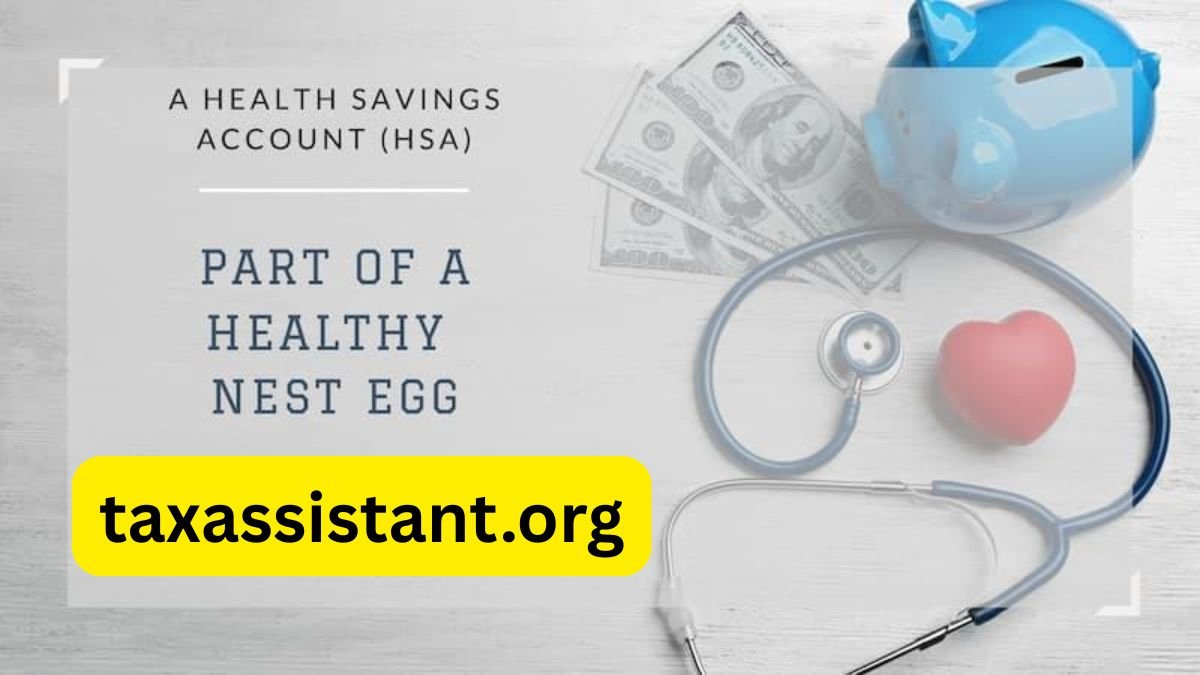
A health savings account (HSA) is a type of account that lets you save — and potentially invest — for healthcare expenses while earning tax benefits along the way. Depending on your financial situation and immediate medical needs, an HSA can even be a valuable retirement planning tool. But HSAs aren’t available to everyone. Continue reading to learn how HSAs work, their rules, and pros and cons.
What is a health savings account, and how does it work?
A health savings account is a tax-advantaged account you can use to pay for qualifying medical expenses, including prescription medications, eyeglasses, doctor’s visits, and more. Some HSAs function like a savings account, while others give you the option to invest your funds for future use.
HSAs are known for their triple tax advantage: You fund them with pre-tax dollars, your contributions grow tax-free, and withdrawals are tax-free as long as you use them for qualifying medical expenses. For this reason, HSAs can be a valuable retirement savings tool if you don’t need the funds to pay for immediate medical needs.
Unlike flexible spending accounts (FSAs), HSA contributions don’t expire at the end of the year. This means you can contribute to your account year after year without the need to “use it or lose it.” HSAs aren’t subject to required minimum distributions, either.
Both you and your employer can contribute to your HSA if your employer offers this benefit. If not, you can still open and contribute to an HSA as long as you meet the eligibility requirements.
Health savings account rules
As with other savings and investment accounts, HSAs come with rules that determine who’s eligible for an account, how you fund an account, and how you can spend your funds.
Eligibility
To open an HSA, you have to meet the following eligibility requirements:
- You are covered by a high-deductible healthcare plan (HDHP)
- You aren’t covered by any other healthcare plan
- You aren’t enrolled in Medicare.
- You aren’t eligible to be claimed as a dependent on someone else’s tax return.
Contribution limits
There are limits to how much you can deposit into an HSA each year. Those 55 and older can also make up to $1,000 in additional catch-up contributions each year.
2025 AND 2026 HSA CONTRIBUTION LIMITS
| Tax year 2025 limit | Tax year 2026 limit | |
| Self-only coverage (if you’re younger than 55) | $4,300 | $4,400 |
| Self-only coverage (if you’re 55 or older) | $5,300 | $5,400 |
| Family coverage (if you’re younger than 55) | $8,550 | $8,750 |
| Family coverage (if you’re 55 or older) | $9,550 | $9,750 |
Qualifying expenses
To make tax-free withdrawals from your HSA, you must use the funds to pay for qualifying medical expenses. These include a wide range of medical, dental, and vision-related expenses such as office visits, drugs, glasses and contacts, emergency services, long-term care, X-rays, and more.
President Trump’s sweeping 2025 tax law made some enhancements to HSAs. You can now use HSA dollars to pay for concierge medical services — bespoke health plans that charge a membership fee for easy access to doctors and care. The law also expands the pool of high-deductible health plans that can offer HSAs, and perhaps most significantly, it allows HSA funds to be used for telehealth services.
If you spend HSA funds on non-qualifying expenses, you’ll have to pay taxes on the withdrawal and, potentially, additional penalties. Once you turn 65, you won’t have to pay any withdrawal penalties. However, non-qualifying expenses are subject to tax no matter your age.
Pros and cons of HSAs
HSAs have notable benefits that can serve you both now and in the future. But there are a few potential downsides to consider, so weigh the pros and cons before opening an account.
Pros
- Tax advantages: HSAs offer several tax advantages. Contributions are tax-deductible, your money grows tax-deferred, and withdrawals are tax-free as long as you use the money for qualifying medical expenses.
- Balance carries from one year to the next: Unlike flexible spending accounts, there are no requirements to spend any of your HSA balance during the year. Instead, your balance carries over year-to-year.
- Portability: Your HSA isn’t tied to your employer. That means if you change jobs, you can take your HSA with you.
- Investment potential: Some HSA providers let you invest your funds in ETFs, mutual funds, and other securities. Doing so can help you build a significant nest egg for medical expenses in retirement.
- May receive employer contributions: Similar to your 401(k), your employer might offer contributions to your HSA, depending on your workplace.
- No required minimum distributions: Unlike other retirement accounts, HSA account holders don’t have to take required minimum distributions from their HSAs. This gives the money in your account an even longer timeline for growth until you’re ready to access it.
Cons
- Eligibility requirements: Not everyone is eligible to open an HSA. Among other requirements, you have to be covered by a high-deductible healthcare plan.
- Withdrawal rules: If you withdraw money from your HSA to pay for non-qualifying expenses, you’ll owe taxes and, potentially, additional penalties.
- Contribution limits: You can only contribute so much to your HSA each year. In 2026, you can contribute up to $4,400 individually or $8,750 as a family.
- Fees: Some HSA providers charge different types of fees. Look out for transaction and maintenance fees, among others, that can eat into your savings.
How to open an HSA
If you meet HSA eligibility requirements, opening an account is simple. You can do so by taking the following steps:
- Research and compare HSA providers: Check to see if your employer offers HSA contributions for a specific HSA account. Regardless, you may want to shop around and compare accounts from different providers. Make sure your choice has the features you’re looking for, considering factors such as fees, account features and services, investment options, and accessibility.
- Fund your account: If your employer offers paycheck deductions, contact your human resources department to set up automatic deposits into your HSA. If not, you can set up contributions through your checking account. Some accounts may require an initial minimum deposit when you open your account. Keep contribution limits in mind, too.
- Invest your funds: If you choose to invest your HSA contributions for the long term rather than use them for immediate medical costs, don’t neglect this step. Make sure to set up your investments so you don’t miss out on potential growth.
Health savings account alternatives
HSAs aren’t available to everyone, in which case you may want to explore some alternatives. Note that it may be possible to have more than one of these account types at the same time.
- Flexible spending account (FSA): A flexible spending account is similar to an HSA in that you can make contributions to this account and use your balance to pay for qualifying medical expenses. Also like an HSA, you don’t pay taxes on your contributions. However, unlike HSAs, you can’t invest within an FSA, and the money doesn’t carry over year-to-year. FSAs also don’t travel with you when you leave a job. If you leave a job with an FSA, any unused funds return to your employer.
- Health reimbursement arrangement (HRA): A health reimbursement arrangement differs from HSAs and FSAs in that they’re completely employer-funded. Individuals aren’t able to contribute to their own HRAs. If your employer provides this type of plan, you’ll receive money to reimburse qualifying healthcare expenses, tax-free, up to a specific limit. Unused funds may roll over into the next year.
- High-yield savings account (HYSA): These accounts aren’t specifically intended for medical expenses, and there are no tax benefits. However, if you don’t qualify for an HSA — or you want more flexibility in how you can use your funds — a high-yield savings account can be a good alternative. Right now, some of the best HYSAs pay as much as 5% APY, allowing your savings to grow. And you can use the funds you contribute for any purpose, whether it’s paying for medical expenses, funding a vacation, or covering surprise bills.
An HSA offers three distinct levels of tax savings that are not combined in most other savings accounts:
Tax-Deductible Contributions: Money goes in pre-tax through payroll or is deductible on your tax return.
Tax-Free Growth: Interest and investment earnings compound without being taxed.
Tax-Free Withdrawals: Distributions are 100% tax-free when used for qualifying medical expenses.
Yes. An HSA is entirely owned by you, not your employer. If you switch jobs, retire, or leave the workforce, your account and all accumulated funds move with you. You can continue using the funds for eligible health expenses or keep the money invested.
While both accounts let you pay for medical costs with pre-tax dollars, they have major key differences:
Rollover Rules: FSA funds operate on a “use-it-or-lose-it” rule each year, whereas HSA funds roll over indefinitely.
Ownership: FSAs are owned by your employer and lost if you leave; HSAs are portable and owned by you.
Investment Capability: HSA balances can be invested in stocks, ETFs, or mutual funds, while FSAs cannot.
Once you turn 65, your HSA gains additional flexibility similar to a Traditional IRA. You can withdraw money for non-medical expenses without paying a penalty (though standard income tax will apply). If you spend the funds on qualified medical expenses, distributions remain completely tax-free.
The tax updates enhanced HSA flexibility by allowing tax-free funds to cover:
Telehealth Services: HSA dollars can be used for virtual medical visits.
Concierge Medicine: Membership fees for concierge or direct primary care plans are now eligible expenses.
Expanded Coverage: A broader pool of High-Deductible Health Plans (HDHPs) now qualify for HSA eligibility.
Higher Contribution Limits: Annual limits increased to $4,400 for individuals and $8,750 for families in 2026.

Manoj Sharma is a Senior Writer on the banking team at Tax Assistant. He provides information on budgeting, bank accounts, the banking industry, and other related topics. Using original data and methodologies, he helps you identify the best financial institutions, accounts, and products tailored to your needs. Manoj holds a degree in Journalism and Political Science from Syracuse University. All articles are strictly reviewed and fact-checked by our panel of expert Chartered Accountants, including CA Devendra Saini, CA Nikhil Khunteta, and CA Ankit Goyal