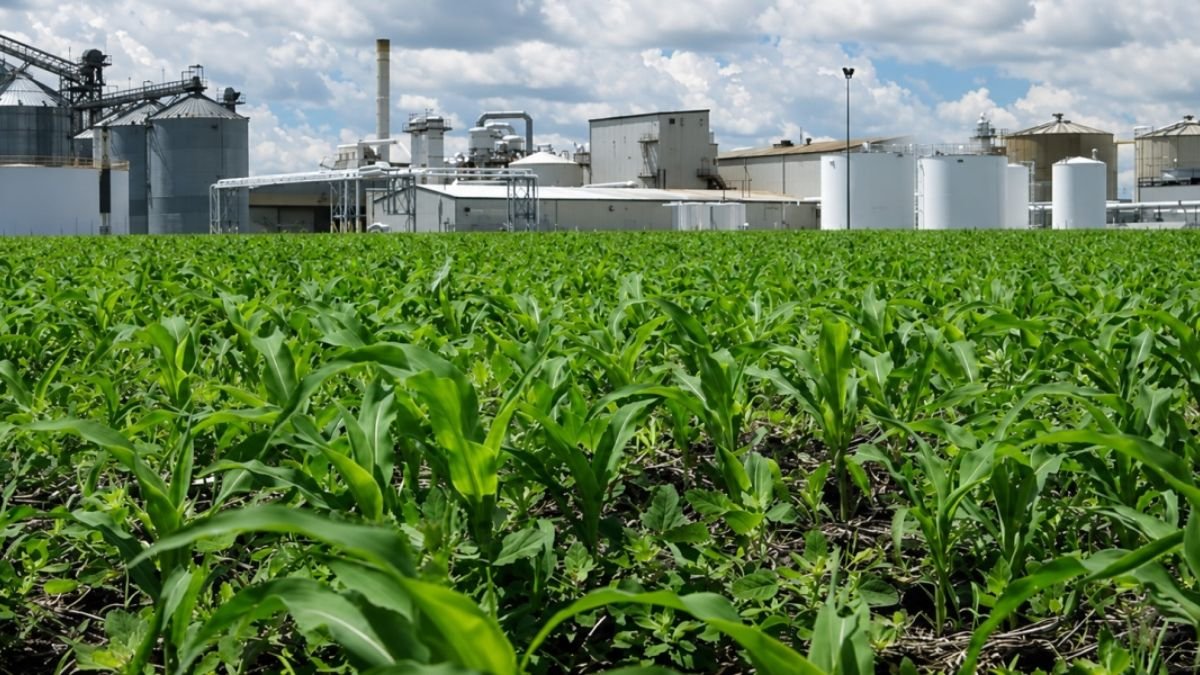
The Internal Revenue Service today issued guidance on the Section 45Z Clean Fuels Production Tax Credit to empower America’s crop and livestock farmers, ranchers, and fuel producers across the country and help them access the growing domestic biofuels market in a way that makes the Clean Fuels Production Credit work for them.
“Today’s guidance helps America’s farmers, ranchers, and fuel producers access growing opportunities in the domestic biofuels market,” said IRS Chief Executive Officer Frank J. Bisignano. “This guidance helps unlock billions of dollars for America’s agricultural producers, provides greater certainty for investment across rural America, strengthens domestic biofuel production, and helps lower fuel costs for American consumers.
provides the 2026 emissions rate table used to calculate the clean fuel production credit and provides additional guidance, including on the use of manure-derived fuels and regenerative agricultural practices, supporting American biofuel production.
Notice 2026-53
The Working Families Tax Cuts (WFTC) amended and extended section 45Z, including making several changes that require technical modeling updates to the 45ZCF-GREET model used to determine emissions rates. The section 45Z proposed regulations, which were issued February 4, 2026 and are under final consideration by the IRS and Treasury Department, proposed rules implementing the WFTC changes to the Clean Fuels Production Credit, including addressing how the annual emissions rate tables work and which table and models a producer should use to determine the emissions rate of a particular fuel.
Today’s notice provides certain technical modeling language used to implement WFTC-mandated model updates for manure-derived fuels. This notice addresses how producers should account for WFTC changes when using the emissions rate table and allowed models. The DOE is developing corresponding updates to the 45ZCF-GREET model.
The 45Z proposed regulations indicated that the IRS would provide further guidance on how United States Department of Agriculture (USDA) rules on regenerative agricultural practices will be integrated into the 45ZCF-GREET model once the USDA finalized its rules, which USDA did on June 29, 2026. This notice provides a safe harbor that will be available for 2025 clean fuel production.
The notice also provides transition rules for applying changes made by the WFTC when an allowed methodology has not yet been updated to reflect those changes, including rules addressing used cooking oil and other feedstocks. Among other changes, the law:
- Requires emissions rates to exclude emissions attributable to indirect land use change;
- Limits eligible transportation fuel to fuel derived exclusively from feedstocks produced or grown in the United States, Mexico or Canada;
- Prohibits negative emissions rates, except for transportation fuel derived from animal manure; and
- Requires distinct emissions rates for transportation fuels derived from specific animal manure feedstocks.
Background
The Clean Fuel Production Tax Credit, as modified by the WFTC, provides a tax credit for eligible clean transportation fuels produced domestically and sold in a qualified sale, including sustainable aviation fuel and other clean fuels. The credit amount generally depends on a fuel’s lifecycle greenhouse gas emissions rate, with lower-emission fuels qualifying for larger credits.
Today’s notice provides the 2026 emissions rate table used to calculate the credit and allows certain regenerative agricultural practices and farm-specific manure management practices to be reflected in emissions calculations, helping agricultural producers participate in the growing domestic biofuels market.
For agricultural feedstocks, the guidance allows taxpayers to account for qualifying low-carbon agricultural practices consistent with the U.S. Department of Agriculture’s technical guidelines and the 45Z-specific Feedstock Carbon Intensity Calculator. The guidance also provides transition relief for fuel produced in 2025 and 2026 from certain requirements relating to the development of a nutrient budget before nutrients are applied.
The guidance provides for distinct emissions rates for transportation fuel derived from specific animal manure feedstocks, as required by the WFTC. The 2026 emissions rate table includes dairy manure and swine manure, and Treasury and IRS anticipate that the 45ZCF-GREET model will be updated later in 2026 to include poultry manure and beef manure as primary feedstocks. The guidance also allows farm-specific prior manure management practices to be taken into account in certain circumstances, allowing emissions calculations to better reflect conditions on individual farms.
The tax credit is claimed directly by registered fuel processing facilities (e.g., ethanol, biodiesel, and sustainable aviation fuel plants) rather than individual farmers. However, agriculture producers benefit indirectly through market premiums. Because the credit amount depends on a fuel’s Carbon Intensity (CI) score, fuel processors pay higher prices for crops grown using verified climate-smart practices (like cover cropping and no-till) to lower their overall emissions rating.
To qualify for the 45Z credit, transportation fuels must be produced exclusively from feedstocks grown or sourced within the United States, Mexico, or Canada. This rule effectively excludes foreign-imported feedstocks—such as imported used cooking oil or foreign tallow—ensuring that the financial benefits directly support domestic agriculture and North American supply chains.
The notice links lifecycle greenhouse gas calculations to USDA technical guidelines using the updated 45ZCF-GREET model. This framework allows crop producers to log farm-level conservation management—such as reduced tillage, efficient nitrogen fertilizer application, and cover crops—to generate lower feedstock CI scores, which directly increases the per-gallon tax credit value for the processor.
Under statutory rules, a fuel’s calculated emissions rate generally cannot fall below zero to prevent runaway credit amounts. However, Notice 2026-53 applies a explicit statutory exception for animal manure-derived fuels (such as renewable natural gas from dairy and swine manure). These fuels are allowed to retain negative carbon intensity scores because they directly capture and destroy farm-level methane emissions.
The credit value is determined by the fuel’s carbon reduction relative to a baseline of 50 kg CO_2e/mmBTU: Non-Aviation Clean Fuels: Base rate of $0.20/gallon, scaling up to $1.00/gallon if Prevailing Wage and Apprenticeship (PWA) requirements are met. Sustainable Aviation Fuel (SAF): Base rate of $0.35/gallon, scaling up to $1.75/gallon with PWA compliance.

Suresh holds a Master of Commerce (M.Com) degree and is a dedicated personal finance researcher and writer. Combining his advanced academic background in commerce with deep industry research, he covers complex topics like taxation, banking systems, credit analysis, and personal finance strategies. As the founder of Tax Assistant (taxassistant.org), Suresh is committed to translating complicated financial guidelines and economic data into simple, accurate, and actionable educational resources for everyday readers.