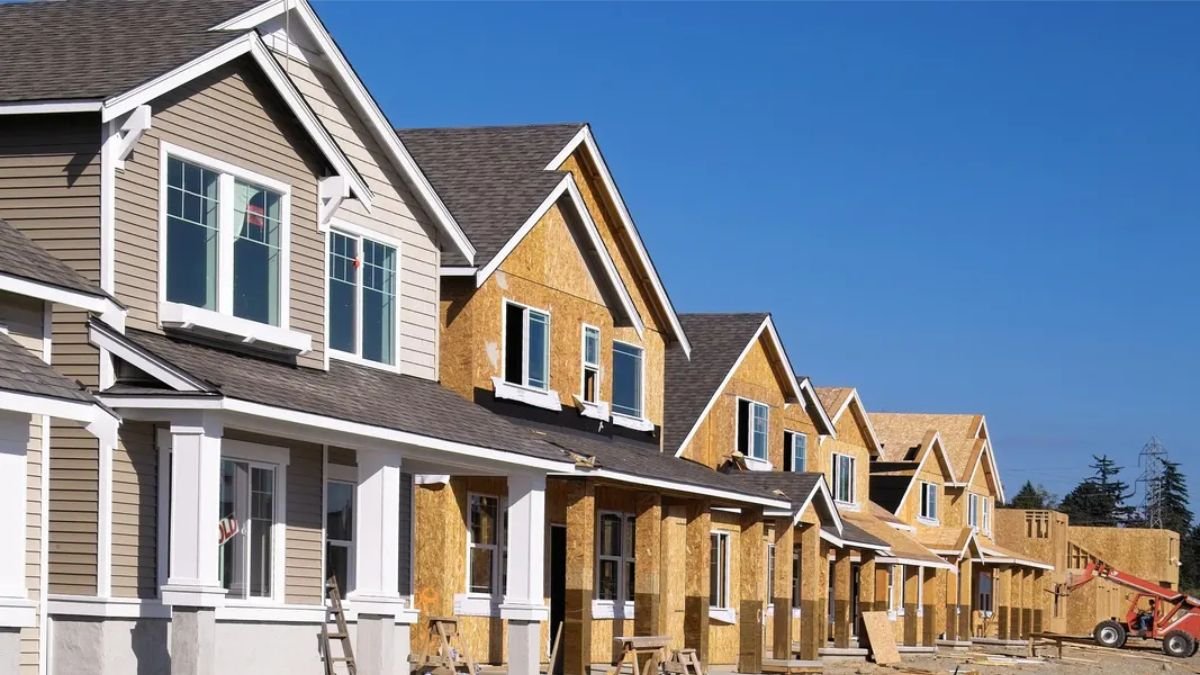
A series of circumstances are coming together to make this an excellent time to consider buying a new construction home. New-home inventory is higher than the pre-pandemic supply, while existing-home supply is 17% lower for the same period. That is pushing new construction prices down, so much so that the median price per square foot for a new home is now $205, while existing homes are $212, according to a Zillow analysis.
Combine the lower cost per square foot with builder-offered financing incentives, including lower mortgage rates, and the case to buy new can be compelling — particularly in areas where builders have broken the most ground.
The benefits of buying a new home depend on where you live
New construction homes can come in several varieties:
- Brand-new, recently completed (“quick move-in”) homes
- Under-construction homes (you may have an opportunity to make some design choices and buy upgrades)
- Custom construction homes, which are built only to your specifications
In any case, you are the first owner in a home that has not had previous residents.
“New homes are the overlooked opportunity more buyers should be thinking about,” Kara Ng, senior economist at Zillow, said in a release. “Buyers who assume new homes are out of their price range may be surprised at what they find. Where the most new homes have been built, buyers are in the best position to negotiate as sellers have a lot of other homes on the market to compete with.” “
Sun Belt markets such as Austin, Raleigh, San Diego and Tampa are seeing the biggest discounts on new homes — as much as 19% off. However, Zillow found new homes still garner premium pricing where builders have been less active, in places like New York City, Cleveland, and Milwaukee.
Builder incentives include low-rate financing
In August, the latest data available, more than 80% of new home communities offered incentives on homes to be built, according to data analytics firm Zonda. Nearly one third (30%) of builders lowered new home prices.
Mortgage rate deals are the most common builder incentive. Realtor.com reported that 13.8% of new home listings promoted reduced interest rates in August. The average rate offered was 3.92%, a surprising below-market rate that would save buyers hundreds of dollars a month. However, borrowers should be aware that many of these offers are temporary buydowns or adjustable-rate mortgages that reset after an introductory period.
How can builders offer lower rates? Some developers negotiate bulk-rate loan packages with an affiliated mortgage lender or an investor. Instead of pricing each loan separately, the builder has access to favorable financing for an entire project.
Other common perks being offered include:
- Lower down payments: In Q3 2025, people buying new construction homes made an average down payment of 15.7%, compared to 17.8% for buyers of existing homes, according to Realtor.com. In the past, new construction homes commonly required higher down payments — but new buyer incentives have flipped the tables.
- Price breaks: New homes are often less expensive on a price-per-foot basis, particularly in the South and West, where there are more newly built homes available.
- Discounts on closing costs: Builders may offer a percentage discount on closing costs, but you’ll likely have to use one of their preferred lenders.
- Upgrades: Builders are throwing in complementary upgrades such as blinds, high-end finishes, and appliances.
Consider the fine print of financing deals
Not all builder financing deals are as good as they seem. If a finance offer includes a low advertised rate with a much higher APR, that can signal up-front costs or future payment adjustments built into the loan.
“Comparing APRs side by side helps buyers avoid being swayed by headline rates alone,” Brian Hurd, senior vice president of the National Builder Division at Cardinal Financial, told tax assistant.
With adjustable-rate mortgages, be aware of how long the initial rate lasts, how often it adjusts, and how high the payment could go over time, he added.
In addition to adjustable rates, another common builder finance incentive is a rate buydown. One example is a 2/1 buydown:
- Your rate is reduced by 2% in the first year.
- Then it’s discounted 1% in the second year.
- Beginning in the third year and for the life of the loan, your interest rate is fixed at the market rate.
“Builder financing incentives can be a powerful affordability tool, but they’re not one-size-fits-all,” Hurd noted. “The key is understanding what’s temporary versus permanent. A lower starting rate doesn’t always mean lower long-term cost, so buyers should evaluate how the loan performs over time, not just the first payment.”
Shopping for loan offers can uncover a better long-term value
Comparing loan offers from the builder to an outside mortgage lender can also help you make an informed decision.
Hurd said buyers should ask whether the incentive is tied to a specific lender, whether the pricing changes if they shop elsewhere, and whether the incentive is coming from the builder or being offset elsewhere in the loan terms.
“Buyers should look at interest rate, APR, points, total closing costs, and how long any incentive lasts. It’s also important to ask how long the quoted rate is locked and whether there’s flexibility if the home’s completion timeline shifts,” Hurd added. “Getting a second opinion doesn’t mean walking away from the builder’s deal; it simply gives buyers clarity.”
There’s another possible downside to builder finance deals: thin equity.
“Builders’ incentives are giving buyers great deals on mortgage rates, but there are trade-offs,” said Joel Berner, senior economist at Realtor.com. “When buyers pay closer to full price and put less money down, they finance more of the purchase, which raises the risk of ending up underwater if home values fall.”
A final consideration: Some perks offered by the builder may have been paid for by raising the home’s listing price. That’s another good reason to seek a second opinion from an independent mortgage lender concerning your loan offer.
Pro and cons of buying a new construction home
Pros
- Possible lower down payment
- Possible lower mortgage rate
- Possible closing costs reductions
- Warranties that cover primary systems, such as plumbing
- Fewer initial repairs and maintenance
- Energy-efficient materials that cut utility costs
Cons
- Possible longer commute, as developments are often in the suburbs, where land is cheaper
- Closing and getting the keys could be delayed by construction setbacks
- Beginning with less equity (or none at all) is possible due to a combination of a low down payment and builder incentives
- HOA dues can be an additional monthly burden
- Landscaping may be young and sparse, so your yard could take a while to fill out
- Property taxes can mount quickly as assessments on land values increase
- Some state and county governments charge new home bond assessments for neighborhood infrastructure improvements, possibly adding to your tax bill
New construction inventory has risen above pre-pandemic levels, while existing home inventory remains 17% lower. To compete and sell inventory, builders—especially in high-build areas like the Sun Belt—are offering price breaks and discounts up to 19%, driving the median new home price to $205/sq. ft. compared to $212/sq. ft. for existing homes.
Builders often negotiate bulk-rate loan packages with affiliated mortgage lenders or institutional investors. By securing favorable financing terms across an entire housing development rather than pricing loans individually, builders can pass significant interest rate discounts directly to buyers.
A 2/1 rate buydown is a temporary financing incentive offered by builders:
Year 1: Your mortgage interest rate is reduced by 2%.
Year 2: Your interest rate is reduced by 1%.
Year 3 onwards: Your rate rises to the full fixed market rate for the remaining life of the loan.
It provides temporary initial savings, but your monthly payments will increase significantly starting in year three.
The main risk is thin home equity. When buyers utilize low down payments (averaging 15.7% for new builds) alongside purchase prices that may have perks bundled into the sticker price, they finance a larger percentage of the home. If property values drop, buyers run a higher risk of becoming underwater (owing more on the mortgage than the home is worth).
You should always seek a second opinion from an independent mortgage lender. While builder incentives (like closing cost credits or low rates) can be attractive, builders sometimes offset these perks by charging higher upfront points, fees, or higher underlying home prices. Comparing total loan costs, interest rates, and APRs side-by-side ensures you get the best long-term value.

Manoj Sharma is a Senior Writer on the banking team at Tax Assistant. He provides information on budgeting, bank accounts, the banking industry, and other related topics. Using original data and methodologies, he helps you identify the best financial institutions, accounts, and products tailored to your needs. Manoj holds a degree in Journalism and Political Science from Syracuse University. All articles are strictly reviewed and fact-checked by our panel of expert Chartered Accountants, including CA Devendra Saini, CA Nikhil Khunteta, and CA Ankit Goyal