For would-be borrowers waiting for lower mortgage rates, the bond market’s momentum is moving in the opposite direction. In a weekly survey of lenders with the lowest rates, more than half offered home loan rates closer to 8% than 6%. With mortgage rates now over 7% and rising, what will it take for them to reverse course and move lower?
Are mortgage rates dropping?
No. As of Sept. 24, Freddie Mac reported that the average 30-year fixed-rate mortgage rate was 7.03%. This is eight basis points higher than last week. At this time in September 2025, mortgage rates averaged 6.30%, 73 basis points lower.
The average 15-year fixed mortgage rate this week was 6.42%, up 16 basis points from last week, and 93 basis points higher than this time last year.
Here’s the Freddie Mac data on mortgage rates for the past 52 weeks as of Sept. 24, 2026:
- 30-year fixed-rate mortgage: 5.98% to 7.03%
- 15-year fixed-rate mortgage: 5.35% to 6.42%
Will mortgage rates trend down by the end of 2026?
Mortgage rates generally move in unison with bond market yields, which has been reaching nearly 20-year highs. The 10-year Treasury yield, a benchmark for mortgage rates, has topped 5% repeatedly since mid-September, and for the first time since 2023.
Rob Chrisman, a long-time mortgage industry analyst, said lenders have been rapidly repricing as a broad-based bond market selloff continues.
“Why? Besides the war driving prices higher causing more inflation, and the mounting budget deficit, other factors entered into it,” he wrote in an analysis for clients.
Chrisman noted mounting concerns that the Fed will move to institute more policy tightening, an exceptionally weak 5-year Treasury note auction, and crude oil futures trading higher due to little progress in resolving the Middle East conflict.
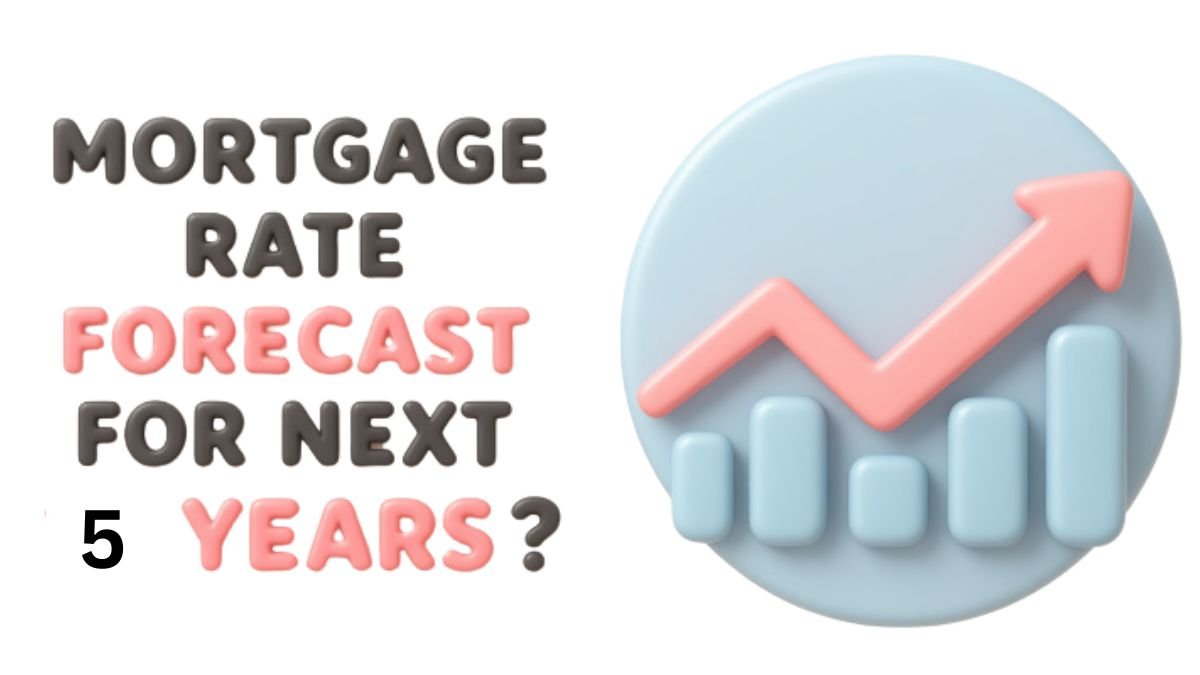
Fannie Mae’s September forecast projects mortgage rates to be near 6.7% through 2027.
The Fed is on an inflation-rate hike watch
Following the Federal Reserve’s first interest rate increase in three years, the Federal Open Market Committee (FOMC) signaled it is leaning toward another 0.25% hike before year-end.
The federal funds rate tends to directly influence rates on shorter-term lending rates. While mortgage rates aren’t directly based on the fed funds rate, they typically mirror fed funds rate trends.
So, if the fed funds rate goes up, mortgage rates are likely to follow.
Keep an eye on 10-year Treasury yields
While short-term lending rates closely follow the Fed funds rate, mortgage rates track the 10-year Treasury yield even more closely. As of Sept. 16, the 10-year Treasury yield opened at 4.95% — compared to 4.11% a year prior.
Now, you’re probably wondering why today’s mortgage rates aren’t in the 4% range, right?
To determine current mortgage rates, lenders add a “spread” to the 10-year Treasury yield. The spread is simply the difference between the rates consumers pay and the 10-year Treasury rate. Without getting too much into the weeds, charging a spread helps mortgage lenders cover the costs of making loans to the public and the risk of providing them.
Mortgage spreads widened over the past few years, exceeding two percentage points. As bond yields have risen over the past six months, the spread has narrowed slightly but remains near two percentage points.
For example, the average 30-year fixed mortgage rate is 7.03%, and the 10-year Treasury yield is 5.12% — a spread of 1.91 percentage points.
Should you wait to buy until mortgage rates go down even more?
In short, no. You don’t necessarily need to wait to buy a home until mortgage rates drop below 6% or lower. Mortgage rates are just one part of the affordability equation. You also have to consider home prices, driven by housing supply and demand.
The current housing market is in a crunch. Simply put, buyers outnumber homes for sale, especially in price ranges accessible to first-time homebuyers. When supply and demand are out of balance like this, home prices tend to stay high because sellers know they’ll have multiple interested buyers.
According to data from the Federal Reserve Bank of St. Louis, the median sale price of single-family homes has mostly trended upward since Q1 of 2009. At that time, the median sale price was $208,400. The median price had risen to $410,700 by Q2 2026.
Even in a recession, prospective buyers likely won’t see much relief. If interest rates drop, as they tend to in recessions, that will increase the number of people looking to buy and lock in a lower rate. That drives up demand for the already limited supply of homes.
To truly save, buyers need both interest rates and home prices to drop. Mortgage rates are holding steady, and housing prices are stagnant or even lowering in certain parts of the country. Situations may be improving for buyers.
Strategies for buyers in today’s mortgage market
If you crave the comforts of homeownership, the best strategy in today’s market may be to buy what you can afford. Whether that means a smaller house or a condo instead of a single-family home, owning something puts you in a position to start building equity.
Yes, shopping for the best mortgage lenders with low rates and fees is crucial when getting a mortgage. But to help you find your ideal home that balances affordability and desirability, it pays to adopt a curious mindset and consider lesser-discussed financial tools.
Get curious
There’s no better time to learn more about your local real estate market than today. By adopting a sense of curiosity, you could discover that your city has more to offer housing-wise than you previously thought.
You may want to take weekend excursions to lesser-known neighborhoods and suburban developments beyond the city limits. You never know what you’ll find that could expand your idea of what “home” looks like — including new developments, school districts, and types of homes.
Consider a fixer-upper
If you’re looking to spend less on a home in today’s mortgage market, a house needing a bit of TLC could help you do just that. Loans like the FHA 203(k) mortgage can roll your purchase and renovation costs into one convenient loan. When you qualify and have an accepted offer, your lender immediately funds the home’s purchase price and puts the renovation costs into an escrow account. As you make repairs, funds get disbursed.
Rethink your commute
How would it feel to have a longer commute yet come home to a house you love? Master-planned communities tend to crop up outside major cities, offering various amenities like parks, shopping, and top-notch schools — all in exchange for a longer commute. These areas could look a lot more palatable if they offer commuting options like park-and-ride or commuter rail. Dare to consider parking the car and taking public transit if it could get you into the home of your dreams.
Go condo
While shared walls, floors, and ceilings might not immediately scream “dream home,” they could help you find an affordable home in a terrific area. Condominiums come in various shapes and sizes, from apartment-style flats to townhomes. Depending on the area, you might even score a small backyard. However, be sure to consider HOA fees when calculating your monthly payment.
Consider a 15-year mortgage
While the monthly payment on a 15-year mortgage will be higher than a typical 30-year mortgage, these loans have plenty of upsides. Not only will you pay off your home on a speedier timeline, but you’ll also likely score a lower interest rate and save a ton on interest over the life of your loan.
Explore rate buydowns
To make today’s mortgage rates more palatable, look into rate buydown options. An interest rate buydown lets you pay cash up front in exchange for a reduced interest rate on your mortgage. Buydowns can be permanent or temporary, like for your loan’s first one to three years. Even a few years of lower rate relief can make today’s home prices more affordable.
Mortgage rates track long-term benchmark yields—specifically the 10-year Treasury yield—rather than short-term Federal Reserve rates alone. Factors like government budget deficits, bond market sell-offs, and elevated crude oil prices keep bond yields high. Additionally, lenders maintain a wider-than-average “spread” (around 2 percentage points) over 10-year Treasuries to offset market volatility and lending risk.
Not necessarily. Mortgage rates are only half of the affordability equation—home prices are the other half. Because housing supply remains tight, a sudden drop in interest rates often brings more buyers into the market, driving home prices higher through increased competition. Waiting for rates to lower could end up costing more if home prices appreciate in the meantime.
A rate buydown (such as a 2-1 buydown) lowers your mortgage interest rate for the first 1 to 3 years of the loan. For example, with a 2-1 buydown on a 7.0% mortgage, your interest rate would be 5.0% in year one, 6.0% in year two, and 7.0% for years 3 through 30. The difference in payments is usually funded upfront by the seller or homebuilder as a concession.
Lenders take on less long-term risk with 15-year mortgages, allowing them to offer lower interest rates (typically 0.5% to 1.0% lower than 30-year rates). While your monthly payment will be significantly higher due to the shorter repayment schedule, you build equity much faster and pay a fraction of total interest over the life of the loan.
For rates to move lower, a combination of economic shifts is required:
Lower 10-year Treasury yields: Bond markets need to stabilize and pull yields down.
Fed policy shifts: Indications from the Federal Reserve that rate hikes are over and rate cuts are approaching.
Narrowing mortgage spreads: Reduced market uncertainty so lenders compress their margin above Treasury yields toward the historical 1.5 percentage point average.

Manoj Sharma is a Senior Writer on the banking team at Tax Assistant. He provides information on budgeting, bank accounts, the banking industry, and other related topics. Using original data and methodologies, he helps you identify the best financial institutions, accounts, and products tailored to your needs. Manoj holds a degree in Journalism and Political Science from Syracuse University. All articles are strictly reviewed and fact-checked by our panel of expert Chartered Accountants, including CA Devendra Saini, CA Nikhil Khunteta, and CA Ankit Goyal