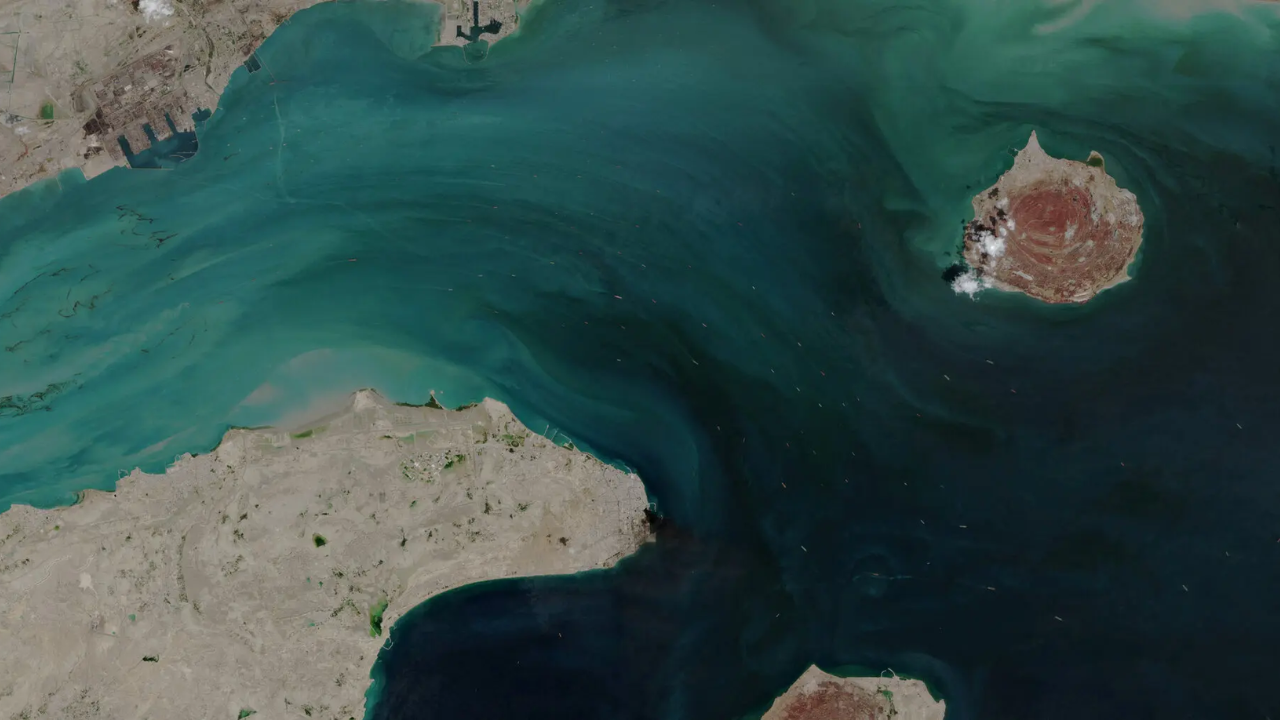
Tehran has pivoted its primary defensive strategy. While the nuclear program was once the centerpiece of Iranian deterrence, mid-April 2026 has seen a shift toward active, tactical control of the Strait of Hormuz. This “geographical deterrent” is proving to be a more immediate and disruptive tool than the long-term threat of enrichment.
From Nuclear Ambition to Maritime Assertiveness
Following the collapse of the Islamabad ceasefire talks on April 11 and the subsequent U.S. naval blockade of Iranian ports, Iran has leaned into its ability to dictate the flow of global trade.
- Deterrence via Volatility: On April 17, Tehran claimed the waterway would remain open, only for the IRGC to fire on commercial vessels (including an Indian-flagged tanker) the following day. This “on-off” unpredictability serves to keep global markets on edge.
- The Sovereignty Toll: Iran is reportedly attempting to monetize the crisis by imposing “sovereignty fees” on ships passing through its territorial waters near Qeshm and Larak Islands, essentially taxing the very trade it threatens.
- Economic Paralysis: The strategy is working without a total physical closure. The mere risk of engagement has driven shipping traffic down by roughly 95%, as insurance premiums skyrocket and major carriers reroute.
Strategy Comparison: Why the Shift?
| Feature | The Nuclear Deterrent | The Hormuz Deterrent |
| Primary Goal | Regime Survival | Global Economic Leverage |
| Immediate Impact | Theoretical/Political | Functional/Market-Moving |
| Countermeasures | Sabotage/Sanctions | Complex Naval Escorts |
| Global Reach | Regional Stability | Global Energy & Food Costs |
The Current Standoff
As of April 19, 2026, the Persian Gulf remains a theater of “reversible instability.” By challenging the U.S. blockade with its own “siege of a siege,” Iran is demonstrating that its greatest weapon isn’t necessarily a warhead, but its physical grip on the world’s most vital energy chokepoint. If Iranian ports cannot function, Tehran’s new doctrine ensures that the rest of the Gulf’s maritime traffic will share that reality.

Suresh holds a Master of Commerce (M.Com) degree and is a dedicated personal finance researcher and writer. Combining his advanced academic background in commerce with deep industry research, he covers complex topics like taxation, banking systems, credit analysis, and personal finance strategies. As the founder of Tax Assistant (taxassistant.org), Suresh is committed to translating complicated financial guidelines and economic data into simple, accurate, and actionable educational resources for everyday readers.