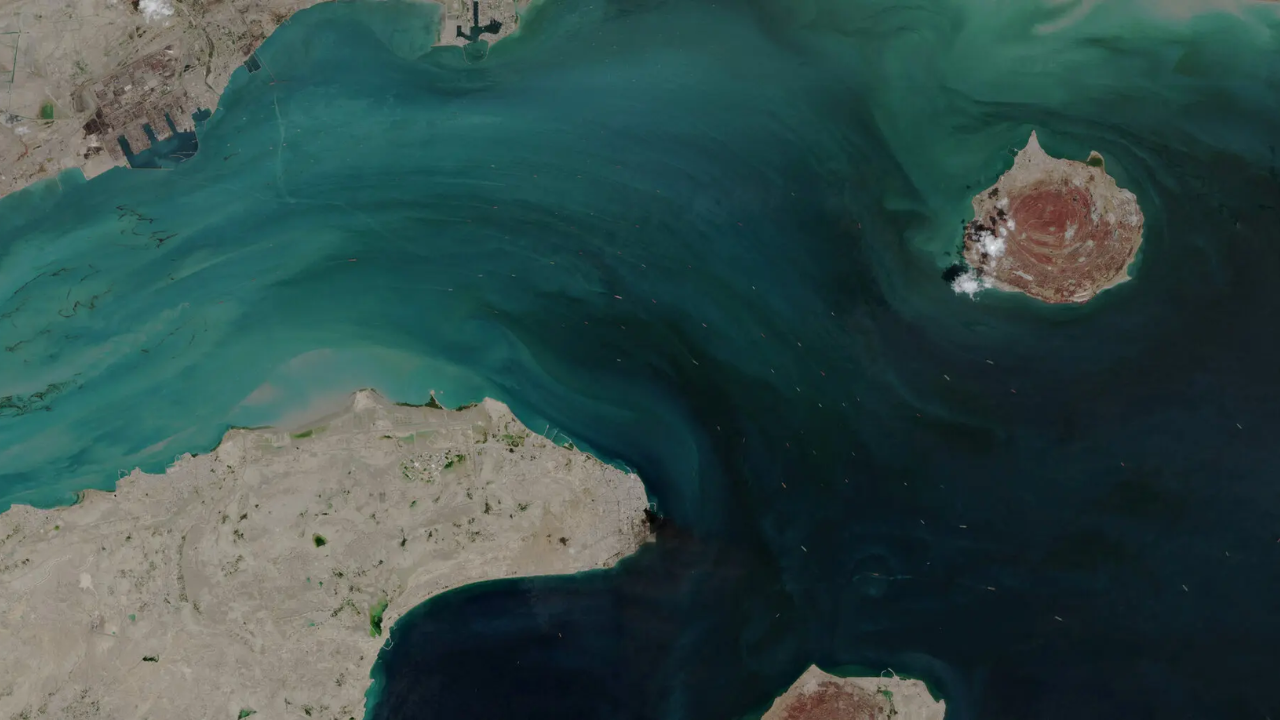
For years, the West argued that a nuclear-armed Iran would be the ultimate “game over” for regional stability. However, the recent conflict with the U.S. and Israel has revealed that Iran already possessed a “geographic nuclear weapon”: The Strait of Hormuz.
1. The Power of the Choke Point
- Global Pain: By flexing control over shipping, Iran has triggered worldwide inflation in gasoline and fertilizer prices.
- The “Textbook” Shift: Analysts now believe that closing the strait will be Iran’s first move in any future conflict. As former Israeli intelligence head Danny Citrinowicz puts it: “You cannot beat geography.”
2. A Resilient Arsenal
- Drones: Roughly 40% of their attack drone fleet survived.
- Missile Launchers: Roughly 60% are still operational after being dug out of caves and bunkers.
- Missiles: Estimates suggest Iran could reclaim up to 70% of its stockpile as recovery efforts continue.
3. The Blockade & The Deadlock
In a bold counter-move, the U.S. has initiated its own naval blockade, forcing cargo ships into Iranian ports. This has effectively paralyzed 90% of Iran’s trade (valued at $340M per day).
- The Standoff: Iran views this as an act of war, yet both sides appear to be holding their breath during the current ceasefire.
- Mixed Signals: While President Trump and Iranian civilians claim the waterway is “open,” the IRGC insists it remains closed—highlighting a deep rift within the Iranian leadership following the death of Ayatollah Khamenei.
The Bottom Line
The U.S.-led campaign may have damaged the regime’s structure, but it has not reopened the world’s most vital artery. As Russia’s Dmitri Medvedev noted, the Strait of Hormuz is a weapon with “inexhaustible” potential. Iran has proven that even without a nuclear bomb, it can still hold the global economy in its grip.

Suresh holds a Master of Commerce (M.Com) degree and is a dedicated personal finance researcher and writer. Combining his advanced academic background in commerce with deep industry research, he covers complex topics like taxation, banking systems, credit analysis, and personal finance strategies. As the founder of Tax Assistant (taxassistant.org), Suresh is committed to translating complicated financial guidelines and economic data into simple, accurate, and actionable educational resources for everyday readers.