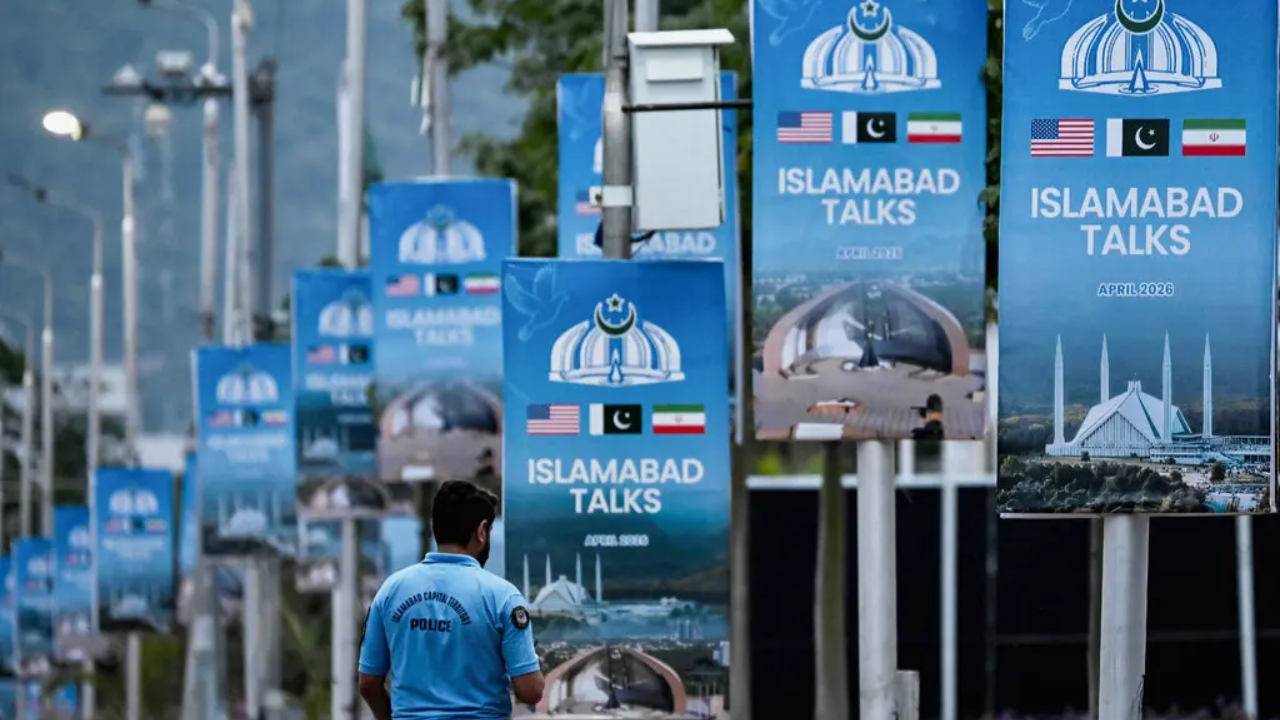
As the 2026 Iran War reaches a defining crossroads, President Trump has confirmed that a high-level U.S. delegation will arrive in Islamabad on Monday evening. Despite a fragile ceasefire, the diplomatic path forward remains steep, with both nations signaling significant friction over the final terms of a peace agreement.
Developing Situations
- The Islamabad Summit: Pakistan continues its role as the primary mediator. While President Trump has signaled that a deal is within reach, Tehran’s leadership maintains that the parties remain “far apart” on core security guarantees and the lifting of economic blockades.
- Strait of Hormuz Gridlock: The world’s most vital energy artery remains largely paralyzed. After a brief window of movement on Friday, Iran has clamped down on transit again, citing the ongoing U.S. naval presence. Multiple tankers have reportedly been turned back or intercepted over the last 24 hours.
- The Lebanon Contradiction: A major rift has emerged regarding the scope of the truce. Iran insists the ceasefire covers all regional proxies, while U.S. and Israeli operations in Lebanon have continued, leading to accusations of bad-faith negotiations from the Iranian side.
Current Conflict Snapshot
| Factor | Current Status |
| Ceasefire Status | Active but fragile (started April 8) |
| Strait of Hormuz | Closed to most commercial traffic |
| Primary Friction | Linkage of the Iran deal to the Lebanon conflict |
| U.S. Strategy | Maintaining the blockade to leverage a “Final Deal” |
What’s at Stake?

Suresh holds a Master of Commerce (M.Com) degree and is a dedicated personal finance researcher and writer. Combining his advanced academic background in commerce with deep industry research, he covers complex topics like taxation, banking systems, credit analysis, and personal finance strategies. As the founder of Tax Assistant (taxassistant.org), Suresh is committed to translating complicated financial guidelines and economic data into simple, accurate, and actionable educational resources for everyday readers.