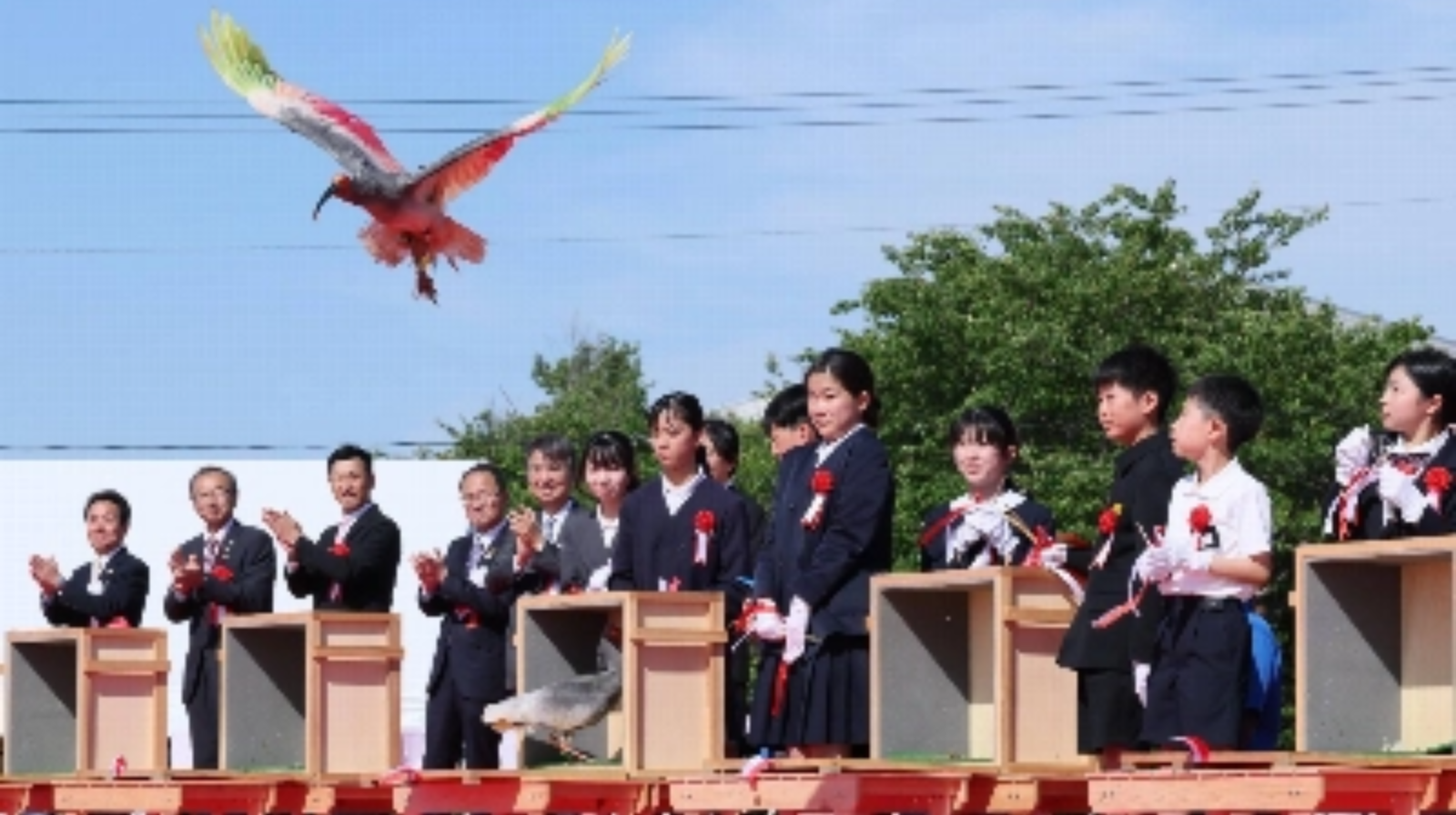
The skies over Japan’s main island are looking a little more majestic. The Ishikawa prefectural government recently released 10 additional crested ibises into the wild in Hakui, a city nestled on the Noto Peninsula.
Thank you for reading this post, don't forget to subscribe!Combined with an initial release of eight birds, a total of 18 ibises are now officially roaming Japan’s main island of Honshu—a monumental milestone for wildlife conservation.
A Tale of Two Releases: Hard vs. Soft
To study how the birds adapt to their new surroundings, conservationists utilized two completely different release strategies:
- The “Hard Release” (May 31): The first eight ibises were released directly from their transport boxes all at once during an official ceremony attended by Crown Prince Akishino and Crown Princess Kiko.
- The “Soft Release” (June 14): For the second group of 10, scientists took a gentler approach. The birds were placed in temporary acclimatization cages for two weeks to adjust to the local environment. When the cage doors were opened, the birds were allowed to leave at their own pace. Within a few hours, all 10 had successfully taken flight.
Why This is a Historic Win
The crested ibis (toki) is deeply woven into Japan’s cultural fabric and holds the status of a “special natural monument.” Tragically, a combination of overhunting and habitat loss led to the extinction of Japan’s native population in 2003.
Thanks to a highly successful captive breeding program using birds gifted by China, conservationists successfully rebuilt a population of over 500 ibises on Sado Island. However, this Ishikawa rollout marks the first time in 56 years that the iconic birds have flown wild over Honshu, where the last wild ibis was captured in 1970.
More Than Conservation: A Symbol of Rebirth
This environmental victory carries profound emotional weight for the local community. The Noto Peninsula is still actively recovering from the devastating earthquake that struck on New Year’s Day. For residents, watching these majestic birds soar over the region’s pesticide-reduced rice paddies has become a powerful symbol of resilience, healing, and post-disaster renewal.
The momentum isn’t stopping here—local conservation groups are already preparing for the next round of releases, scheduled to take place in the neighboring town of Nakanoto this coming September.
Editing by- katie willimas