The idea sounds like the ultimate political win: completely abolish the federal income tax, get rid of Form 1040, and fund the entire US government by leveling tariffs on foreign goods instead.
It is a fascinating concept that takes America back to its 19th-century fiscal roots. However, when you look at modern economic data, you run into an brutal reality: the math simply does not work.
To understand why this fiscal swap is structurally impossible, we have to look at the massive chasm between what Americans earn versus what the country imports.
1. The Revenue Chasm
The core issue is a fundamental mismatch in size. The US “tax base” for personal and corporate income is massive, while our total pool of foreign imports is relatively tiny.
| Fiscal Category | Approximate Annual Amount |
| Federal Income Taxes Collected (Individual & Corporate) | $2.5 to $3.1 Trillion |
| Total Value of All US Goods Imports (The Tariff Base) | $3.1 to $3.4 Trillion |
| Current Tariff Revenue | $80 to $250 Billion |
To completely wipe out the income tax, the federal government would need to extract nearly $3 trillion in tax revenue out of roughly $3.3 trillion worth of total imports.
2. Test the Math Yourself
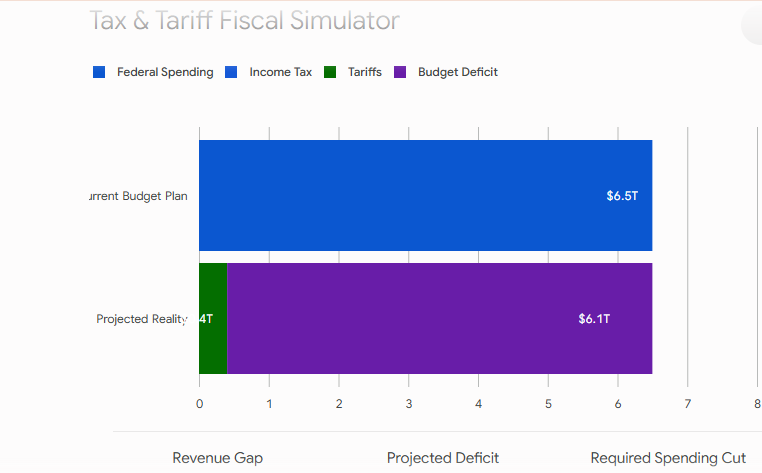
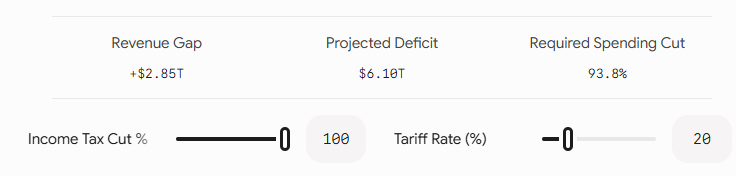
To see how this “Tariffs-Only” math breaks down under different scenarios, use the interactive calculator below. Adjust the tax cuts and tariff rates to see the immediate impact on the national deficit and government stability.
3. The Three Economic Dead Ends
If a government attempted to force this transition, it would instantly trigger three major economic crises:
The Tariff Paradox (The Laffer Curve)
If you levy a modest 10% tariff, you raise decent revenue. But to replace the income tax, you would need an across-the-board tariff of nearly 90%. At that price point, foreign goods become completely unaffordable, and Americans stop buying them altogether.
The Irony: The more “successful” a tariff is at blocking foreign products to protect domestic factories, the less money the government collects. If imports drop to zero, tariff revenue drops to zero, leaving the government entirely unfunded.
Shifting the Burden to the Working Class
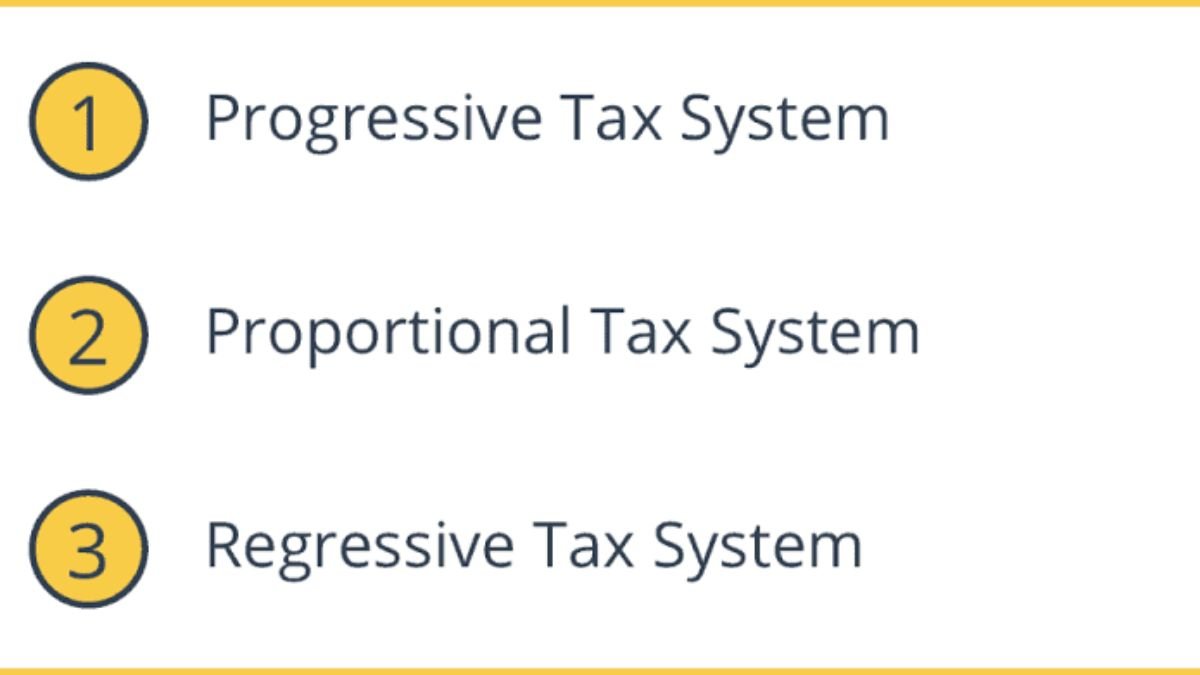
The US income tax is progressive—higher earners pay a steeper percentage. Tariffs, however, act like a national sales tax. Because lower- and middle-income families spend a significantly larger percentage of their paychecks on everyday physical goods (clothes, groceries, electronics, cars) than the ultra-wealthy do, switching to a tariffs-only model would cause a massive, regressive tax hike on the working class.
Savage Spending Cuts or Fiscal Collapse
The US actually did fund itself primarily through tariffs during the 1800s. But back then, the federal government didn’t fund Social Security, Medicare, or a massive global military—federal spending was just 2% of GDP. Today, it sits around 20% to 24% of GDP.
Axing the income tax leaves a massive gap that forces two impossible choices:
- Letting the national deficit explode by trillions of dollars a year, risking hyperinflation.
- Cutting federal spending by 35% to 40%, which would require drastically dismantling national defense and social safety nets.
The Bottom Line
Targeted tariffs are a useful geopolitical tool for protecting critical domestic industries or countering foreign monopolies. However, treating them as a replacement for the federal income tax is a mathematical mirage. You cannot fund a 21st-century superpower using a 19th-century tax code.
Editing by-katie willimas

Suresh holds a Master of Commerce (M.Com) degree and is a dedicated personal finance researcher and writer. Combining his advanced academic background in commerce with deep industry research, he covers complex topics like taxation, banking systems, credit analysis, and personal finance strategies. As the founder of Tax Assistant (taxassistant.org), Suresh is committed to translating complicated financial guidelines and economic data into simple, accurate, and actionable educational resources for everyday readers.