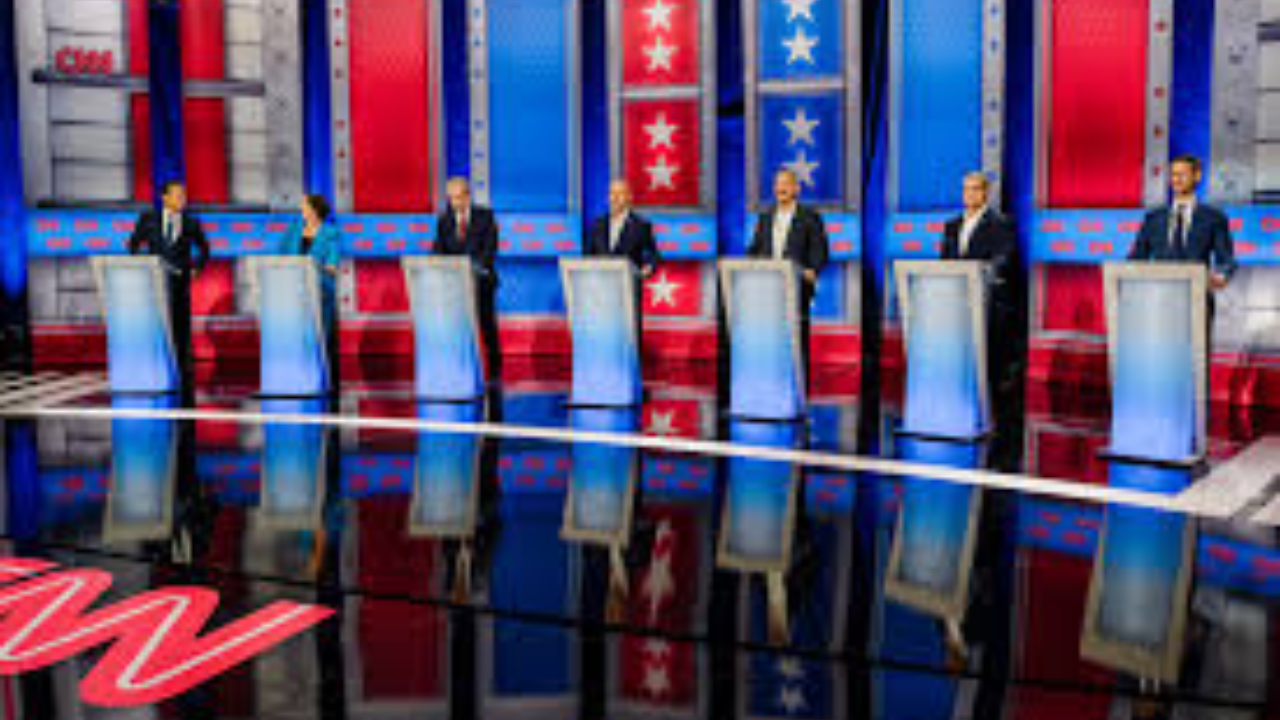
With the June primary looming and mail-in ballots already hitting mailboxes, eight candidates vying to succeed Governor Gavin Newsom took the stage on April 28, 2026. The night was characterized by high-stakes sparring and a “chaotic” atmosphere as the crowded field fought for oxygen.
1. Xavier Becerra Faces the Heat
As the perceived frontrunner, former HHS Secretary Xavier Becerra spent the evening as the primary target for both sides of the aisle. While he leaned heavily on his resume—arguing that the Governor’s office isn’t for “training wheels”—he was forced to defend his record on the state’s insurance crisis and his pandemic-era decisions.
2. A Chaotic Stage Dynamic
The eight-person format proved difficult for moderators and viewers alike. Frequent interruptions and “sharp elbows” led to an unwieldy debate where candidates prioritized viral soundbites over deep policy dives. The tension was palpable enough that even an audience member described the proceedings as “a bit of a mess” during the Q&A portion.
3. National Politics in a State Race
The shadow of Donald Trump loomed large over the California stage. Democrats, led by Becerra, framed the election as a bulwark against Trump’s influence. Conversely, Republican candidates Steve Hilton and Chad Bianco leaned into the former President‘s endorsement, arguing that 16 years of “one-party rule” have left the state unaffordable.
4. Ideological Rifts Between Democrats
The debate highlighted a lack of unity within the Democratic party:
- Katie Porter and Tom Steyer clashed over corporate influence and fossil fuel history.
- Matt Mahan positioned himself as a pragmatist, criticizing fellow Democrats for failing to deliver results on homelessness and crime.
- Antonio Villaraigosa and Tony Thurmond worked to carve out space between the more progressive and moderate wings of the party.
5. The Focus on “Kitchen Table” Issues
While many topics were touched upon, the home insurance crisis and cost of living dominated the substantive portions of the night.
- Becerra’s proposal to freeze insurance rates was a major flashpoint.
- Critics like Hilton and Mahan dismissed the freeze as a “temporary band-aid” that ignores the underlying economic issues driving providers out of the state.
The Lineup:
The stage featured Democrats Xavier Becerra, Katie Porter, Tom Steyer, Matt Mahan, Tony Thurmond, and Antonio Villaraigosa, alongside Republicans Steve Hilton and Chad Bianco.

Suresh holds a Master of Commerce (M.Com) degree and is a dedicated personal finance researcher and writer. Combining his advanced academic background in commerce with deep industry research, he covers complex topics like taxation, banking systems, credit analysis, and personal finance strategies. As the founder of Tax Assistant (taxassistant.org), Suresh is committed to translating complicated financial guidelines and economic data into simple, accurate, and actionable educational resources for everyday readers.