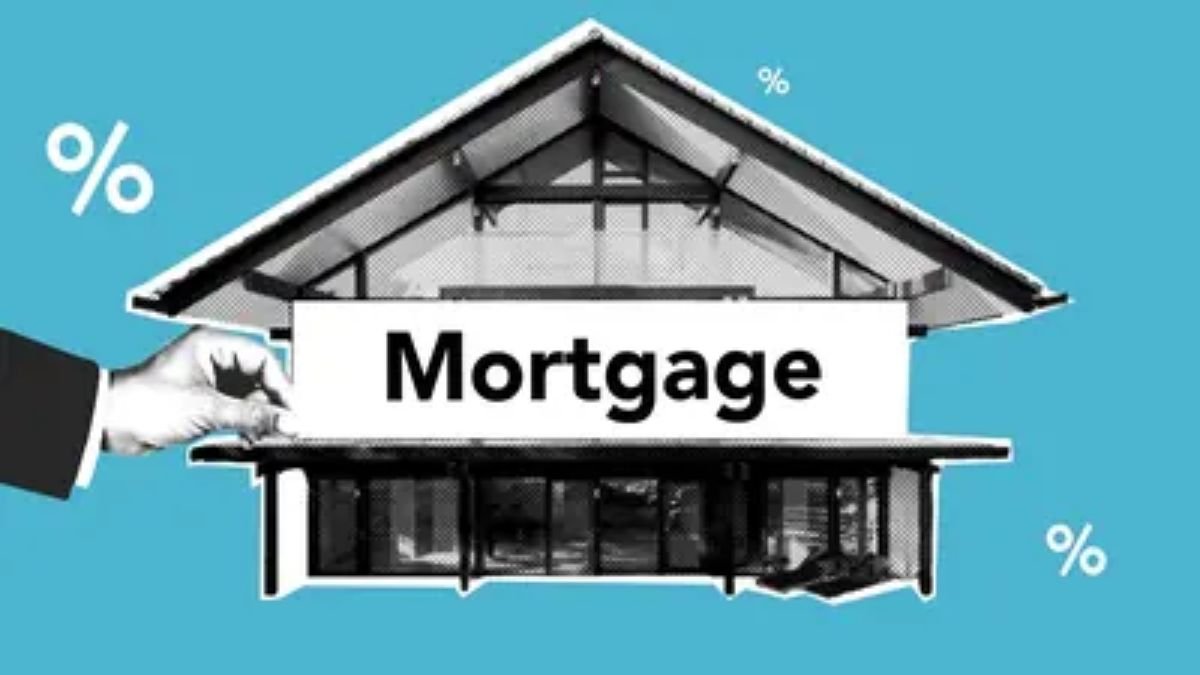
According to the Zillow lender marketplace, mortgage rates backed off today, Thursday, October 1, 2026, as expectations for a Fed rate increase in October shifted lower.
The 30-year fixed-rate purchase loan fell 12 basis points to 7.24%; the 15-year fixed purchase loan decreased by 8 basis points to 6.70%; and the 5/1 ARM purchase rate fell 6 basis points to 6.72%.
Today’s mortgage rates
Here are the current purchase mortgage rates for today, Thursday, October 1, 2026, according to the latest Zillow data:
- 30-year fixed: 7.24%
- 20-year fixed: 7.12%
- 15-year fixed: 6.70%
- 5/1 ARM: 6.72%
- 7/1 ARM: 6.46%
- 30-year VA: 6.97%
- 15-year VA: 6.36%
- 5/1 VA: 6%
Remember, these are the national averages and rounded to the nearest hundredth.
Today’s mortgage refinance rates
Here are the current refinance mortgage rates for today, Thursday, October 1, 2026, according to the latest Zillow data:
- 30-year fixed: 7.40%
- 20-year fixed: 7.35%
- 15-year fixed: 6.84%
- 5/1 ARM: 6.85%
- 7/1 ARM: 6.74%
- 30-year VA: 7.02%
- 15-year VA: 6.70%
- 5/1 VA: 6.02%
As with mortgage rates for purchase, these are national averages that we’ve rounded to the nearest hundredth. Refinance rates can be higher than purchase mortgage rates, but that isn’t always the case.
Monthly mortgage payment calculator
Use the mortgage calculator below to see how various mortgage rates will impact your monthly payments.
Monthly Mortgage Payment Calculator
You can bookmark the tax assistant mortgage payment calculator and keep it handy for future use, as you shop for homes and lenders. Be sure to use the dropdown to include private mortgage insurance costs and HOA dues if they apply to you. These monthly expenses, along with your mortgage principal and interest rate, will give you a realistic idea of what your monthly payment could be.
How do mortgage rates work?
A mortgage interest rate is the fee charged by a lender for borrowing money, expressed as a percentage. There are two basic types of mortgage rates: fixed and adjustable rates.
A fixed-rate mortgage locks in your rate for the entire life of your loan. For example, if you get a 30-year mortgage with a 6% interest rate, your rate will remain at 6% for the entire 30 years. (Unless you refinance or sell the home.)
An adjustable-rate mortgage keeps your rate the same for the first few years, then changes it periodically. Let's say you get a 5/1 ARM with an introductory rate of 6%. Your rate would be 6% for the first five years, and then the rate would increase or decrease once per year for the last 25 years of your term. Whether your rate goes up or down depends on several factors, such as the economy and the U.S. housing market.
At the beginning of your mortgage term, most of your monthly payment goes toward interest. As time passes, less of your payment goes toward interest, and more goes toward the mortgage principal or the amount you originally borrowed.
How are mortgage rates determined?
Two categories determine mortgage rates: those you can control and those you cannot.
What factors can you control? First, you can compare the best mortgage lenders to find the one that gives you the lowest rate and fees.
Second, lenders typically extend lower rates to people with higher credit scores, lower debt-to-income (DTI) ratios, and considerable down payments. If you can save more or pay down debt before securing a mortgage, a lender will probably give you a better interest rate.
What factors can you not control? In short, the economy.
The list of ways the economy impacts mortgage rates is long, but here are the basic details. If the economy — for example, employment rates — is struggling, mortgage rates decrease to encourage borrowing, which helps boost the economy. If the economy is strong, mortgage rates go up to temper spending.
With all other factors being equal, mortgage refinance rates are typically slightly higher than purchase rates. So don't be surprised if your refinance rate is higher than you may have expected.
30-year vs. 15-year fixed mortgage rates
Two of the most common mortgage terms are 30-year and 15-year fixed-rate mortgages. Both lock in your rate for the entire loan term.
A 30-year mortgage is popular because it has relatively low monthly payments. But it comes with a higher interest rate than shorter terms, and because you're accumulating interest for three decades, you'll pay a lot of interest in the long run.
A 15-year mortgage can be a good choice because it has a lower rate than you'll get with longer terms, so you'll pay less in interest over the years. You'll also pay off your mortgage much faster. But your monthly payments will be higher because you're paying off the same loan amount in half the time.
Basically, 30-year mortgages are more affordable from month to month, while 15-year mortgages are cheaper in the long run.
Refinance loans generally carry slightly higher interest rates because lenders often view them as carrying higher risk or administrative costs compared to original purchase loans. However, depending on market conditions, lender competition, or specific loan programs (like certain VA or FHA streamline options), refinance rates can occasionally match or beat purchase rates.
30-Year Fixed: Offers lower, more affordable monthly payments because the loan is stretched over three decades. However, it carries a higher interest rate, resulting in significantly higher total interest costs over time.
15-Year Fixed: Offers lower interest rates and allows you to pay off your home twice as fast, saving tens of thousands in interest. However, monthly principal and interest payments are higher.
A 5/1 ARM provides a fixed introductory interest rate for the first 5 years. Starting in year 6, the rate adjusts once per year (the "1" in 5/1) for the remaining 25 years based on broader economic indicators and U.S. housing market conditions.
Mortgage rates are influenced by two sets of factors:
Factors you can control: Your credit score, debt-to-income (DTI) ratio, down payment size, and shopping around across multiple lenders.
Factors outside your control: Broad economic conditions, inflation, employment levels, and Federal Reserve policy.
Your total monthly housing cost typically includes:
Principal & Interest: Your core mortgage loan payment.
Property Taxes & Homeowners Insurance: Often held in an escrow account.
Private Mortgage Insurance (PMI): Required if your down payment is less than 20% on conventional loans.
HOA Dues: Fees charged by a homeowners association, if applicable.

Manoj Sharma is a Senior Writer on the banking team at Tax Assistant. He provides information on budgeting, bank accounts, the banking industry, and other related topics. Using original data and methodologies, he helps you identify the best financial institutions, accounts, and products tailored to your needs. Manoj holds a degree in Journalism and Political Science from Syracuse University. All articles are strictly reviewed and fact-checked by our panel of expert Chartered Accountants, including CA Devendra Saini, CA Nikhil Khunteta, and CA Ankit Goyal