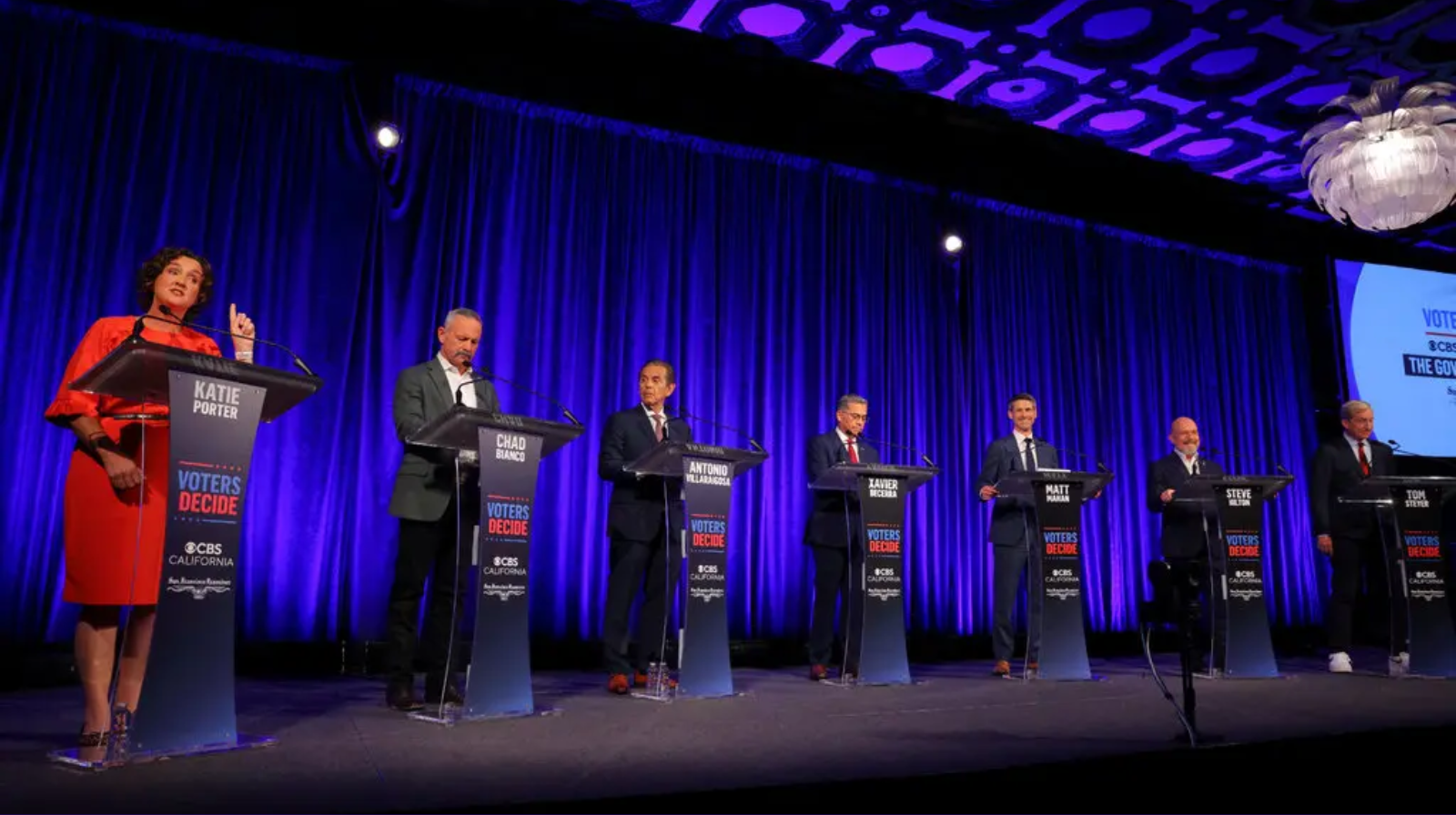
The 2026 California gubernatorial debate on May 14 was a high-octane preview of the June primary. With the stage packed with front-runners and firebrands, the evening was defined by sharp ideological divides and calculated political theater.
Here are the five standout moments from the CBS News/San Francisco Examiner showdown:
1. The Return of the White Board
Katie Porter leaned into her signature brand of “oversight via office supplies.” During a direct confrontation with Xavier Becerra, Porter produced a white notebook to diagram his past positions on single-payer healthcare. The visual stunt was designed to frame Becerra as a political shapeshifter, forcing the front-runner to defend his commitment to California’s version of Medicare-for-All.
2. The Extradition Litmus Test
In a moment that clarified the high stakes of the post-Roe landscape, candidates were asked if they would extradite California doctors for providing reproductive care to out-of-state patients.
- The Consensus: Democratic candidates (including Mahan and Steyer) stood in a unified front, refusing to comply with out-of-state warrants.
- The Contrast: Chad Bianco and Steve Hilton argued for the rule of law and interstate cooperation, creating a clear “referendum on rights” for the November general election.
3. Conflict Over “Homeless Industrial Complex”
Sheriff Chad Bianco took aim at the state’s current spending model, labeling it a “homeless industrial complex” that prioritizes non-profit funding over results. The moment turned sour for Bianco, however, when he was confronted with statistics showing significant homelessness reductions in his own jurisdiction—Riverside County—achieved through the very public-private partnerships he was criticizing.
4. Housing as a State of Emergency
Xavier Becerra dominated the housing segment by proposing a Statewide Emergency Declaration. His plan to use executive power to bypass local “NIMBY” zoning laws and environmental hurdles signaled a more aggressive state-level approach. Steve Hilton countered by championing local control, framing Becerra’s plan as an overreach that would “strip communities of their character.”
5. The “AI Climate” Frontier
Recognizing California’s role as the epicenter of the AI boom, Katie Porter introduced a new policy angle: Green AI Standards. She argued that the massive energy consumption of AI data centers is a looming climate threat. By calling for strict environmental regulations on tech infrastructure, Porter successfully pivoted the tech conversation from job growth to ecological accountability.

Suresh holds a Master of Commerce (M.Com) degree and is a dedicated personal finance researcher and writer. Combining his advanced academic background in commerce with deep industry research, he covers complex topics like taxation, banking systems, credit analysis, and personal finance strategies. As the founder of Tax Assistant (taxassistant.org), Suresh is committed to translating complicated financial guidelines and economic data into simple, accurate, and actionable educational resources for everyday readers.