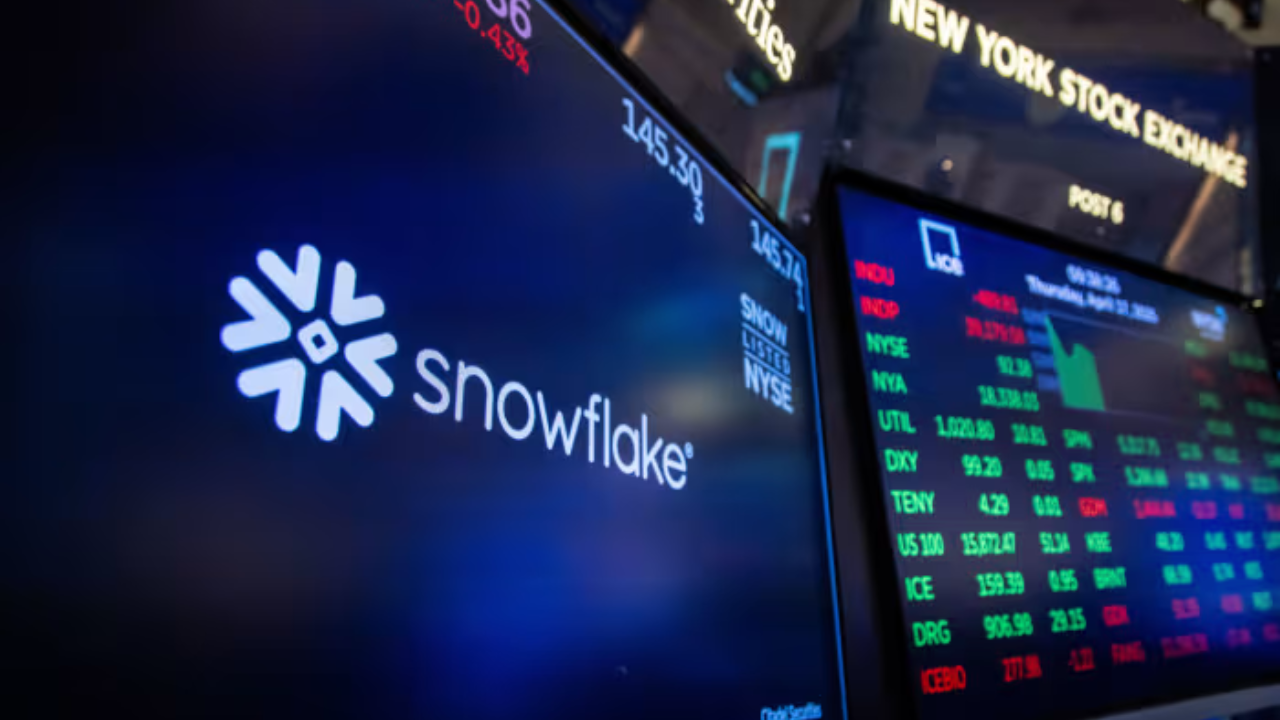
Snowflake (SNOW) shares tumbled sharply on Thursday, despite the company reporting quarterly earnings and revenue that exceeded Wall Street forecasts. This paradoxical drop occurred because a key growth metric—product revenue—decelerated, failing to meet investors’ exceptionally high expectations.
Thank you for reading this post, don't forget to subscribe!The Numbers: Beat vs. The Reality
| Metric | Result | Analyst Estimate | Context |
| Adjusted EPS | 35 cents/share | 31 cents/share | Beat |
| Total Revenue | $1.21 billion | $1.18 billion | Beat |
| Product Revenue | $1.16 billion | $1.13 billion | Beat |
| Product Revenue Growth (YoY) | 29% | N/A | The Problem: A slowdown from 32% in the prior quarter. |
The Main Investor Concern: Slowing Momentum
The primary issue was the deceleration of core Product Revenue growth to 29% year-over-year. As Guggenheim analyst John DiFucci noted, this moderation was below expectations, especially after the prior period showed significant acceleration. Because Snowflake’s stock had soared 72% this year, it was priced for aggressive, accelerating growth, and the slightest slowdown triggered a sell-off.
What Analysts Liked
Despite the stock drop, many analysts remain positive, pointing to strong leading indicators:
- Remaining Performance Obligations (RPO): The future contracted revenue grew 37% year-over-year to $7.88 billion, easily surpassing estimates of $7.43 billion.
- Strong Bookings: Citi analyst Tyler Radke highlighted that bookings were “very strong,” suggesting future growth is encouraging.
- Outlook: Snowflake’s full-year product revenue outlook of $4.45 billion was also raised above analyst consensus.
The AI Narrative and Strategic Moves
CEO Sridhar Ramaswamy emphasized Snowflake’s role as a “cornerstone” for customer data and AI strategies. The company underscored its commitment to the AI trend by announcing an expanded, multiyear, $200 million partnership with AI company Anthropic to integrate their Claude models onto the Snowflake platform. However, some analysts suggested the focus on AI was an attempt to distract from the revenue deceleration.
In summary, the stock fell not because of poor results, but because the 29% product revenue growth did not meet the “buy-side expectations” required to justify its premium valuation.