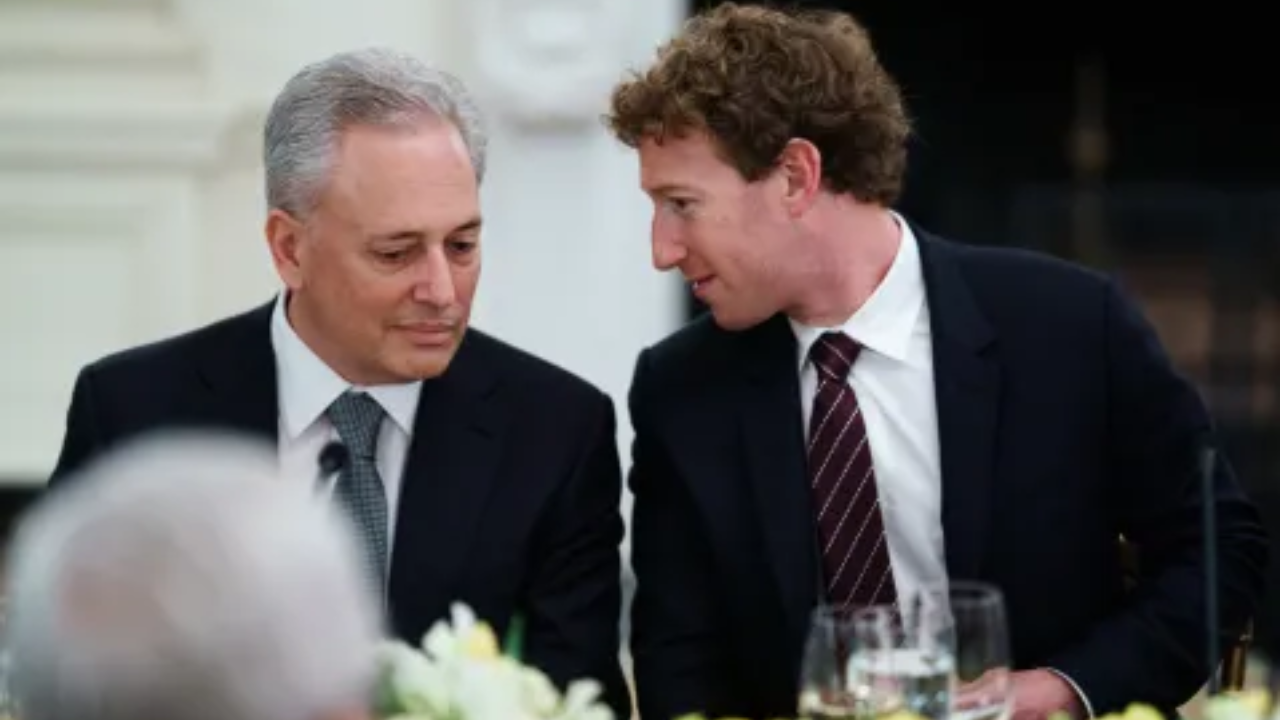
Tech investor David Sacks, serving as the Trump administration’s unpaid “special government employee” (or czar) for AI and crypto, is facing scrutiny regarding potential conflicts of interest. The New York Times reports that Sacks has been effective at advancing policies that could financially benefit his extensive portfolio of tech investments, which include companies like Anduril and Palantir.
Thank you for reading this post, don't forget to subscribe!Specifically, Sacks has reportedly advocated for the removal of government obstacles facing AI companies and made policy recommendations that run contrary to national security advice. He even co-hosted an AI summit with President Trump through his own media company. While Sacks’s representatives state he sold specific investments (Amazon, Meta, xAI) to take the role, former Trump adviser Steve Bannon criticized the situation, calling the actions of the tech oligarchs “out of control.”
Intel: Gelsinger Reflects on Corporate Decay
Former Intel CEO and long-time veteran Pat Gelsinger weighed in on the chipmaker’s recent struggles, stating that the company’s “decay” before his return was “deeper and harder than I’d realized.” Gelsinger noted a critical lapse in execution, pointing out that in the years prior, “not a single product was delivered on schedule.” This allowed rival TSMC to take on the manufacturing of some of Intel’s own chips.
Gelsinger also expressed frustration over the CHIPS Act, which he helped lobby for, calling the delay in disbursing the tens of billions in federal funding “hideous.” Though he supports the federal stake in Intel, he believes that the true driver for bringing chipmaking back to the US will be “economic dislocation” and aggressive competitive tactics.
Massive Data Leak at Coupang
Coupang, often called South Korea’s Amazon, is under official investigation following a major data leak that exposed the personal information of nearly 34 million accounts. This is an immense figure for a nation of about 52 million people.
The breach, discovered on November 18 but dating back to late June, involved the exposure of sensitive customer details, including names, email addresses, shipping addresses, and phone numbers. The alleged culprit is a Chinese national who was a former employee. Coupang’s CEO has announced a review of the company’s data security systems, while South Korea’s Ministry of Science and ICT is examining whether the retailer violated national data protection rules, which can result in severe financial penalties, as seen in a prior $97 million fine against SK Telecom.
Quick Tech Bytes
- Airbus: Ordered a software rollback on 6,000 A320-series aircraft due to concerns that solar radiation had corrupted flight control data.
- Black Friday: AI-driven traffic to US retail sites surged by an astonishing 805% compared to last year.
- AI Models: Chinese open-source AI models are gaining popularity among US startups.
- Databricks Valuation: The San Francisco startup is reportedly raising $5 billion at a valuation of $134 billion.
- Micron Investment: The chip company plans to invest $9.6 billion in Japan to construct a new memory chip manufacturing facility.
- AI in Peer Review: Approximately one in five peer reviews submitted at a major AI conference were found to be generated by AI.