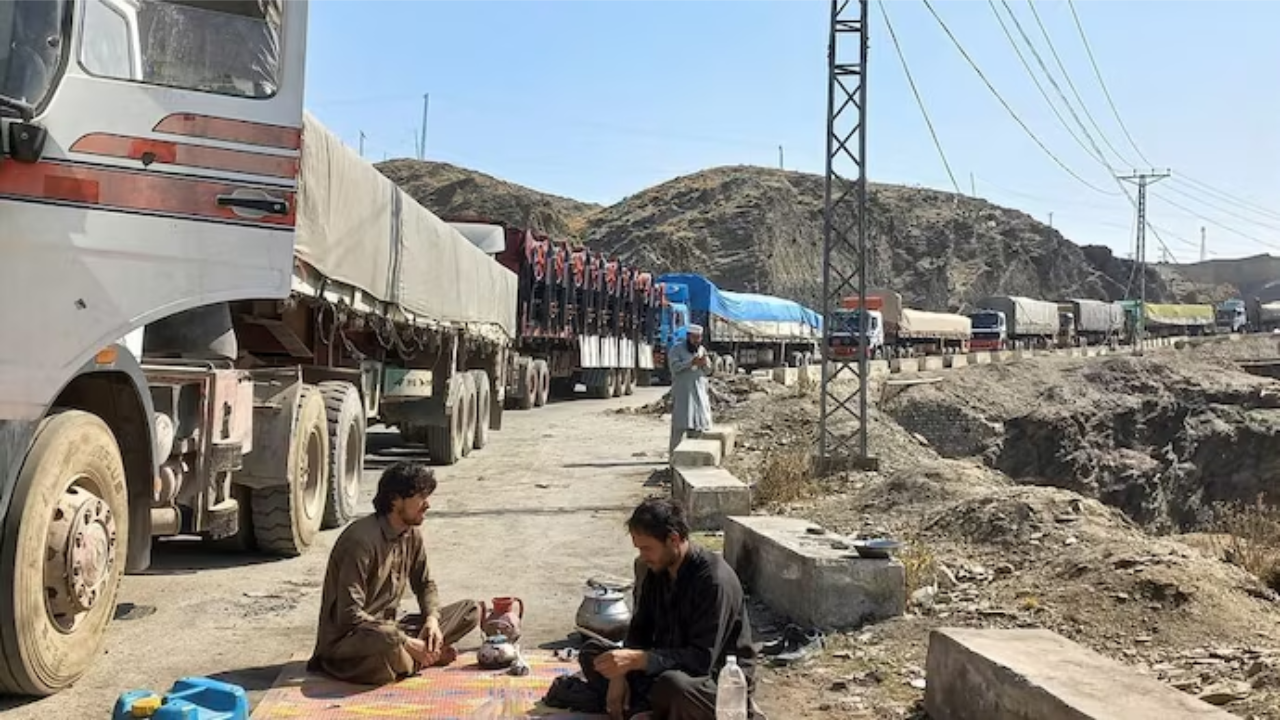
Pakistan’s decision to halt trade with Afghanistan, controversially dubbed a “blessing in disguise” by Defence Minister Khawaja Asif, is proving to be a self-inflicted economic wound. While Islamabad aimed to exert pressure on the Taliban regime, the resulting trade war has severely impacted Pakistan’s own fragile economy, forcing Afghanistan to pivot to alternative partners like Iran, India, and Central Asian republics.
Thank you for reading this post, don't forget to subscribe!The warning issued by Pakistan’s DG ISPR, Lieutenant General Ahmed Sharif Chaudhry—”blood and business cannot go together”—now appears to have boomeranged, primarily hurting Islamabad. Following a brief border clash and the mass expulsion of Afghan nationals, bilateral relations have sunk to their lowest point, and the consequences of the trade blockade are falling disproportionately on Pakistan.
Severe Economic Blow to Pakistan
Since the closure of border trade points on October 11, Pakistan has taken a significant hit, undermining its trade, manufacturing, and export sectors.
- Financial Losses: Pakistani businessmen reported losing trillions of rupees due to the 45-day closure of the Durand Line crossings, prompting them to rush to political leaders, demanding intervention.
- Industry Outcry: The Pathan-dominated Khyber Pakhtunkhwa province, where manufacturers and traders are heavily reliant on this commerce, erupted in protest, demanding the immediate lifting of the ban.
- Widespread Disruption: The standoff has not only frozen two-way trade but has also triggered shortages, price spikes, and production disruptions across key Pakistani industries.
Key Sectors Facing Collapse
The ripple effects of the trade closure are most acutely felt in crucial Pakistani sectors:
| Sector | Impact Summary | Financial/Material Consequence |
| Cement Manufacturing | Worst Hit. Imports of Afghan coal (a cheaper resource) halted, and cement exports stopped. | Forced to switch to far costlier coal from South Africa/Indonesia. Local coal prices shot up from PKR 30,000 to PKR 42,000–45,000 per tonne. |
| Pharmaceuticals | Exports virtually collapsed, with many consignments stuck. | Pakistan previously exported US$187 million worth of medicines annually to Afghanistan. Unregistered drugs cannot be rerouted locally, leading to major losses. |
| Agriculture (Fruits/Veggies) | Perishable goods exports (a vital income source) largely frozen; shipments destroyed. | Prices of imported fruits doubled in Pakistan for consumers. Exporters are writing off entire consignments. |
| Revenue & Employment | Sharp drop in tax collection from transit duties and customs. | Small traders face bankruptcy, transporters accrue debt, and widespread joblessness is feared among laborers. |
Afghanistan Pivots, Leaving Pakistan Behind
Despite Afghanistan being one of the world’s poorest countries (with a projected GDP per capita of only $434 and over 64% of its population in poverty), the Taliban regime has proven adaptable by actively diversifying its trade routes and partners.
- New Corridors: Afghanistan is now redirecting commerce through Iran, India, and the Central Asian republics.
- Courting India: Two recent Afghan delegations, including the Minister of Industry and Commerce, visited India to open trade and court investments.
- Official Warning: Afghanistan’s Deputy PM for Economic Affairs, Mullah Ghani Baradar, explicitly told traders to “Immediately seek alternative routes to Pakistan,” threatening to withhold cooperation if problems arise for those using Pakistani routes.
The crisis prompted the UN to urge Islamabad to reconsider its decision. Foreign Minister Ishaq Dar confirmed he would discuss the matter with the Prime Minister and Army Chief. Ultimately, while Pakistan’s defense minister called the closure a security benefit, ordinary Pakistani businesses and workers are bearing the overwhelming economic cost.