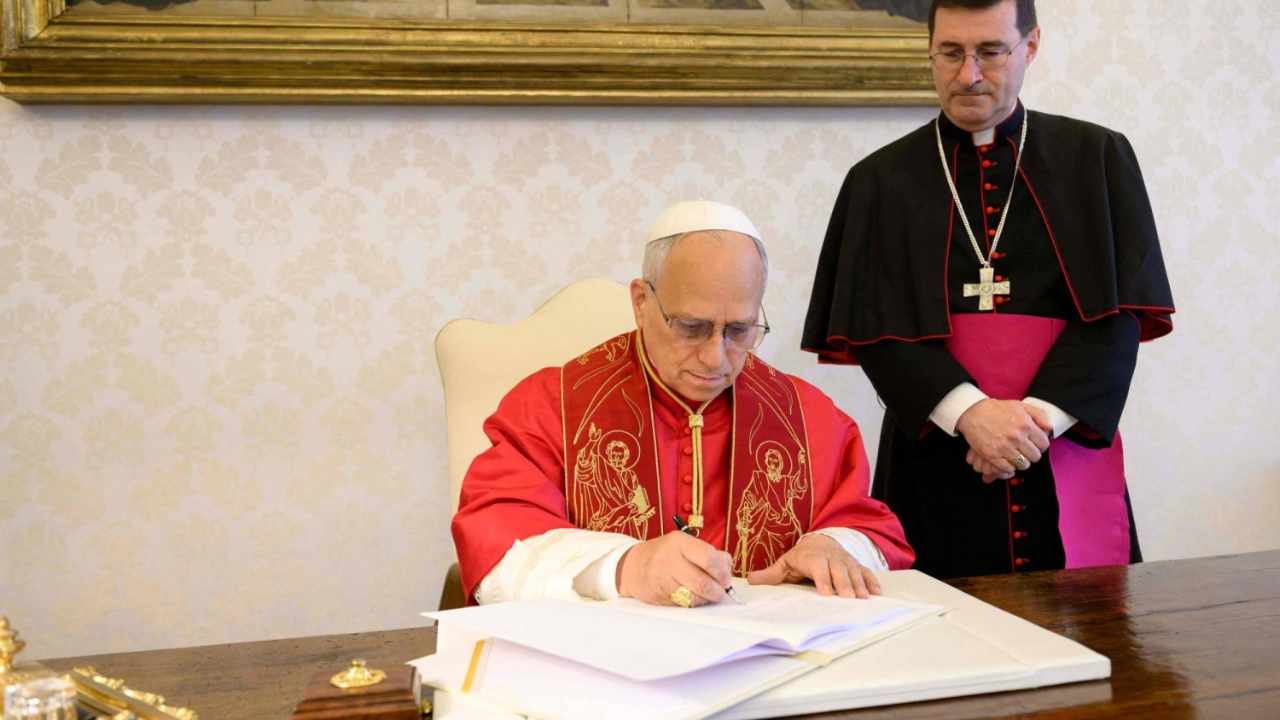
In a historic and sweeping moral intervention, Pope Leo XIV has issued his highly anticipated first encyclical, Magnifica Humanitas (“Magnificent Humanity”).
By demanding that artificial intelligence be “disarmed,” the Pope is drawing a direct, deliberate parallel to the Catholic Church’s long-standing fight against nuclear weapons. He warns that without urgent regulation, AI risks transitioning from a tool of human progress into an unstoppable force of global domination.
What Does it Mean to “Disarm” AI?
The Pope clarified that “disarming” AI does not mean halting human innovation or rejecting technology. Instead, it means stripping AI of its weaponization—both literally on the battlefield and metaphorically in the corporate race for algorithmic supremacy.
“To disarm does not mean rejecting technology, but preventing it from dominating humanity… Artificial Intelligence now demands to be disarmed, freed from logics that turn it into an instrument of domination, exclusion and death.” — Pope Leo XIV
4 Core Pillars of the Papal Warning
1. The Death of “Just War”
The encyclical takes an uncompromising stance against autonomous weapons. The Pope declared that delegating life-or-death decisions to automated systems is entirely “not permissible.” Because algorithms cannot understand the value of human life, the Pope boldly stated that rapid AI advancement has rendered the Church’s traditional “just war” theory officially outdated.
2. Breaking the Big Tech Monopoly
The Vatican fiercely criticized the concentration of data, infrastructure, and computational power within a handful of private Silicon Valley corporations. The Pope warned against leaving global morality in the hands of a small technocratic elite, noting that algorithmic bias heavily exploits and excludes vulnerable populations—especially children.
3. A Call for Hard Regulation
Moving past vague ethical guidelines, the Church is demanding concrete legal frameworks, strict public transparency, and independent oversight. Symbolically, the Vatican launched the document alongside Chris Olah, the co-founder of AI safety lab Anthropic, emphasizing that tech developers face intense commercial pressures and desperately need external, civil, and religious boundaries.
4. Human Dignity Over Digital Efficiency
The Pope issued a stark warning against a posthumanist future that views human beings as mere data points. He reminded the world that machines cannot feel joy, form relationships, or experience love, arguing that AI must be designed to support human labor rather than cause mass economic displacement.
The Big Picture
This landmark address represents the most significant religious and moral intervention into the digital age to date. By drawing a line in the sand, Pope Leo XIV has set up a massive philosophical clash with tech executives and political administrations currently pushing for aggressive AI deregulation.
For a deeper look into the Vatican’s visual presentation and global reactions, you can watch the France 24 News Segment on the Pope’s AI Encyclical, which provides direct coverage of this historic warning.

Suresh holds a Master of Commerce (M.Com) degree and is a dedicated personal finance researcher and writer. Combining his advanced academic background in commerce with deep industry research, he covers complex topics like taxation, banking systems, credit analysis, and personal finance strategies. As the founder of Tax Assistant (taxassistant.org), Suresh is committed to translating complicated financial guidelines and economic data into simple, accurate, and actionable educational resources for everyday readers.