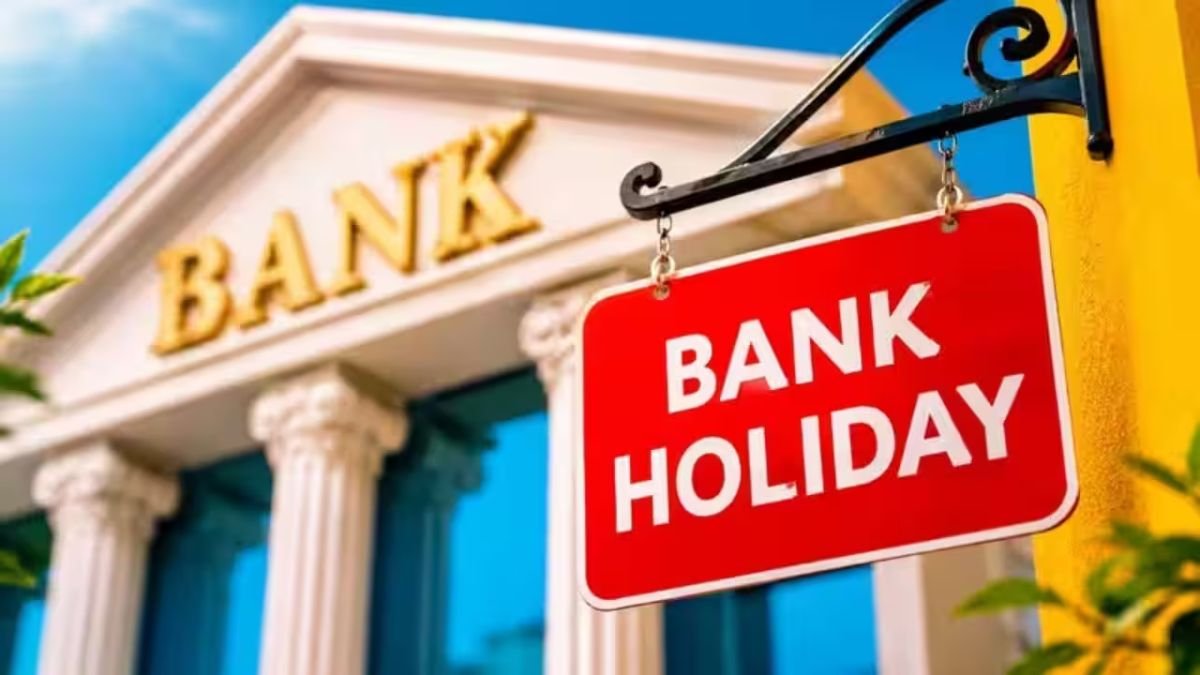
On federal bank holidays, banks all over the country close their doors for the day, and certain services are paused or delayed. And because Labor Day is a federal holiday, banks will be closed on September 7, 2026.
Read on for a full schedule of bank holidays so you can plan ahead.
Most years, there are 11 federal banking holidays. But every four years, a new president takes office. In this case, Inauguration Day pushes the number of federal bank holidays to 12.
Here’s a look at the federal banking holidays for 2026:
- Thursday, January 1: New Year’s Day
- Monday, January 19: Martin Luther King, Jr. Day
- Monday, February 16: Washington’s Birthday
- Monday, May 25: Memorial Day
- Friday, June 19: Juneteenth
- Friday, July 3: Independence Day
- Monday, September 7: Labor Day
- Monday, October 12: Columbus Day
- Wednesday, November 11: Veterans Day
- Thursday, November 26: Thanksgiving Day
- Friday, December 25: Christmas Day
Note: If a holiday falls on a weekend, there are adjustments to when banks recognize the holiday. For holidays that occur on a Saturday, the bank will be open on the preceding Friday. But if the holiday lands on a Sunday, the bank will be closed the following Monday.
Holidays when banks are typically open
Other holidays, from niche observations like Houseplant Appreciation Day to major holidays like Ramadan or Yom Kippur, aren’t federal banking holidays. Banks can adjust their hours on those holidays if they wish, but banks are usually open on those dates, and they’ll follow their normal operating schedules.
Banks usually operate normally on the following holidays:
- Valentine’s Day
- Ash Wednesday
- Ramadan
- St. Patrick’s Day
- Palm Sunday
- Good Friday
- Easter Sunday
- Passover
- Cinco de Mayo
- Mother’s Day
- Father’s Day
- Rosh Hashanah
- Yom Kippur
- Halloween
- Black Friday
- Boxing Day
- Chanukah
- Kwanzaa
- Christmas Eve
- New Year’s Eve
If you need to visit a bank in person, it’s a good idea to call the branch location ahead of time to ensure they’re open.
If you need to visit a bank in person, it’s a good idea to call the branch location ahead of time to ensure they’re open.
Other reasons your bank might be closed
The 12 federal bank holidays are the most common reasons for bank closures. However, there are other instances when banks close.
Banks may close if a natural disaster, such as a hurricane or earthquake, affects certain regions. If a storm is expected, the Office of the Comptroller of the Currency may issue a declaration to federal banks and credit unions authorizing them to close.
Banks may also close if there is an emergency declaration due to calamities or emergency conditions. One of the most famous bank closures occurred in 1933. President Franklin D. Roosevelt proclaimed a bank holiday lasting from March 6, 1933, to March 13, 1933. The week-long closure helped restore consumer confidence in the U.S. bank system as people returned their hoarded deposits.
4 ways federal banking holiday closures can affect you
Even if you do the majority of your banking via mobile app or online portal, you’ll still be affected by federal bank holidays. The holidays can impact you in the following ways:
1. You could be paid early
If you’re paid via direct deposit rather than receiving a paper check, your paycheck is transferred through the Automated Clearing House (ACH) network. The ACH network is a system connecting banks and credit unions that allows them to transfer money between them securely.
The standard practice for paydays that fall on a weekend or federal banking holiday is to pay them on the prior Friday to benefit the employee.
However, if you work for a small company or have an employer that manually processes payroll, there could be delays if they miss the earlier cut-off date for payroll submissions.
2. Bills may be processed later
Electronic bill payments, such as credit card or utility bill payments, are processed on the next business day after the federal banking holiday.
For example, let’s say your credit card payment is typically due on the 19th of the month. This year, June 19 is Juneteenth, a federal banking holiday. If you submit your payment, it won’t be processed until the next business day; in this case, it will be processed on Friday, June 20.
If the payment’s due date lands on a federal bank holiday, then any mailed payments received by the bank by the end of the next business day are considered on-time payments.
3. Check deposits may be delayed
If you deposit a check, a federal bank holiday can delay when the check clears and the money is available for your use.
For example, let’s say you deposit a check this year on Friday, Aug. 29. Normally, the check would clear and the funds would be available to you by Monday. But because Monday, Sept. 1 is a holiday, the money won’t be available for withdrawals or transfers until Tuesday, Sept. 2.
4. Branches will be closed
On federal bank holidays, banks and credit unions will close their brick-and-mortar branches. If you need to visit a teller or meet with a bank representative to discuss loan options, you’ll have to go to the branch on another day.
Services available when banks are closed
Just because banks close their branches and pause operations on federal bank holidays doesn’t mean your accounts aren’t accessible. You can still complete the following activities on bank holidays:
Transfer money between accounts with the same bank
If you have multiple accounts with the same bank, electronic transfers between accounts are often instant. You can transfer money from your checking account to your savings account online or through a mobile app, and the money will move over immediately.
Withdraw from ATM
Although bank branches are closed on federal bank holidays, you can still withdraw cash or make deposits at ATMs.
Deposit check via mobile app
Rather than depositing a check in person at a bank, you can deposit a check to your account through your bank or credit union mobile app. You can complete the deposit, which will be processed the following business day.
Open a new account online
Banks and credit unions will allow you to open new checking accounts, savings accounts, certificates of deposit (CDs), or other accounts online.
No, banks are typically open and operate on normal schedules during non-federal holidays, including Christmas Eve, New Year’s Eve, Good Friday, Easter, Ramadan, Yom Kippur, and Halloween. However, individual branches may choose to adjust or shorten their hours, so calling ahead is recommended.
If your scheduled payday falls on a federal banking holiday or weekend, the standard practice for automated ACH payroll is to process payments on the preceding Friday so you receive your funds early. If your employer processes payroll manually, however, missing early submission cutoffs could cause a brief delay.
No, electronic bill payments (such as credit cards or utilities) processed through the ACH network pause on federal holidays. Payments submitted on a banking holiday are processed on the next available business day, but mailed payments received by the end of that next business day are still considered on time.
Yes. You can withdraw cash and deposit checks or cash using ATMs. You can also deposit checks through your bank’s mobile app or complete online transfers between accounts at the same institution, which update immediately. Note that check processing for external funds will resume on the next business day.
When a official federal holiday falls on a Saturday, banks observe the holiday on the preceding Friday. If the holiday lands on a Sunday, banks observe the closure on the following Monday.

Manoj Sharma is a Senior Writer on the banking team at Tax Assistant. He provides information on budgeting, bank accounts, the banking industry, and other related topics. Using original data and methodologies, he helps you identify the best financial institutions, accounts, and products tailored to your needs. Manoj holds a degree in Journalism and Political Science from Syracuse University. All articles are strictly reviewed and fact-checked by our panel of expert Chartered Accountants, including CA Devendra Saini, CA Nikhil Khunteta, and CA Ankit Goyal