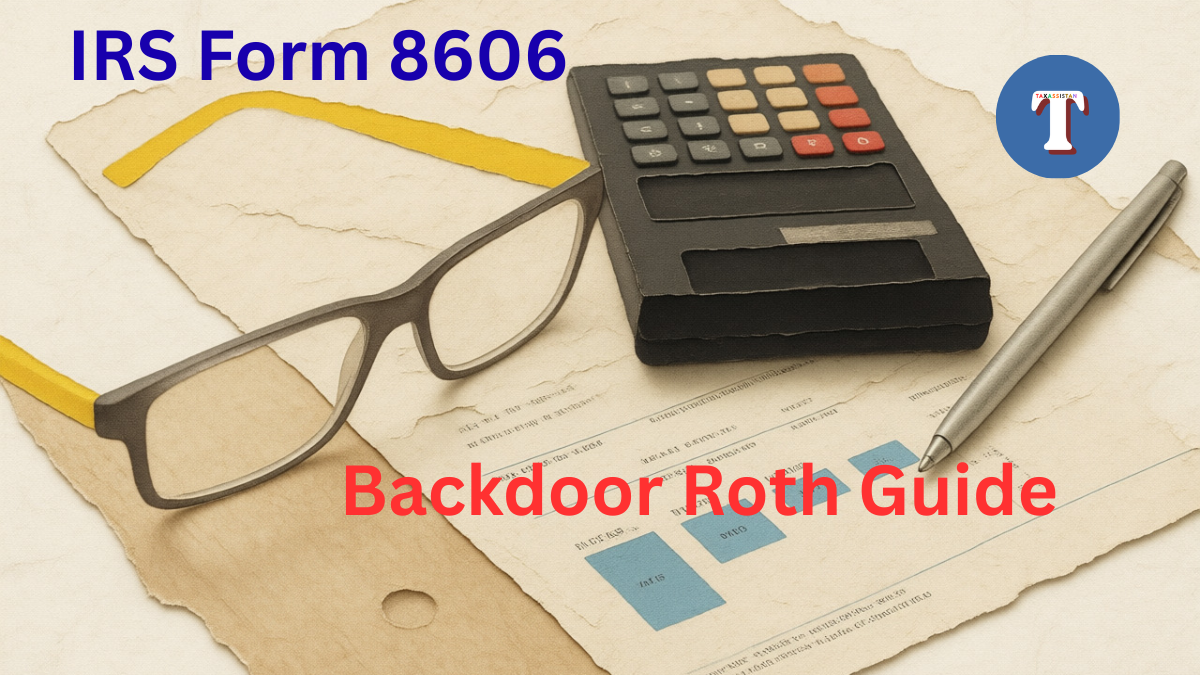
The Internal Revenue Service (IRS) has officially updated the structural reporting guidelines regarding the IRS Form 8606 rules for the current fiscal period. As millions of American taxpayers look to maximize their long-term retirement savings, understanding how to accurately document nondeductible contributions to traditional Individual Retirement Accounts (IRAs) is essential to eliminate double taxation down the road.
Failure to file this critical informational document with federal collection agencies can result in unexpected IRS holding patterns, penalties, or complex audit tracking during the upcoming tax filing season.
Who Must File IRS Form 8606 in 2026?
The primary objective of Form 8606 is to track your after-tax basis in traditional retirement arrangements. The federal government enforces strict filing requirements for specific high-income distribution paths and conversions.
- Nondeductible Contributions: If you contribute to a traditional IRA but your income exceeds the phase-out limits to deduct it, you must report the after-tax amount here
- The Backdoor Roth Strategy: High earners utilizing the popular Backdoor Roth IRA conversion method are legally required to submit Form 8606 to establish their tax-free rollover status .
- AfterTax Distributions: If you withdraw funds from a traditional IRA that contains a mix of deductible and nondeductible assets, the IRS applies the pro-rata rule via this specific form.
Step-by-Step Compliance to Avoid IRS Penalties
Accurately processing your retirement basis requires a careful review of your annual financial ledgers. Tax professionals recommend a structured, step-by-step documentation workflow:
1. Calculate Your Historic Basis: Review your prior year’s Form 8606 (specifically Line 14) to carry over your total accumulated after-tax balances accurately.
2. Apply the Pro-Rata Formula: The IRS views all your traditional, SEP, and SIMPLE IRAs as a single combined pool when calculating taxable withdrawal portions.
3. Submit with Form 1040: You must attach Form 8606 directly to your main federal tax return submission before the statutory April filing deadline.

Suresh holds a Master of Commerce (M.Com) degree and is a dedicated personal finance researcher and writer. Combining his advanced academic background in commerce with deep industry research, he covers complex topics like taxation, banking systems, credit analysis, and personal finance strategies. As the founder of Tax Assistant (taxassistant.org), Suresh is committed to translating complicated financial guidelines and economic data into simple, accurate, and actionable educational resources for everyday readers.