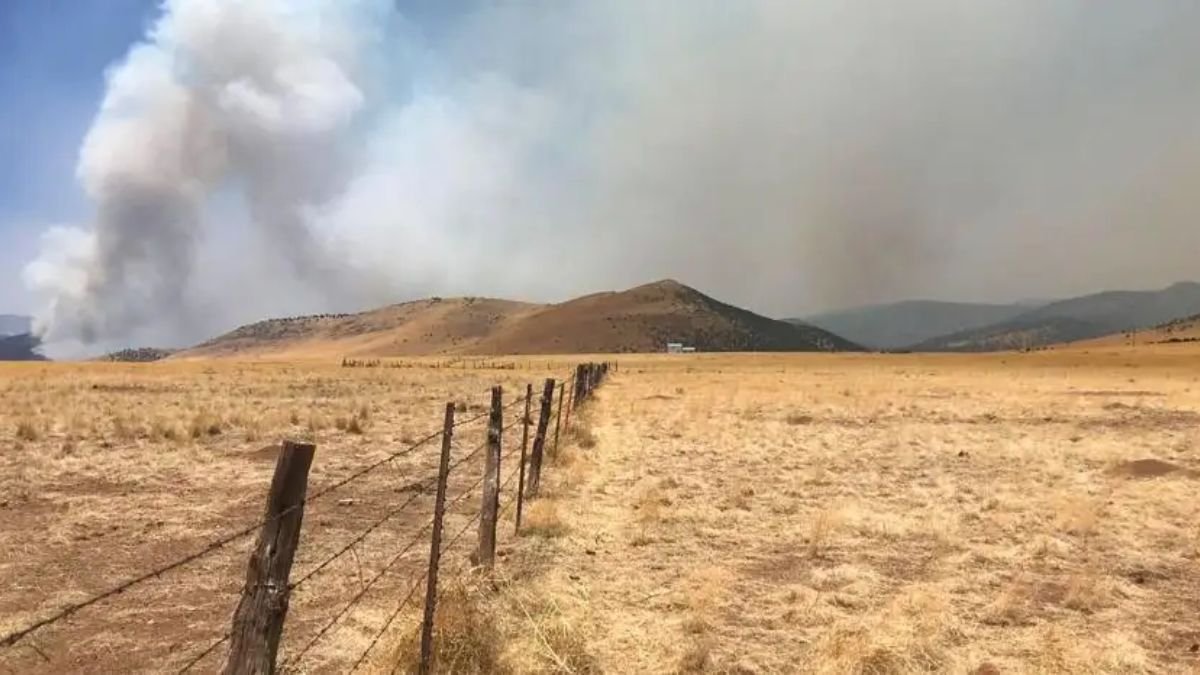
The Internal Revenue Service today issued guidance that provides an extension of tax relief for farmers and ranchers in most states and other regions who sold or exchanged livestock because of drought conditions. Under the guidance, those affected may take more time to replace their livestock and defer tax on any gains from the forced sales or exchanges.
“Large swaths of the United States continue to experience drought conditions, distressing hard-working American farmers and ranchers,” said IRS Chief Executive Officer Frank J. Bisignano. “By extending relief for those who sell or exchange livestock, the IRS is providing much needed support to those who feed our nation.”
Notice 2026-54 PDF lists the specified areas, by county or other jurisdiction, that qualify for federal assistance. The list includes 49 states, the District of Columbia, Puerto Rico, and other areas that reported exceptional, extreme or severe drought during the 12-month period ending on Aug. 31, 2026.
The tax relief generally applies to capital gains realized by eligible farmers and ranchers from sales or exchanges of livestock held for draft, dairy or breeding purposes. Sales of other livestock – such as those raised for slaughter or held for sporting purposes – and sales of poultry do not qualify.
Eligible farmers and ranchers must show that drought prompted the sales or exchanges, and that the area received a federal drought designation. Generally, livestock must be replaced within a four-year period, instead of the usual two-year period. The IRS is authorized to further extend this replacement period if the drought persists.
The replacement period extension announced in the notice gives eligible farmers and ranchers until the end of their first tax year after the first drought-free year after the four-year replacement period to replace the sold or exchanged livestock. As a result, eligible farmers and ranchers whose drought-sale replacement period was scheduled to expire at the end of 2026 will have until the end of their next tax year to replace the sold or exchanged livestock.
The IRS provides this extension to eligible farmers and ranchers if the applicable region is listed as suffering exceptional, extreme or severe drought conditions during any week between Sept. 1, 2025, and Aug. 31, 2026. This determination is made by the National Drought Mitigation Center.
Details and an example of how this provision works can be found in Notice 2006-82 PDF, available on IRS.gov.
More information on reporting drought sales and other farm-related tax issues can be found in Publication 225, Farmer’s Tax Guide PDF, available on IRS.gov.
A: Relief applies strictly to draft, dairy, or breeding livestock sold or exchanged in excess of normal business practices due to drought conditions. Sales of poultry, livestock raised for slaughter/feeder animals, or animals kept for sporting purposes are excluded.
A: Under baseline tax law, producers have 2 years (extended to 4 years for federal disaster/drought designations) to buy replacement livestock without recognizing capital gains. Under Notice 2026-54, if your 4-year replacement window was scheduled to end on December 31, 2026, your deadline is automatically extended to the end of your first tax year following a “drought-free year” in your area.
A: A drought-free year is a 12-month period ending on August 31 during which no weekly exceptional, extreme, or severe drought was reported for your county or any contiguous neighboring county. Because Notice 2026-54 lists qualifying drought regions for the 12-month period ending August 31, 2026, those areas are legally classified as experiencing ongoing drought, triggering the extension.
A: The guidance includes specified counties and jurisdictions across 49 states, the District of Columbia, Puerto Rico, the U.S. Virgin Islands, and other U.S. territories that experienced qualifying drought levels between September 1, 2025, and August 31, 2026.
A: You make the election on your tax return for the year the forced sales occurred by attaching a statement detailing the drought evidence, the computation of gains, and the number/type of livestock sold.

Suresh holds a Master of Commerce (M.Com) degree and is a dedicated personal finance researcher and writer. Combining his advanced academic background in commerce with deep industry research, he covers complex topics like taxation, banking systems, credit analysis, and personal finance strategies. As the founder of Tax Assistant (taxassistant.org), Suresh is committed to translating complicated financial guidelines and economic data into simple, accurate, and actionable educational resources for everyday readers.