If you’re looking for safe ways to grow your money and protect your savings, a high-yield savings account (HYSA) can be a great option. However, it’s important to be aware that there are certain instances when you could lose money. So if you plan on opening a high-yield savings account, be sure you understand how to protect your principal and earned interest.
What is a high-yield savings account?
High-yield savings accounts are like traditional savings accounts except that they offer above-average interest rates. These accounts are available from banks and credit unions, particularly online financial institutions. The higher interest rate means you earn more on your deposited funds over time, allowing your savings to grow faster.
If you open an account with a federally insured financial institution, your savings account deposits are protected in case the institution fails. With banks, deposits are protected by the Federal Deposit Insurance Corporation (FDIC) up to $250,000 per institution, per depositor, per ownership category. With credit unions, deposits are similarly insured by the National Credit Union Administration.
Can you lose money in a high-yield savings account?
The short answer: No. In most cases, anyway.
Unlike investments, money in a high-yield savings account isn’t tied to the stock market. Your account can earn interest, but your balance won’t fluctuate with market conditions like it might with stocks, mutual funds, index funds, or other types of securities.
However, it is possible for your HYSA to lose value in certain situations.
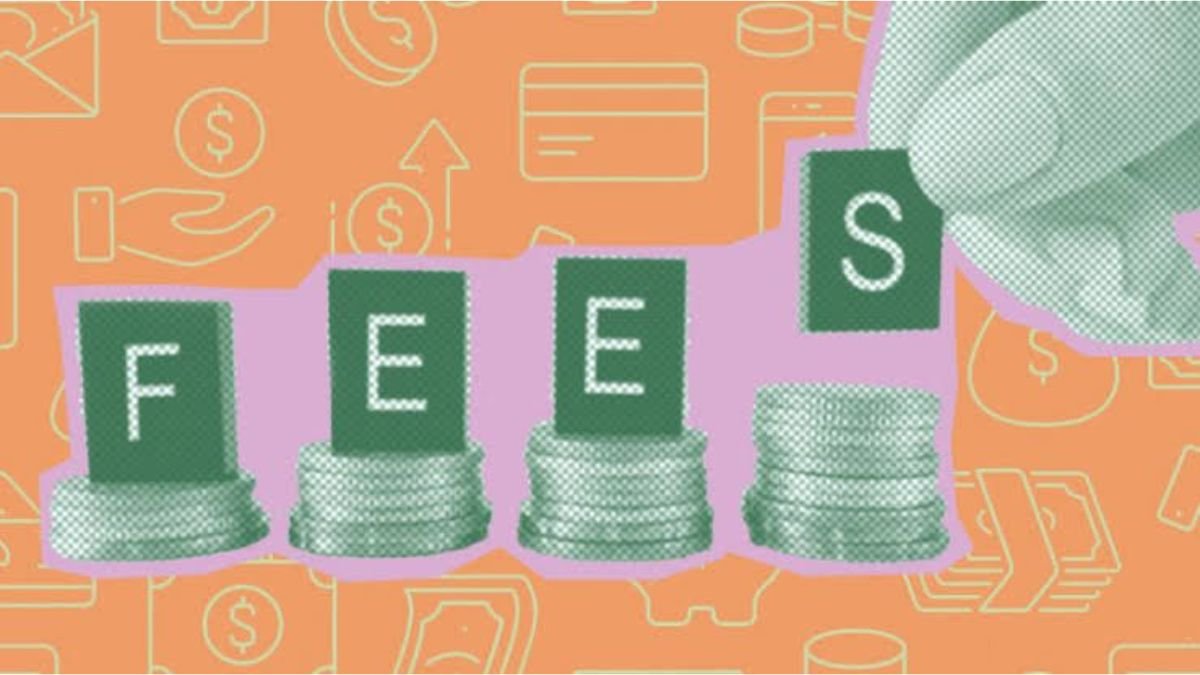
Fees
Many high-yield savings accounts are free, meaning there’s no monthly maintenance fee. However, some HYSAs do come with certain fees, depending on the terms of the account.
For example, you may be required to keep a minimum amount on deposit in order to earn the highest advertised rate and/or avoid a monthly fee. Some financial institutions also have limits on the number of withdrawals you can make each month, and charge a fee for excess transactions. If your high-yield savings account comes with ATM access, there may be fees associated with using ATMs outside of the bank’s network.
These fees could exceed the interest you earn, leading to a net loss in your account balance. Before opening an account, be sure you understand the terms and how to avoid fees.
Inflation
If the current inflation rate is higher than the interest rate you’re earning on your high-yield savings account, your money’s purchasing power will decrease over time. In this case, while you’re not losing the principal amount deposited, the real value of your money could decline, meaning you can buy less with the same amount of money in the future.
Changing rates
High-yield savings account interest rates are variable, not fixed. This means that as economic conditions change, HYSA rates can adjust accordingly at the discretion of the bank. If your bank currently has a high APY, it’s possible for the rate to decrease over time. The fluctuating APY won’t cause your balance to decrease, but it will affect your interest income.
For example, if you had $10,000 in a savings account that earns 4% APY, you’d earn a little over $400 after one year. But if your account’s APY dropped to 3% APY, your annual interest earnings would drop to around $300.
Bank or credit union failures
Although uncommon, it is possible for banks and credit unions to fail. If your high-yield savings account is held at a federally insured financial institution, your deposits are protected up to $250,000. But if you have deposits that exceed this limit, you risk losing the additional amount if the bank or credit union fails.
Alternatives to high-yield savings accounts
High-yield savings accounts can be appealing because of their higher APYs, but they may not be the best solution for your needs. Depending on your situation, one of the following options may be a better option to grow and protect your money.
Money market accounts
A money market account (MMA) is a type of savings account offered by banks and credit unions. Unlike regular savings accounts, money market accounts often come with the ability to write checks and may include a debit card.
MMAs also typically pay higher interest rates than regular savings accounts. They often offer tiered interest rates, which means the rate can increase as your account balance grows. However, they also often require a higher minimum balance to open and maintain the account without incurring fees.
Certificates of deposit (CDs)
Like money market accounts, a CD is a deposit account that typically earns a higher APY than savings accounts. Unlike savings and money market accounts, CD rates are fixed for the length of the CD’s term. So, they can be a smart way to lock in a higher APY for months or even years; some CDs have terms as long as 10 years.
Series I bonds
Series I bonds, commonly referred to as I bonds, are issued by the U.S. Department of the Treasury. These bonds earn interest monthly, and the interest is added to the bond principal every six months. You can buy a bond with as little as $25.
Series I bonds are less flexible than savings accounts; you need to wait at least 12 months to redeem your bond, and there are limits on how much you can invest in bonds per year. They tend to earn a higher rate than most savings and money market accounts, but those rates are only locked in for a short period and reset every six months.
No, as long as your account is held at a federally insured institution (FDIC for banks, NCUA for credit unions) and your balance remains under the $250,000 per depositor, per bank, per ownership category limit. Unlike stock market investments, your principal amount does not fluctuate with market volatility.
Even if an account does not lose money to market drops, maintenance charges, out-of-network ATM costs, or penalties for failing to maintain a minimum required balance can be deducted directly from your total funds. If these cumulative fees exceed the interest your balance earns each month, your net account balance will decline.
Because high-yield savings accounts feature variable interest rates, financial institutions can lower the Annual Percentage Yield (APY) at any time based on federal interest rate decisions or market trends. A rate drop will lower the speed at which your account generates future interest earnings, but it will never decrease your existing principal balance or accrued interest earnings.
While your dollar count in a savings account increases as interest accrues, your money’s purchasing power shrinks whenever the annual inflation rate outpaces your account’s APY. For example, earning 3% interest in an economy with 4% inflation means your cash buys fewer goods and services over time despite a higher nominal dollar total.
HYSA: Offers high, variable interest rates with maximum flexibility to deposit or withdraw cash as needed.
CD: Offers a fixed interest rate guaranteed for a set timeline (e.g., 6 months to 5 years), but charges a penalty fee if you withdraw funds early.
MMA: Offers high variable rates alongside limited transactional tools directly attached to the savings balance (such as a debit card or checkbook), often requiring higher opening deposits to waive monthly fees.

Manoj Sharma is a Senior Writer on the banking team at Tax Assistant. He provides information on budgeting, bank accounts, the banking industry, and other related topics. Using original data and methodologies, he helps you identify the best financial institutions, accounts, and products tailored to your needs. Manoj holds a degree in Journalism and Political Science from Syracuse University. All articles are strictly reviewed and fact-checked by our panel of expert Chartered Accountants, including CA Devendra Saini, CA Nikhil Khunteta, and CA Ankit Goyal