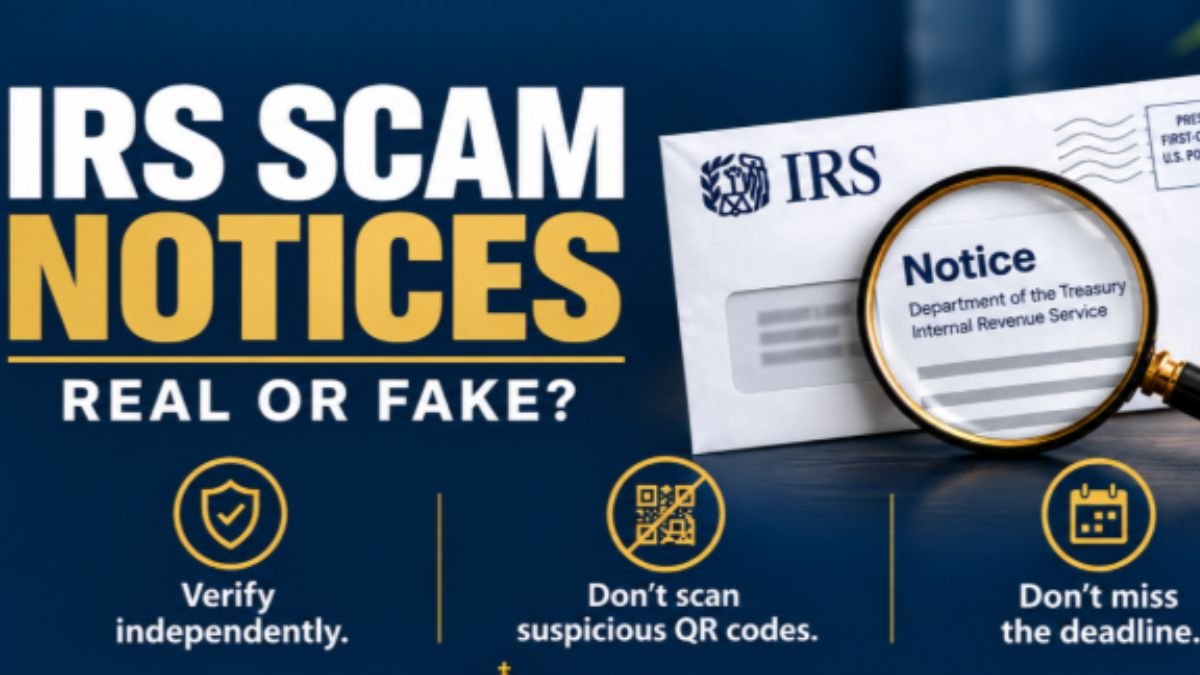
The IRS is warning taxpayers about fraudulent communications that are becoming increasingly convincing, including fake paper letters designed to look like genuine IRS correspondence. One current scam targets cryptocurrency holders with letters directing them to a nonexistent “Digital Asset Compliance Portal.” Some fraudulent letters also use QR codes or web addresses that lead to sites made to resemble IRS.gov.
That creates two risks. You do not want to respond to a scam, but you also do not want to dismiss a genuine IRS notice as fake. A legitimate notice may carry a response deadline, and waiting too long can mean additional penalties and interest or, in some situations, the loss of important appeal rights and other options.
Do Not Assume a Letter Is Real Just Because It Looks Official
A professional-looking envelope, IRS-style letterhead, a notice number, or even information about your taxes does not by itself prove that a notice is genuine. Scammers can imitate official formatting and may already possess some personal information.
The safest approach is simple: do not verify a suspicious notice by using the contact information, QR code, or website printed on the notice itself. Verify it independently.
How to Verify an IRS Notice
Check the notice or letter number.
Genuine IRS correspondence normally includes a CP or LTR number. Use that number to search the IRS “Understanding Your IRS Notice or Letter” information at IRS.gov. A number on the page is a clue, not proof by itself.
Go to IRS.gov yourself.
Type IRS.gov into your browser rather than following a link or scanning a QR code from a questionable letter. The IRS specifically warns taxpayers not to use the QR code in the current fake Digital Asset Compliance Portal letters.
Check your IRS Online Account.
Digital copies of many IRS notices are available in the Notices and Letters section of an individual IRS Online Account. Not every notice appears online, so the absence of a notice there does not automatically mean a mailed notice is fake. If you don’t have an IRS Online Account, you should set one up: it’s fast and easy
Call the IRS independently if you are still unsure.
If the notice cannot be identified through the IRS notice search or something looks suspicious, the IRS says taxpayers can call 800-829-1040 for assistance.
Have a tax professional review it.
A CPA familiar with IRS correspondence can help determine what the notice means, whether it appears legitimate, what records are needed, and how the response should be handled.
Warning Signs of a Scam
- An unexpected message that pressures you to act immediately
- Threats intended to frighten you into paying or providing information
- Requests for personal or financial information through an unsolicited email, text, or social media message
- Demands for immediate payment using gift cards or other unusual payment methods
- A QR code or website that claims you must register through an unfamiliar IRS portal
- Instructions that discourage you from independently contacting the IRS
The IRS normally makes initial contact by U.S. mail. The agency can use other forms of communication in certain circumstances, including communications taxpayers have opted into, so the important point is not to rely on one feature alone. Verify suspicious contact independently through IRS.gov.
The Other Danger: Ignoring a Real IRS Notice
A scam should be ignored and reported. A real IRS notice should not be ignored.
Read a genuine notice carefully and identify the response date immediately. If you disagree with the IRS, responding by the due date can be essential to preserving appeal rights. If money is due, delay can also allow interest and penalties to continue increasing.
This is why uncertainty about whether a notice is real should not become a reason to put it aside. Verify it promptly, then determine what response is required.
Professional Help Can Be Most Valuable Early
Taxpayers sometimes wait until an IRS problem has escalated before asking for help. With IRS correspondence, earlier is usually better. A timely professional review can help confirm what the IRS is asking for, identify deadlines, gather the right documentation, prepare an appropriate response, and preserve the options that may still be available.
If you receive an IRS notice, do not panic, but do not delay.
Verify it. Understand it. Respond on time.
Bottom Line
Do not assume an IRS notice is real. Do not assume it is fake. Verify it independently, and do not miss the deadline while you are deciding.
If you receive a notice and are uncertain what it means or how to respond, professional help early in the process may protect options that become harder, or sometimes impossible, to recover after a deadline passes.
Not necessarily, but appearance alone is not proof. Scammers frequently spoof IRS logos, formatting, and notice numbers, often leveraging personal information obtained through data breaches. Always verify the notice independently through official IRS tools before responding.
Avoid using the links, phone numbers, or QR codes printed on the questionable notice. Instead: Manually type IRS.gov into your web browser.
Log in to your IRS Online Account to check the Notices and Letters tab.
Search the letter’s CP or LTR number on IRS.gov. Call the official IRS customer service line directly at 1-800-829-1040.
Red flags include demands for immediate payment using unusual methods (such as gift cards, wire transfers, or cryptocurrency), threats of instant arrest or enforcement, links directing you to non-IRS web addresses, and instructions that discourage you from contacting the IRS independently.
Ignoring a legitimate IRS notice can result in accrued interest, additional financial penalties, or the permanent loss of appeal rights. If you suspect a notice might be real, verify it immediately through IRS.gov or consult a tax professional rather than putting the letter aside.

Suresh holds a Master of Commerce (M.Com) degree and is a dedicated personal finance researcher and writer. Combining his advanced academic background in commerce with deep industry research, he covers complex topics like taxation, banking systems, credit analysis, and personal finance strategies. As the founder of Tax Assistant (taxassistant.org), Suresh is committed to translating complicated financial guidelines and economic data into simple, accurate, and actionable educational resources for everyday readers.