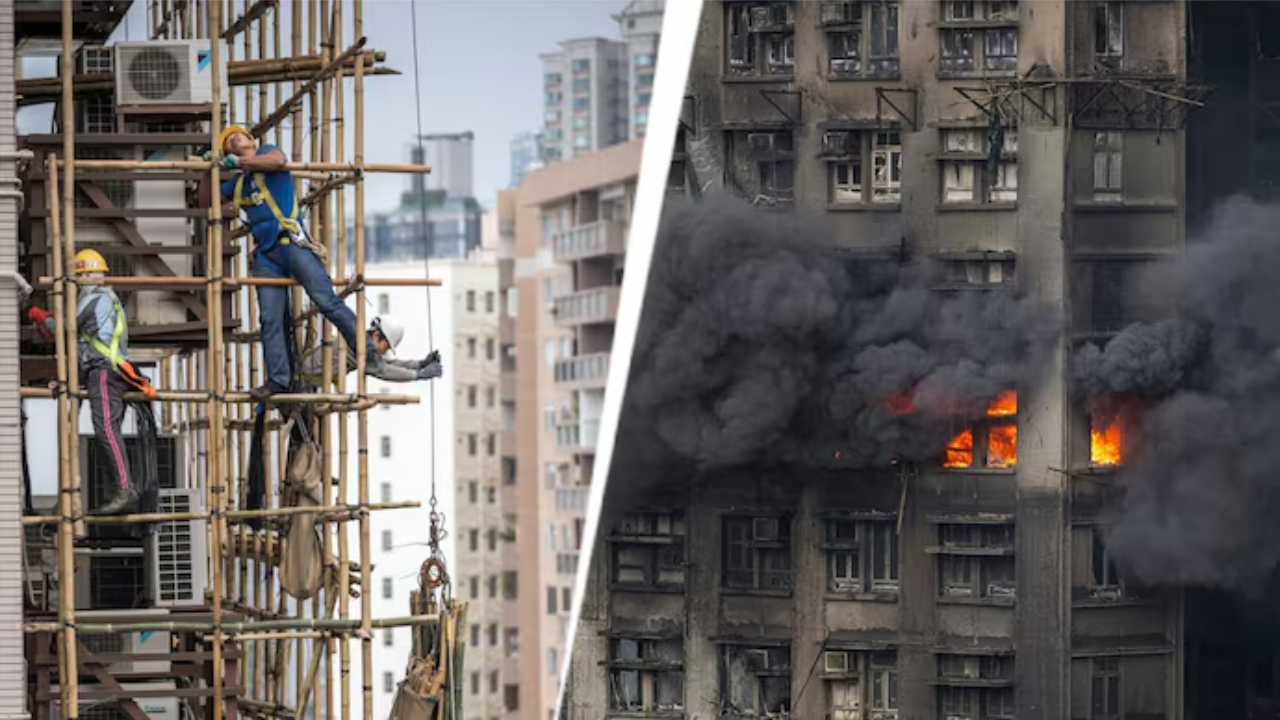
A devastating fire that ripped through a Hong Kong high-rise, killing at least 75 people, has triggered an urgent debate over building safety. While the city’s iconic bamboo scaffolding is under scrutiny, experts and locals suggest that substandard, low-quality construction nets and plastic materials were the true accelerants that fueled the deadly inferno.
Thank you for reading this post, don't forget to subscribe!The Case Against Traditional Bamboo Scaffolding
For centuries, bamboo has been a hallmark of the Hong Kong skyline, prized for its low cost, flexibility, and speed of erection. However, critics point to its inherent nature as a critical risk factor, especially on tall structures.
- Flammability: Experts confirm that bamboo is a flammable material. In dry conditions, once ignited, the material facilitates a “superfast” spread of fire.
- Vertical Ladder: Bamboo poles are often oriented vertically on high-rises, effectively creating ladders of fire that allow the blaze to race upward almost unhindered.
- Historical Risk: Bamboo scaffolding has been linked to 22 deaths in industrial accidents in Hong Kong between 2019 and 2024.
The Case Against Flammable Construction Materials
While bamboo provides the skeleton, many experts, officials, and locals believe the fire’s devastating intensity was primarily due to the coverings and plastics used during the renovation work.
- The Hidden Fuel: The fire appeared to be driven by cheap, non-fire-retardant construction netting, plastic sheeting, and polystyrene foam insulation.
- Substandard Imports: Many sources suggested these low-quality materials were imported for cost-cutting purposes and failed to meet necessary fire safety standards.
- Evidence of Negligence: Police arrested three individuals from the construction company on suspicion of manslaughter, citing “gross negligence” and the use of substandard materials. Authorities specifically noted flammable polystyrene boards blocking windows and “unusual” amounts of protective netting and plastic film on the exterior.
- Eyewitness Accounts: Videos showed non-compliant construction netting burning fiercely, dripping, and spreading within seconds. Notably, one photographer observed that the bamboo scaffolding withstood 14 hours of the blaze, suggesting the external plastics were the primary issue.
Conclusion: A Combination of Failures
While bamboo provides a flammable structure, the consensus forming among many experts is that the fire’s lethality was a result of a dangerous synergy:
“The fire is likely due to a combination of factors, including the plastic scaffolding encapsulation, plastic sheeting, polystyrene, the bamboo structural scaffolding, and any other flammable components.”
In short, the tragedy highlights how a flammable structural skeleton combined with cheap, highly flammable external covers and a lapse in safety enforcement created a catastrophic outcome.
The Hong Kong government has now set up a task force and ordered immediate inspections, while earlier mandates required a switch to metal scaffolding for at least 50% of new public-works contracts.