Show me where communism has ever worked before—whether it’s the Soviet Union, Cuba, or Venezuela. With these policies, you always end up with less.
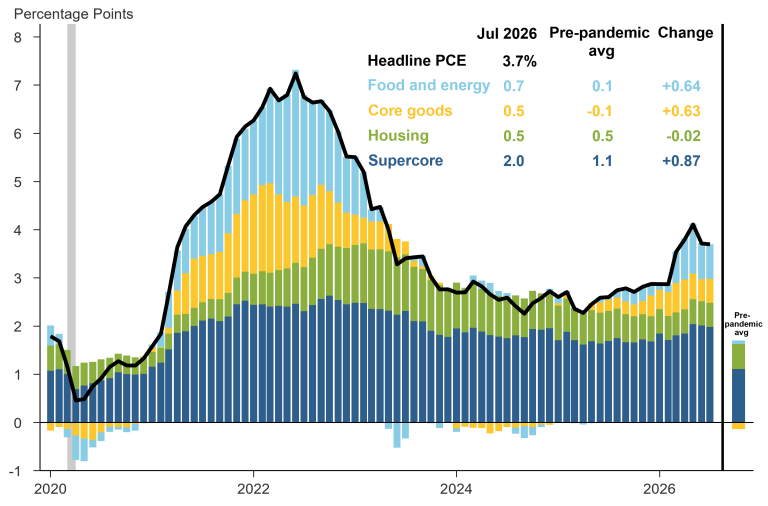
Core inflation, which came out days ago, was 2.5%—a very good number, moving toward the Fed’s 2% target.
What we’ve seen over the past year is that wages for the bottom 25% of working Americans were up 5.5%.
Command economies remove free-market price signals, which show real-time supply and demand. Without these signals, central planning leads to resource misallocation, inefficient production quotas, chronic consumer shortages, and a lack of incentive for innovation compared to market-driven systems.
Headline inflation measures the total inflation in an economy, including food and energy prices. Core inflation excludes food and energy because their prices are notoriously volatile. Central banks focus heavily on core inflation to gauge long-term price stability.
A 2% inflation target acts as a “Goldilocks zone.” It is low enough to preserve purchasing power while high enough to prevent deflation (falling prices), which can cause economic stagnation as consumers delay purchases waiting for lower prices.
Wage growth at the lower end (the bottom quartile) was primarily driven by a tight labor market. High demand and low candidate availability in high-turnover sectors like hospitality, service, and retail forced employers to raise starting wages to recruit and retain staff.
Real wage growth occurs when wage increases exceed the rate of inflation (e.g., a 5.5% wage hike versus 2.5% inflation). When real wages grow, workers’ actual purchasing power increases, meaning their paychecks can buy more goods and services than before.

Manoj Sharma is a Senior Writer on the banking team at Tax Assistant. He provides information on budgeting, bank accounts, the banking industry, and other related topics. Using original data and methodologies, he helps you identify the best financial institutions, accounts, and products tailored to your needs. Manoj holds a degree in Journalism and Political Science from Syracuse University. All articles are strictly reviewed and fact-checked by our panel of expert Chartered Accountants, including CA Devendra Saini, CA Nikhil Khunteta, and CA Ankit Goyal