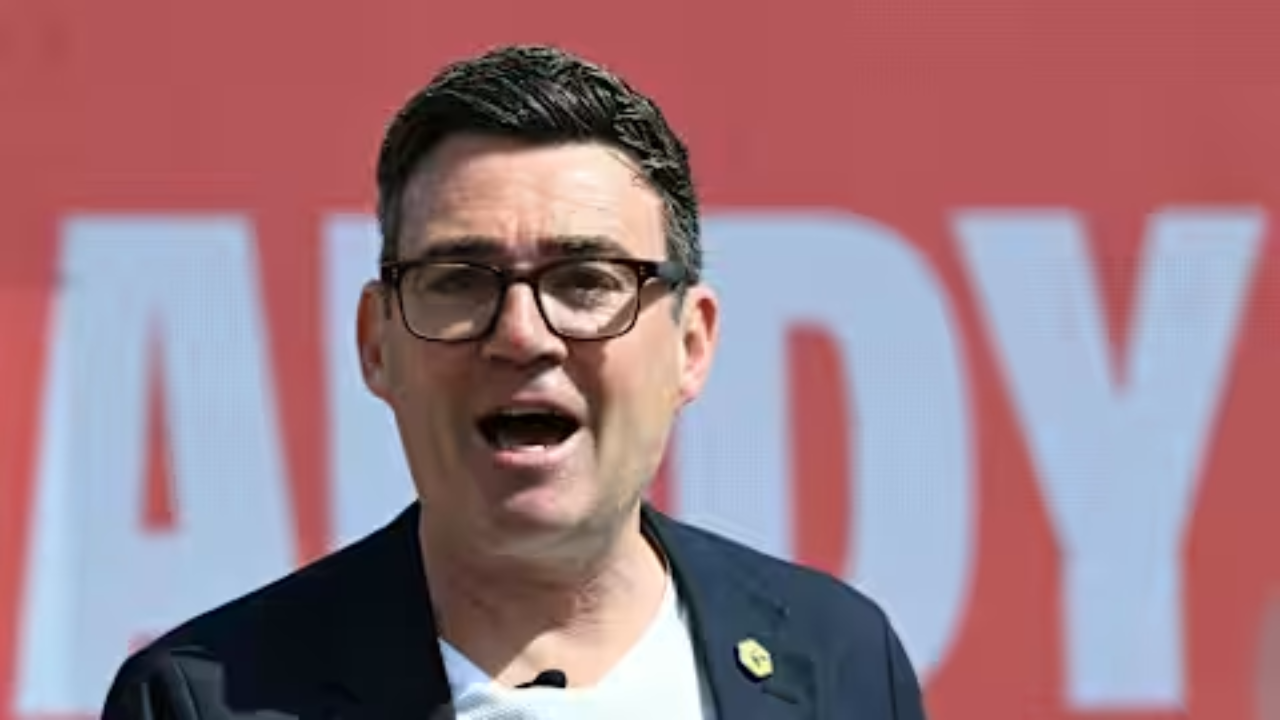
Greater Manchester Mayor Andy Burnham’s recent policy shifts highlight a critical challenge for modern public leaders: how to deliver vital, large-scale public investment while remaining firmly within the rigid constraints of national fiscal rules.
Thank you for reading this post, don't forget to subscribe!As he expands his national influence, Burnham is championing a pragmatic path to boost infrastructure and public services—all while avoiding the market volatility that triggers investor panic.
The Strategy: Breaking the “Fiscal Straitjacket”
To deliver on ambitious goals like building council homes, expanding the Bee Network, and reforming utility infrastructure, Burnham is looking beyond traditional central government grants. His strategy focuses on three key mechanisms designed to unlock capital without breaking Treasury rules:
- The “Carve-Out” Model: Burnham has floated the concept of a “defence carve-out,” inspired by Germany’s use of special, off-budget funds for national security. While currently aimed at defence, this serves as a structural proof-of-concept for how critical infrastructure could eventually be ring-fenced from standard borrowing limits.
- Revenue-Backed Financing: Rather than relying on Whitehall handouts, Burnham favors using regional public corporations that fund infrastructure through guaranteed future income (such as transit fares or housing rents). Because these entities have dedicated revenue streams to service their debt, they sit more comfortably within fiscal frameworks.
- Aggressive Public Regulation: To avoid the massive upfront borrowing required for outright nationalization, Burnham champions franchising and strict public regulation. By using state leverage to force private operators (such as water utilities and transit firms) to reinvest their profits into local networks, infrastructure is upgraded without touching the public balance sheet.
The Market Reality Check
While Burnham continues to test the boundaries of Treasury rules, he has noticeably moderated his previous rhetoric about Britain being too “in hock” to financial markets.
When early debates around changing fiscal rules sparked volatility in gilt yields and drew warnings from the International Monetary Fund (IMF), Burnham quickly adapted. He has since explicitly reinforced his commitment to fiscal discipline, acknowledging that the rules must be respected to maintain market confidence, even as leaders work to reform them from a position of economic stability.
The Core Philosophy: Burnham’s economic circle argues that current Treasury rules treat investment as a threat to stability. Their counter-narrative is that a lack of capacity—insufficient housing, fractured transport, and weak utility networks—is the true driver of long-term inflation and stagnation. In short: building capacity is building stability.

Suresh Kumar Saini is a financial researcher specializing in US Personal Finance, Online Banking, and US Tax Guides, helping individuals navigate complex financial systems.