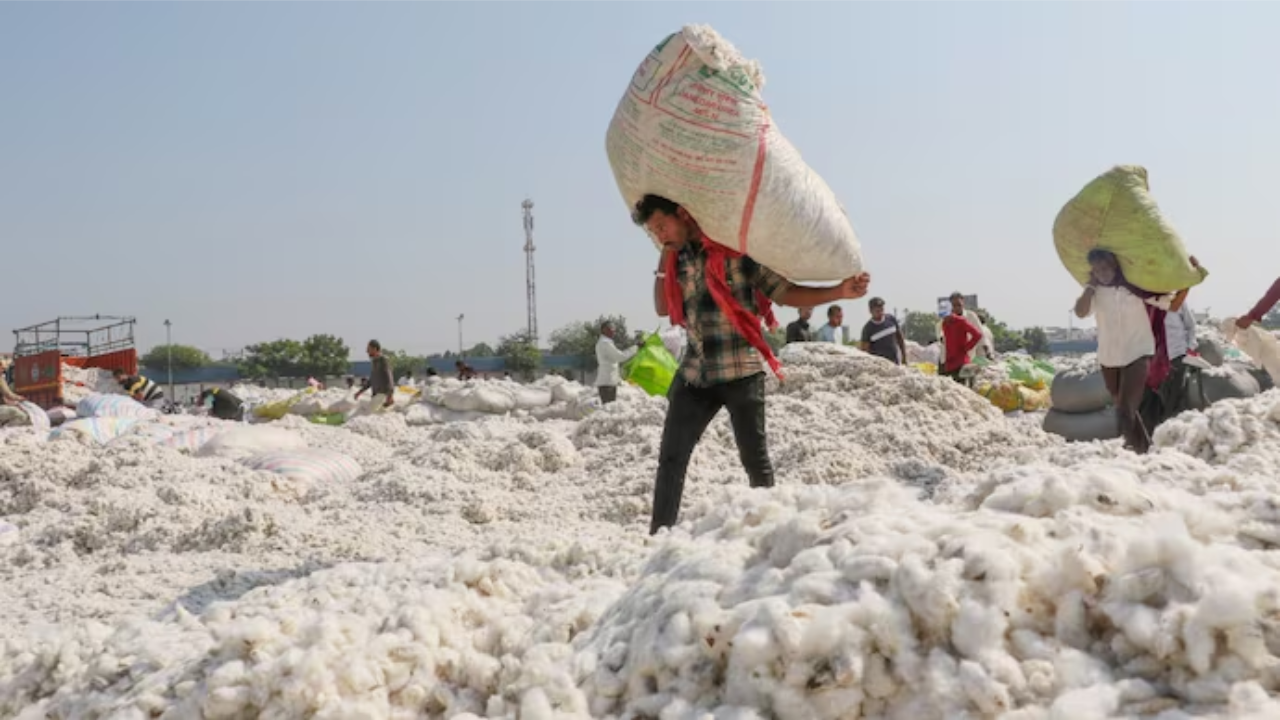
Dhaka, Bangladesh – A significant shift is underway in Bangladesh’s critical textile supply chain. Brazil has officially surpassed India to become the largest source of raw cotton for Bangladesh, the world’s second-largest exporter of ready-made garments (RMG). This pivot occurred during a marketing year (MY 2024-25) that saw Bangladesh import a record 8.28 million bales of cotton.
Thank you for reading this post, don't forget to subscribe!According to a US Department of Agriculture (USDA) report, Brazilian shipments reached 1.9 million bales (25% market share), pushing India—which historically benefited from faster shipping via nearby ports—to second place with 1.4 million bales (15%). This change is particularly notable as India was the top supplier just one year prior.
Despite the loss of dominance in raw cotton, India maintains a pivotal role in the processing sector. India continues to supply a staggering 82% of Bangladesh’s total cotton yarn imports, leveraging its massive spinning capacity, lower logistics costs, and expedited delivery routes.
The RMG sector, which drives over 80% of Bangladesh’s export earnings and employs 4 million people, demonstrated resilience. The USDA noted that raw cotton imports held steady even as the interim government took power in August 2024 following the ouster of Sheikh Hasina. Imports are forecasted to climb further to 8.4 million bales in the current marketing year, reflecting stronger demand from domestic spinners.
Bangladesh’s Cotton Trade Pivots to Brazil Following Regime Change
Bangladesh has initiated a notable economic pivot away from India, installing Brazil as its primary source of raw cotton. This significant trade shift coincides directly with the political regime change that saw Prime Minister Sheikh Hasina removed from power in August 2024.
The USDA report confirming Brazil’s new dominance explicitly links the market development to the political transition. While Bangladeshi importers previously tolerated higher prices and occasional quality issues for Indian cotton in exchange for quicker turnaround times, the new political climate appears to favor diversifying sources. In the 2024-25 market year, Brazil supplied 1.9 million bales, reducing India’s share to 1.4 million bales.
The textile sector remains the cornerstone of the national economy, contributing 10% of GDP and generating over 80% of export revenues. Despite initial disruptions following the political turmoil—including the deadly July-August agitation—the RMG sector’s raw cotton imports have held firm, with a record 8.28 million bales imported in MY 2024-25.
However, India’s influence is not fully extinguished. It remains the key supplier of processed cotton yarn, holding an 82% market share. Its proximity and extensive spinning infrastructure keep it indispensable for the crucial yarn input that feeds Bangladesh’s manufacturing facilities.