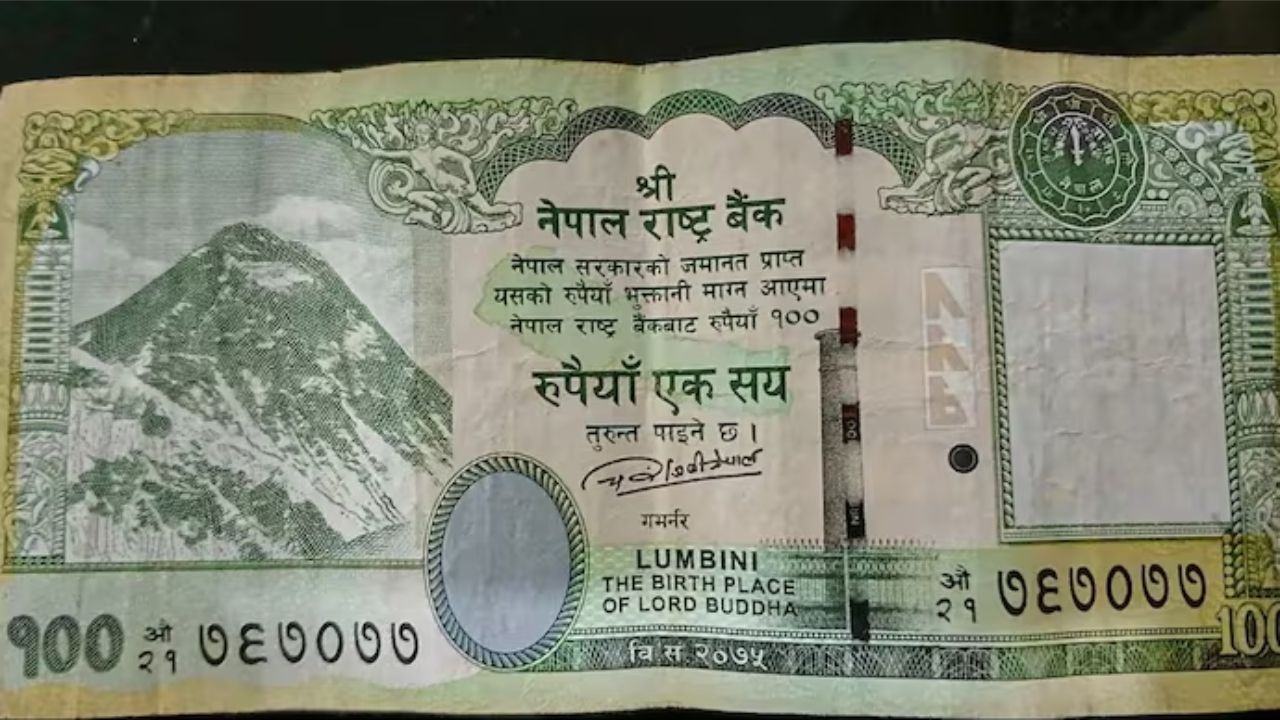
Nepal has officially released a new Rs 100 currency note featuring a revised map that includes three territories claimed by India: Kalapani, Lipulekh, and Limpiyadhura. This move reignites a significant border dispute between the two nations.
Thank you for reading this post, don't forget to subscribe!Key Details of the New Banknote
- Issuing Authority: Nepal Rastra Bank (NRB).
- Revised Map: The new Rs 100 note is the only denomination that features Nepal’s map, and the revised version incorporates the three disputed regions.
- Official Justification: An NRB spokesperson stated that the revision was made as per the Nepal government’s 2020 decision to update the political map.
- Design Elements: The front side features Mt. Everest, the national flower (Rhododendron) as a watermark, and the Ashoka Pillar with the inscription, “Lumbini, the birthplace of Lord Buddha.” The back features a horned rhino.
- Date and Signature: The note is dated 2081 BS (2024) and bears the signature of previous Governor Maha Prasad Adhikari.
The Border Controversy
The inclusion of these regions on the currency is a tangible step in asserting Nepal’s territorial claims, which date back to the 2020 government move:
- Nepal’s Claim: In May 2020, the K. P. Sharma Oli-led government unveiled a new political map claiming Lipulek, Kalapani, and Limpiyadhura. This was subsequently endorsed by the Nepali Parliament.
- India’s Position: India maintains that these regions belong to its territory. At the time of the 2020 map release, India sharply reacted, calling it a “unilateral act” and warning that such “artificial enlargement” of territorial claims would not be acceptable.
Nepal shares a border of over 1,850 km with five Indian states: Sikkim, West Bengal, Bihar, Uttar Pradesh, and Uttarakhand. The release of this new currency note is expected to escalate diplomatic tensions over the contested areas.
Would you like me to find current reports on India’s official reaction to the release of this new banknote?