If you have a large amount of spare change sitting at home, you may want to convert those coins to paper cash for easier spending.
There are a few ways to convert coins to cash, from visiting your bank branch to using a self-service kiosk. These various methods all have their own pros and cons to consider. So, learn about your options for converting coins to cash and which one makes the most sense for you.
Where can I change my coins for cash for free?
If you’re hoping to exchange coins for cash without paying a fee, you have a few options:
- Banks: Many banks will let you exchange your coins for cash, though you may need to be an existing customer to avoid a fee. Some banks may also require you to do some work beforehand — namely, rolling up your coins in wrappers so they don’t have their tellers spending an hour sifting through a bucket of spare change. However, some community banks have their own self-service coin-sorting machines that allow you to skip this step (most big banks such as Chase and Bank of America have done away with these machines).
- Credit unions: Like banks, your credit union may agree to exchange your coins for cash for free if you’re a member. Non-members may have to pay a fee for this service, if offered.
- Certain retailers: There’s no telling what sort of response you will get, but if you bring in a bunch of rolled coins, a retailer might be happy to give you cash for your coins. Still, a bank or credit union is your best bet.
Other places to exchange coins (for a fee)
If you can’t find a local bank or credit union willing to exchange your coins for cash, there are a few other places you can do it, often for a fee.
Coinstar
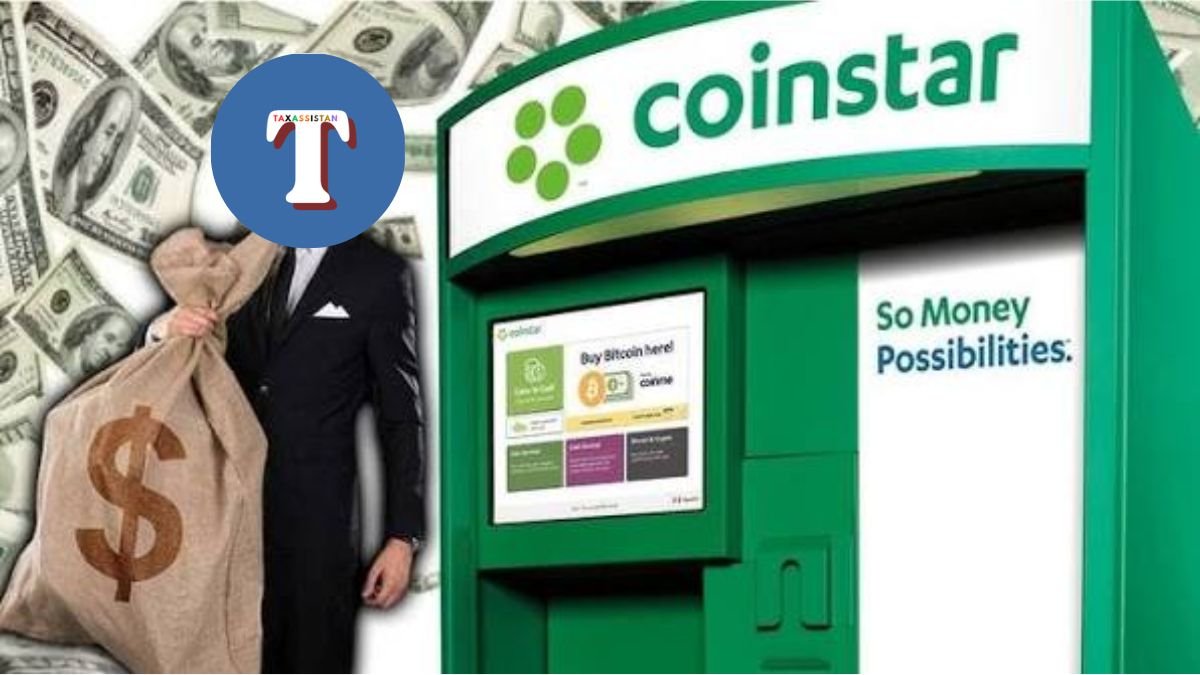
Founded in 1991, Coinstar machines are commonly found in grocery stores, big-box retailers, and other convenient locations. These kiosks will count your coins and exchange them for paper bills — for a service fee. Coinstar fees vary but can be up to 15.9% of your total coin value, plus an additional transaction fee of up to $0.99.
Some Coinstar machines offer e-gift cards instead of cash; if you choose this option, you can avoid the fee.
Publix
If you shop at Publix supermarkets, you’ll notice that the store has its own Publix-branded coin-counting machines. These machines count your coins and provide a receipt that you can take to the customer service counter and redeem for cash.
Publix coin-counting fees vary by store, but generally, they charge around 10%.
Store-branded coin-counting machines
You may find some other supermarkets or stores that have their own coin-counting machines. They may charge a fee, though some stores offer the service for free if you redeem the amount for store credit.
What to do with your cash
So once you’ve converted your stash of coins into cash, what should you do with it? Here are some ideas.
Open a high-yield savings account
Coins sitting at home do little more than take up space. But if you convert those coins to cash and deposit the money to a savings account, your money starts working harder for you — especially if you choose a high-yield account.
Today’s best high-yield savings accounts (HYSAs) earn as much as 4% APY. By putting your cash into an HYSA, your balance will generate interest and grow faster without any extra work on your part.
Save for a specific purpose
Your $100 or $200 or whatever you’ve saved in coins could go toward something you’re specifically saving for. This type of savings is often referred to as a sinking fund — a special fund where you consistently put money aside to go toward a future expense, whether it’s holiday gifts, a vacation, a wedding, or perhaps a down payment on a house.
Make an extra payment toward your debt
You might not be in a hurry to send extra cash to creditors, but those coins you traded in could make a big dent in your debt.
For example, let’s say you have a $5,000 personal loan at 10% APR and 36 months to pay it off. Your monthly payment would be about $162.
But now let’s say that you have $200 in coin cash and you use it to make an extra payment on your debt. You’d shave off one month from your repayment timeline and save an additional $68 in interest.
Make a donation
If you collect some cash around your house — money that you didn’t miss and now you’ve got — it might be a fairly painless but very satisfying decision to take your coin cash and donate your money to a charity.
You may also be able to deduct the contribution on your taxes, too. To do so, you’ll need to itemize your taxes using Schedule A. The donation must also be made to a qualifying 501(c)(3) organization.
Invest it
You can also use your coins to invest in the stock market, which can result in much greater gains than you’ll get with a savings account. If you’re investing for retirement, consider making an extra contribution to your individual retirement account or 401(k) and help fund your future.
Not sure how to get started with investing? A financial adviser can help you devise a strategy and choose the right investments to reach your goals.
You can exchange coins for cash for free at your local bank or credit union, provided you are an account holder (though many branches require you to roll the coins in paper wrappers first). Alternatively, you can use a Coinstar machine and select an e-gift card instead of cash to skip the fee entirely, or ask local retailers if they need spare change.
Coinstar machines typically charge a fee of up to 15.9% of your total coin value, plus a transaction fee of up to $0.99 for cash payouts. Store-branded machines, such as those at Publix supermarkets, generally charge a fee around 10%.
Most major national banks (such as Chase and Bank of America) have eliminated self-service coin-counting machines. To exchange coins at a big bank, you usually need to sort and wrap them in coin wrappers before bringing them to a teller. However, some local community banks and credit unions still offer self-service coin counters for their members.
Depositing the cash into a High-Yield Savings Account (HYSA) earning up to 4% APY is one of the smartest choices, as it immediately starts generating interest. Other productive options include using the money as an extra debt payment to reduce interest charges, investing it in an account like an IRA, or setting it aside in a dedicated sinking fund for future expenses.
Applying spare change directly toward debt principal shortens your loan term and reduces the total interest you owe. For example, making an extra $200 payment on a $5,000 personal loan at 10% APR over 36 months shaves off one full monthly payment and saves $68 in total interest.

Manoj Sharma is a Senior Writer on the banking team at Tax Assistant. He provides information on budgeting, bank accounts, the banking industry, and other related topics. Using original data and methodologies, he helps you identify the best financial institutions, accounts, and products tailored to your needs. Manoj holds a degree in Journalism and Political Science from Syracuse University.