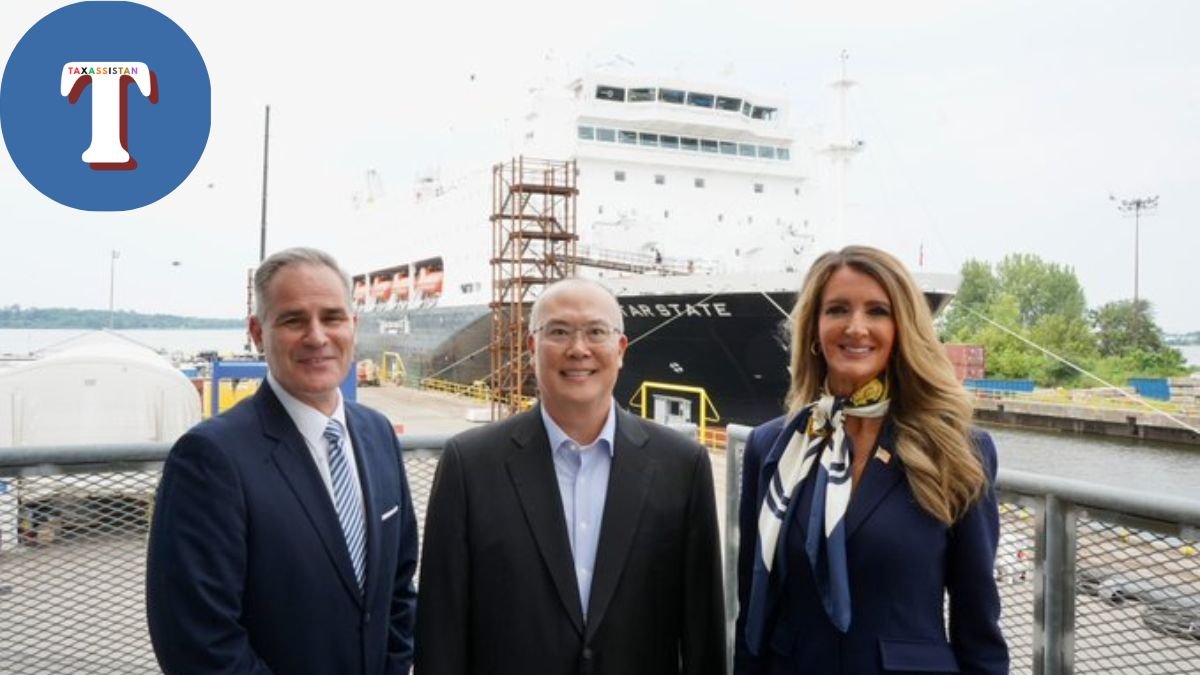
Assistant Secretary for Investment Security Chris Pilkerton and
@SBAgov Administrator Kelly Loeffler visited Hanwha
@PhillyShipyard to highlight how trusted foreign investment can strengthen U.S. supply chains, support American jobs, and advance our national security. The visit also highlighted a new Treasury initiative: the Strategic Vendor Program, which will connect CFIUS-reviewed companies with a resilient, U.S.-based network of suppliers and vendors.
The visit by Treasury Assistant Secretary Chris Pilkerton and SBA Administrator Kelly Loeffler was designed to highlight how vetted, trusted foreign investment can boost domestic manufacturing, create U.S. jobs, and strengthen critical supply chains. It also served as the platform to introduce the Treasury’s new Strategic Vendor Program.
The Strategic Vendor Program is a pilot initiative led by the Committee on Foreign Investment in the United States (CFIUS). It transitions CFIUS beyond its traditional national security review role by actively connecting approved, foreign-invested companies with a network of vetted small and mid-sized U.S. suppliers to fill critical domestic supply chain gaps.
When foreign enterprises invest in key defense and commercial infrastructure (such as Hanwha’s acquisition and planned $5 billion investment in Philly Shipyard), it expands shipbuilding capacity, updates technology, and creates thousands of domestic jobs. Because building major vessels requires thousands of individual components, these investments pump business into hundreds of U.S. base-industry suppliers.
The Small Business Administration (SBA) provides capital, direct funding, and resources to help U.S. small and medium-sized manufacturers expand their production capacity. By coordinating with federal initiatives like the Strategic Vendor Program, the SBA helps small suppliers scale up to meet the component demands of large foreign-invested industrial projects.
The program focuses on connecting:
Foreign-invested companies that have undergone CFIUS national security reviews and operate within critical U.S. sectors.
U.S.-based small and mid-sized businesses that produce specialized components, raw materials, or equipment required by these high-impact manufacturing projects.

Manoj Sharma is a Senior Writer on the banking team at Tax Assistant. He provides information on budgeting, bank accounts, the banking industry, and other related topics. Using original data and methodologies, he helps you identify the best financial institutions, accounts, and products tailored to your needs. Manoj holds a degree in Journalism and Political Science from Syracuse University. All articles are strictly reviewed and fact-checked by our panel of expert Chartered Accountants, including CA Devendra Saini, CA Nikhil Khunteta, and CA Ankit Goyal