Even if you’re a budgeting pro, major financial curveballs can throw you off track. That’s why it’s crucial to have an emergency savings fund in place.
An emergency fund allows you to pay your rent or mortgage, put food on the table, and keep gas in your car without going into debt if you unexpectedly lose your job or experience a financial setback. Even an emergency fund as small as $250 can lessen the chance of eviction or inability to pay an important bill, according to a study by the Urban Institute.
Here’s a closer look at how emergency funds work, how much you should save, and how to start building your financial safety net.
What is an emergency savings fund?
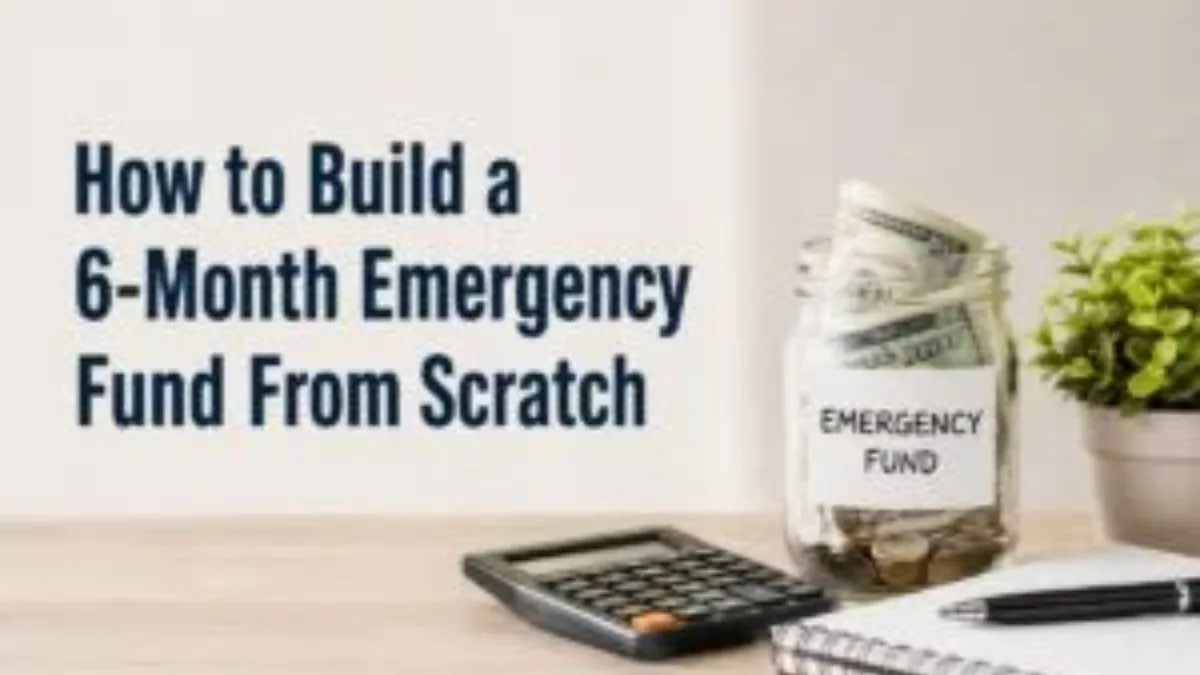
An emergency savings fund is money you set aside in an account so you don’t have to rely on credit cards, loans, or tap long-term savings when life throws you a financial curveball.
Emergency funds are meant for surprise expenses such as:
- Job loss or reduced income
- Medical or dental bills
- Car repairs or home maintenance
- Emergency travel
- Unexpected insurance deductibles
On the other hand, an emergency is not for planned expenses such as vacations, holidays, or routine bills. Additionally, an emergency fund is not the same as your regular savings or retirement accounts. The point of an emergency fund is to help you avoid dipping into your savings or taking on high-interest debt by using a credit card or loan to pay for these expenses.
How much should you keep in an emergency fund?
As a general rule of thumb, you should aim to keep three to six months’ worth of essential expenses — the costs you must cover to maintain your basic needs, health, safety, and financial obligations — in an emergency fund. These usually include:
- Rent or mortgage
- Utilities
- Food
- School tuition
- Cell phone and internet
- Transportation
- Insurance premiums
- Childcare
- Debt payments
- Taxes
For example, if your monthly expenses total $3,000, your eventual goal would be to keep between $9,000 and $18,000 in an emergency fund.
However, if you have a job with fluctuating or unpredictable income, you might want to target nine to 12 months’ worth of expenses as an extra buffer.
Where should I keep my emergency fund?
Keeping your emergency fund separate from your everyday checking and savings accounts is a smart move. Ideally, the account should earn interest while still allowing you to access your money quickly when an emergency arises. Here are a few account types worth considering:
Money market accounts: These savings accounts offer some features of a checking account, like the ability to use a debit card and write checks from the account. Money market accounts also tend to have high interest rates. However, you may need to keep a large amount of money in the account to avoid paying monthly maintenance fees.
Short-term certificate of deposit (CD): With compound interest and higher interest rates, a CD with a short term of one to three months means you can earn interest without having your money tied up for too long.
Traditional savings accounts: Large brick-and-mortar banks offer little interest for savings accounts, but they can be convenient, especially if you prefer to do your banking in person.
High-yield savings accounts: These accounts operate like regular savings accounts but have much higher interest rates. Credit unions and online banks tend to offer much higher interest rates than traditional banks.
Whatever you choose, ensure your account is protected by the Federal Deposit Insurance Corp. (FDIC) or National Credit Union Administration (NCUA). NCUA- or FDIC-insured accounts are covered up to $250,000. Look for options with low to no minimum deposit amounts, low or no fees, and offer easy access to your money via ATM access, in-person banking, or a mobile app.
How to build an emergency fund
To start your emergency savings fund, take some time to figure out what you can contribute to an account each week or pay period. Don’t worry if it seems like it will take a long time to reach your goal. Even small — but consistent — contributions will put you on track to build your fund.
- Set savings goals. Breaking up your overall goal into smaller savings makes saving easier. Use a savings goal calculator to determine how long it will take to reach your goal. Watching your money grow can provide motivation.
- Save automatically. Many people find it easier to save money when they don’t have a chance to spend it. To do that, set up a recurring deposit from your checking account to your emergency fund or directly deposit a portion of your paycheck into your emergency fund account.
- Shave down living expenses. Make a budget to see where all your money is going. You may find you can shift money from spending categories such as entertainment, clothing, and dining to an emergency fund. You can also look into long-term money-saving opportunities like a monthly subscription audit, insurance bundling, and debt consolidation.
- Save unexpected money. Anytime you receive money that you weren’t expecting or don’t need to use to pay your bills, add it to your emergency fund. That could include monetary gifts or tax refunds.
A true emergency is an unplanned, urgent, and necessary expense required to protect your health, safety, income, or basic housing—such as a job loss, medical bill, major car repair, or emergency travel. Regular or predictable costs—such as annual insurance premiums, holiday gifts, routine oil changes, or property taxes—are not emergencies and should be planned for in a separate “sinking fund” within your monthly budget.
Calculate your emergency fund target based on your essential survival expenses, not your full monthly gross or net income. Add up your non-negotiables: rent/mortgage, utilities, food, basic transportation, minimum debt payments, and insurance.
If you have a stable salary, aim for 3 to 6 months of these essential costs.
If you are a freelancer, gig worker, or rely heavily on commission, aim for 9 to 12 months of essential expenses to cushion against long dry spells.
It is generally best to build a starter emergency fund of $500 to $1,000 first. This small safety net prevents you from taking on new high-interest credit card debt when minor surprises arise. Once your starter fund is in place, pause building savings to aggressively pay off high-interest debt (like credit cards). After high-interest debt is paid off, resume saving to build your full 3-to-6-month safety net.
Your emergency fund should be stored in a High-Yield Savings Account (HYSA) or a Money Market Account (MMA) backed by FDIC or NCUA insurance. These accounts offer much higher interest rates than traditional checking or savings accounts while keeping your money liquid—meaning you can withdraw cash within 1 to 2 business days without penalties or risk of losing your principal.
If an actual emergency occurs and you need to tap into your savings, use the funds without guilt—that is precisely why you built the safety net. Once the emergency passes, pause optional spending or extra investments temporarily and route those dollars back into your savings account until your fund is restored to its target balance.

Manoj Sharma is a Senior Writer on the banking team at Tax Assistant. He provides information on budgeting, bank accounts, the banking industry, and other related topics. Using original data and methodologies, he helps you identify the best financial institutions, accounts, and products tailored to your needs. Manoj holds a degree in Journalism and Political Science from Syracuse University. All articles are strictly reviewed and fact-checked by our panel of expert Chartered Accountants, including CA Devendra Saini, CA Nikhil Khunteta, and CA Ankit Goyal