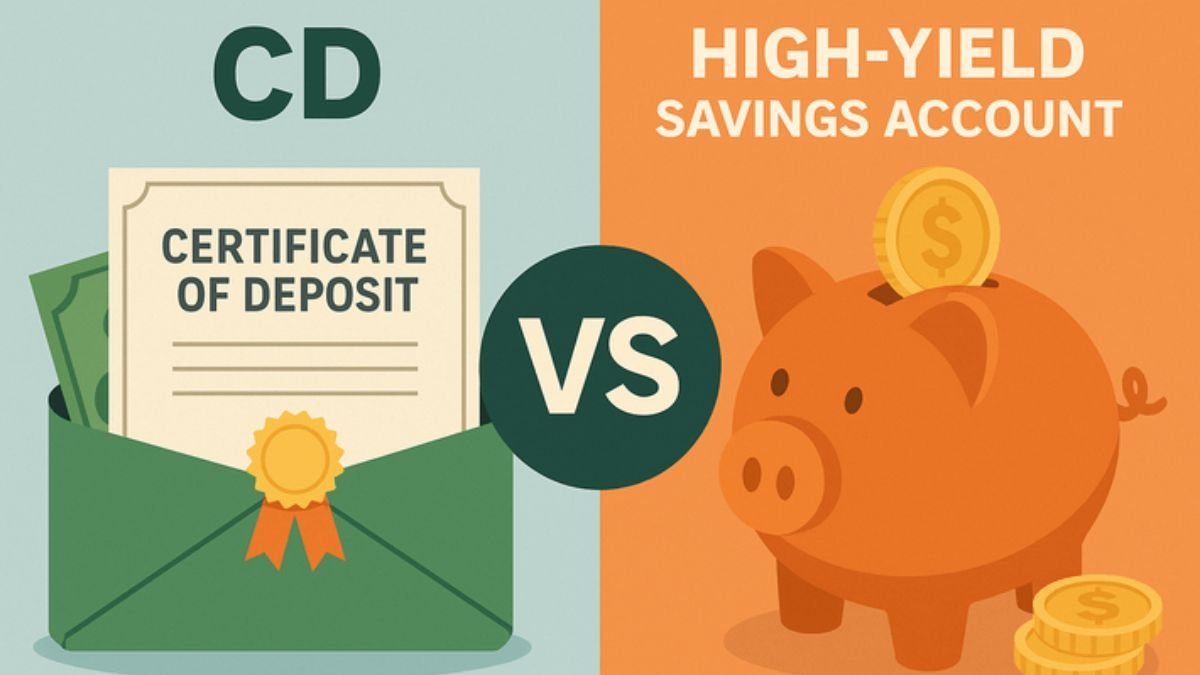
A Certificate of Deposit (CD) is a fantastic tool for locking in a guaranteed, fixed interest rate. It protects your savings from falling interest rates, but it comes with a major catch: your money is locked away until the CD matures. If you need to withdraw it early, you will face an early withdrawal penalty.
Because there is no universal “magic number” for a CD deposit, finding your perfect amount means filtering your cash through five key factors.
1. Clear Your Emergency Fund First
Never use a CD as your primary emergency fund. If an unexpected medical bill or car repair pops up, you need instant access to cash without penalties.
- The Rule: Keep 3 to 6 months of essential living expenses entirely out of CDs.
- Where to put it: Keep this emergency cushion in a highly liquid High-Yield Savings Account (HYSA) so you can grab it instantly.
2. Match Your Money to Your Timeline
CDs excel when you have a specific, predictable timeframe for a financial goal.
- Short-Term (< 1 Year): Skip the CD. If you are saving for a vacation next season, keep it in an HYSA so you can buy tickets the moment prices drop.
- Medium-Term (1 to 5 Years): Perfect for a CD. If you are saving for a house down payment or a new car in two years, a CD protects your cash from stock market volatility while beating standard bank rates.
- Long-Term (5+ Years): Limit CD use. For goals like retirement, investing in the market typically offers much higher long-term growth to outpace inflation.
3. Read the Interest Rate Environment
Because CD rates are fixed, timing matters:
- When rates are falling: Locking in a long-term CD is brilliant. If you grab a 5-year CD at 4.5% APY, you keep that high return even if the market drops to 2%.
- When rates are rising: Locking into a CD can backfire. You’ll be stuck earning a lower yield while newer accounts offer much higher returns.
Read More….Lock in Up to 4.10% APY: Today’s Best CD Rates (June 29, 2026)
4. Respect the $250,000 Insurance Cap
Your money is safe, but it has limits. Federal protection (FDIC for banks, NCUA for credit unions) covers up to $250,000 per person, per institution.
- If you plan to deposit more than $250,000, split your money across different banks or use a service like CDARS to ensure every dollar remains fully insured.
5. Check the Minimum Deposit Requirements
Some online banks allow you to open a CD with $0 down, while others require a minimum of $500, $1,000, or more. Ensure you are completely comfortable walking away from that minimum amount for the duration of the term.
The Golden Rule of CDs
To find your ideal deposit amount, use this simple formula:
Total Savings -Emergency Fund – Short-Term Cash Needs = Your Maximum CD Deposit
Pro-Tip: If you hate the idea of locking up all your cash at once, consider building a CD Ladder. Divide your money into multiple smaller CDs that mature at staggered intervals (e.g., 6 months, 12 months, 18 months). This ensures you get high interest rates while giving you access to cash a few times a year.
Editing by-katie willimase

Suresh holds a Master of Commerce (M.Com) degree and is a dedicated personal finance researcher and writer. Combining his advanced academic background in commerce with deep industry research, he covers complex topics like taxation, banking systems, credit analysis, and personal finance strategies. As the founder of Tax Assistant (taxassistant.org), Suresh is committed to translating complicated financial guidelines and economic data into simple, accurate, and actionable educational resources for everyday readers.