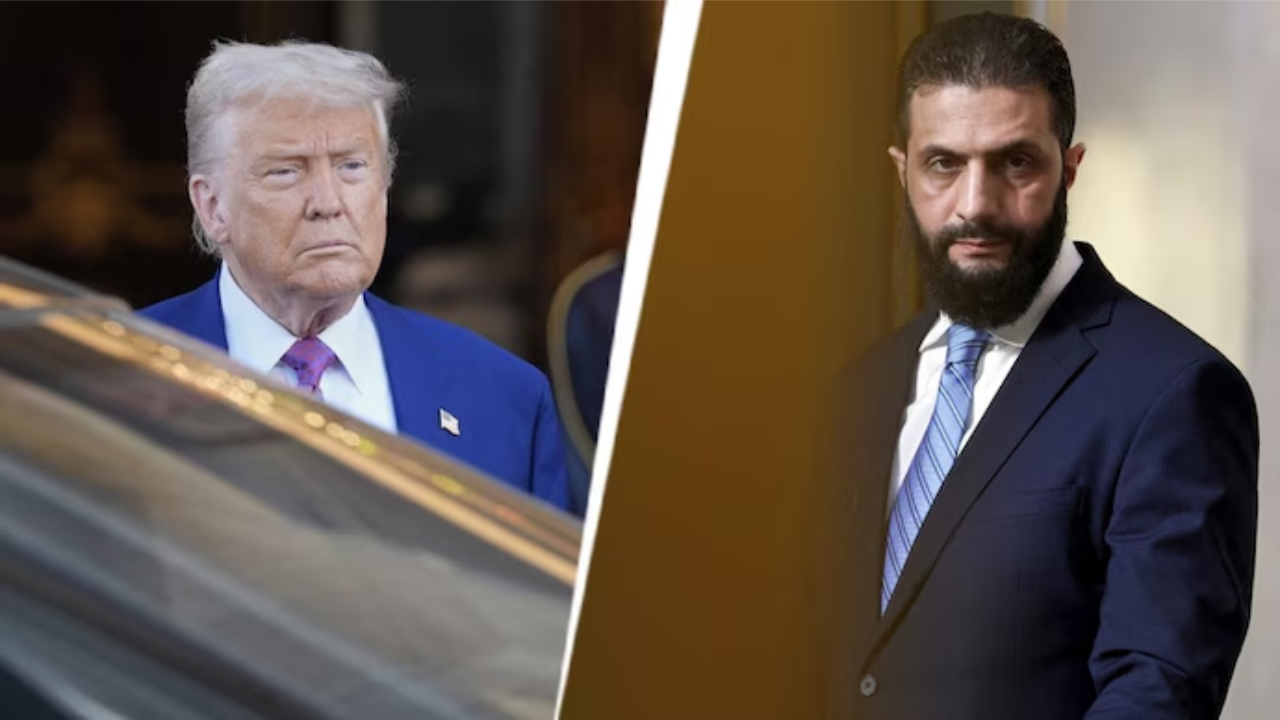
In a stunning diplomatic reversal, Syrian President Ahmed al-Sharaa is set to make the first-ever visit by a Syrian head of state to the White House on Monday, meeting with US President Donald Trump.
Thank you for reading this post, don't forget to subscribe!The visit caps an extraordinary year for the rebel-turned-ruler, 42, who led the offensive that overthrew Bashar al-Assad last December. Just days before the meeting, Washington removed the former al-Qaeda affiliate from its “Specially Designated Global Terrorist” list, following the lifting of a $10 million bounty and UN sanctions.
Shifting Alliances and High-Stakes Agenda
Syria’s foreign policy has rapidly moved away from its traditional allies, Iran and Russia, toward the Gulf, Turkey, and the US. The meeting’s agenda is packed with critical security and economic issues:
- Anti-ISIS Coalition: Syria is expected to formally announce its decision to join the US-led coalition to fight the Islamic State (ISIS).
- Regional Security: The US is actively brokering talks between Syria and Israel for a potential security pact. Reports indicate the US is also planning a military presence at a Damascus airbase.
- Sanctions Relief: Sharaa will strongly push for the repeal of the Caesar Sanctions Act—the toughest US economic measures, which require a vote by Congress. The goal is to unlock the over $200 billion the World Bank estimates is needed to rebuild the war-ravaged nation.
Trump’s Endorsement and Remaining Concerns
President Trump, who first met Sharaa six months ago in Saudi Arabia, praised the Syrian leader, stating: “I think he’s doing a very good job. It’s a tough neighbourhood, and he’s a tough guy.”
Despite the warming relations and Sharaa’s push for a moderate image, analysts like Firas Maksad note that “Much can still go wrong in this nascent experiment.” Deep civil war wounds remain, with new sectarian violence leaving more than 2,500 dead since Assad’s fall, raising serious questions about the new government’s ability to govern for all Syrians.
This visit is a powerful symbol of Syria’s journey “from being an Iranian satrapy to joining the American-led camp,” transforming its president “from a wanted terrorist to a partner in the war on terror.”