A massive new batch of declassified government files has sparked a wave of viral stories about “eerie” audio from the Apollo 12 mission. The reports claim astronauts encountered mysterious “streaks of light” that NASA allegedly kept under wraps.
While the audio sounds like the setup for a sci-fi thriller, the reality is a mix of bureaucratic archiving and fascinating deep-space physics.
1. The “New” Files Aren’t Actually New
In May 2026, a transparency initiative called PURSUE (Presidential Unsealing and Reporting System for UAP Encounters) released over 160 declassified documents. Among them were 14 files detailing historical NASA missions, including Apollo 11, 12, and 17.
The internet quickly ran with the idea that these were secret, newly uncovered encounters. However, space historians were quick to point out a major detail: these transcripts, audio logs, and photos have been public for decades. The government didn’t uncover a secret; they simply compiled existing historical records into a modern UAP database.
2. Why Astronauts Saw “Streaks of Light” with Their Eyes Closed
In the audio, Apollo astronauts describe seeing sudden flashes and streaks of light inside the dark cabin—even when their eyes were completely shut while trying to sleep.
While it felt supernatural at the time, NASA solved this mystery back in the 1970s. The culprit is a medical phenomenon called Cosmic Ray Visual Phenomena (often called “Astronaut’s Eye”).
How it works: Once a spacecraft leaves Earth’s protective magnetic shield, it is blasted by high-energy cosmic radiation. These subatomic particles pass right through the ship’s hull and the human body.
When a particle passes through an astronaut’s eye, it triggers light in two ways:
- Cherenkov Radiation: The particle actually travels faster than the speed of light inside the liquid of the eye, creating a microscopic “sonic boom” of light.
- Direct Stimulation: The radiation physically zaps the retina or optic nerve, tricking the brain into seeing a bright flash or streak.
3. Explaining the “Glowing UFOs” in Apollo Photos
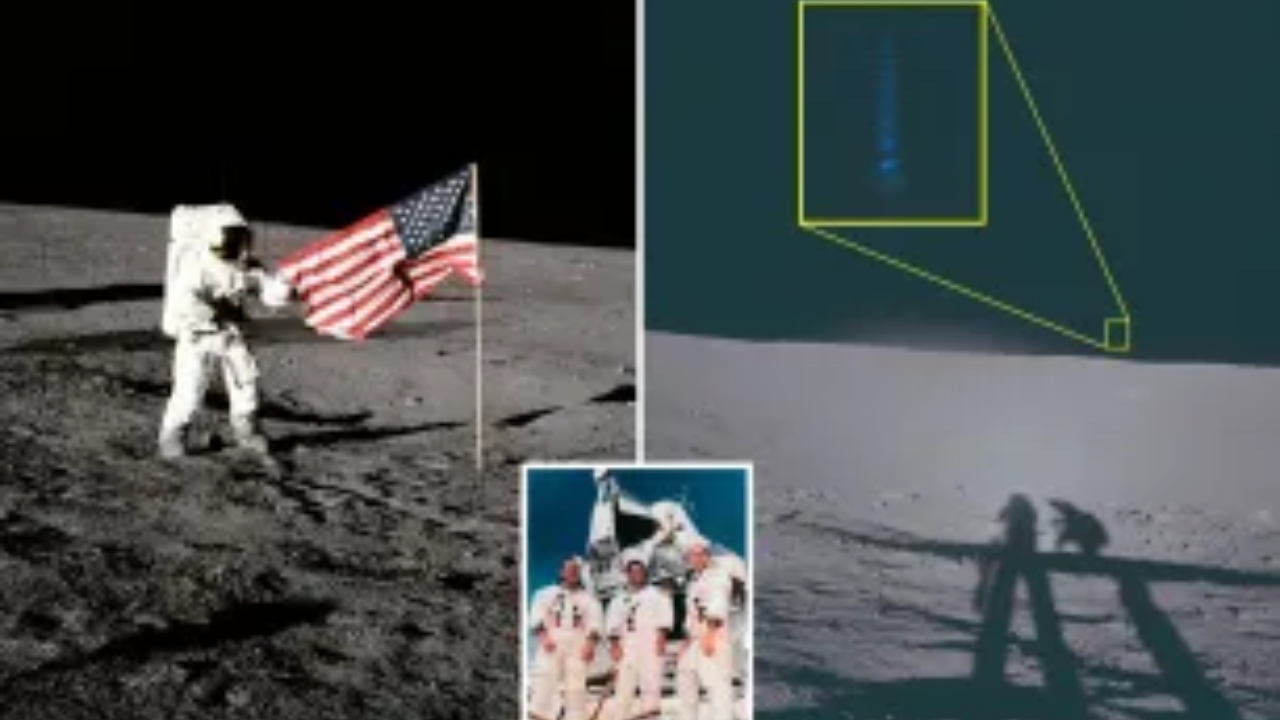
The declassified files also highlighted famous Apollo-era photos showing strange, glowing blue shapes floating above the lunar horizon.
Astrophysicists have confirmed these aren’t alien spacecraft—they are film artifacts.
- Apollo missions used physical photographic film, which is highly sensitive to space radiation.
- When heavy ions hit the film, they leave bright, ionized marks that look like glowing Orbs.
- The Proof: These identical “mysterious lights” appear on parts of the film negative that were completely blocked inside the camera body, where light from the lens couldn’t possibly reach.
Furthermore, modern missions like the Artemis II lunar flybys use radiation-shielded digital sensors. The result? They haven’t captured a single one of these “glowing lights,” proving the old UFOs were just a byproduct of 1960s camera tech meeting deep-space radiation.

Suresh holds a Master of Commerce (M.Com) degree and is a dedicated personal finance researcher and writer. Combining his advanced academic background in commerce with deep industry research, he covers complex topics like taxation, banking systems, credit analysis, and personal finance strategies. As the founder of Tax Assistant (taxassistant.org), Suresh is committed to translating complicated financial guidelines and economic data into simple, accurate, and actionable educational resources for everyday readers.