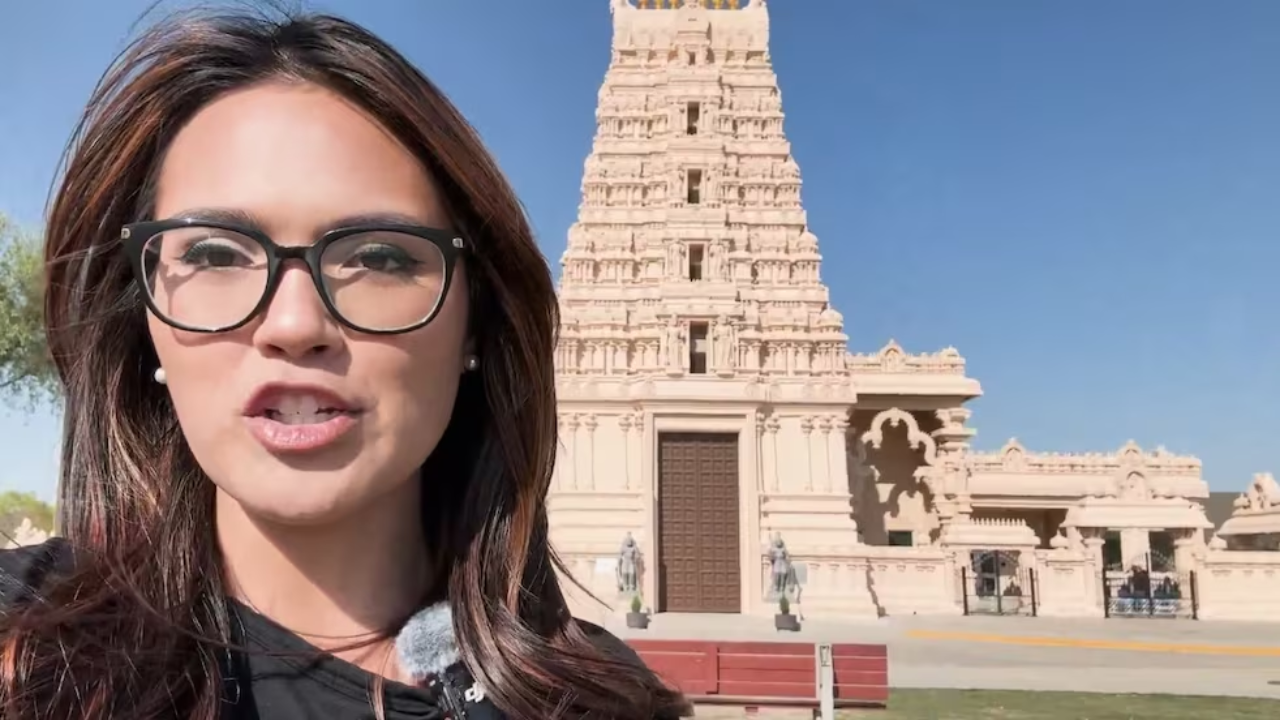
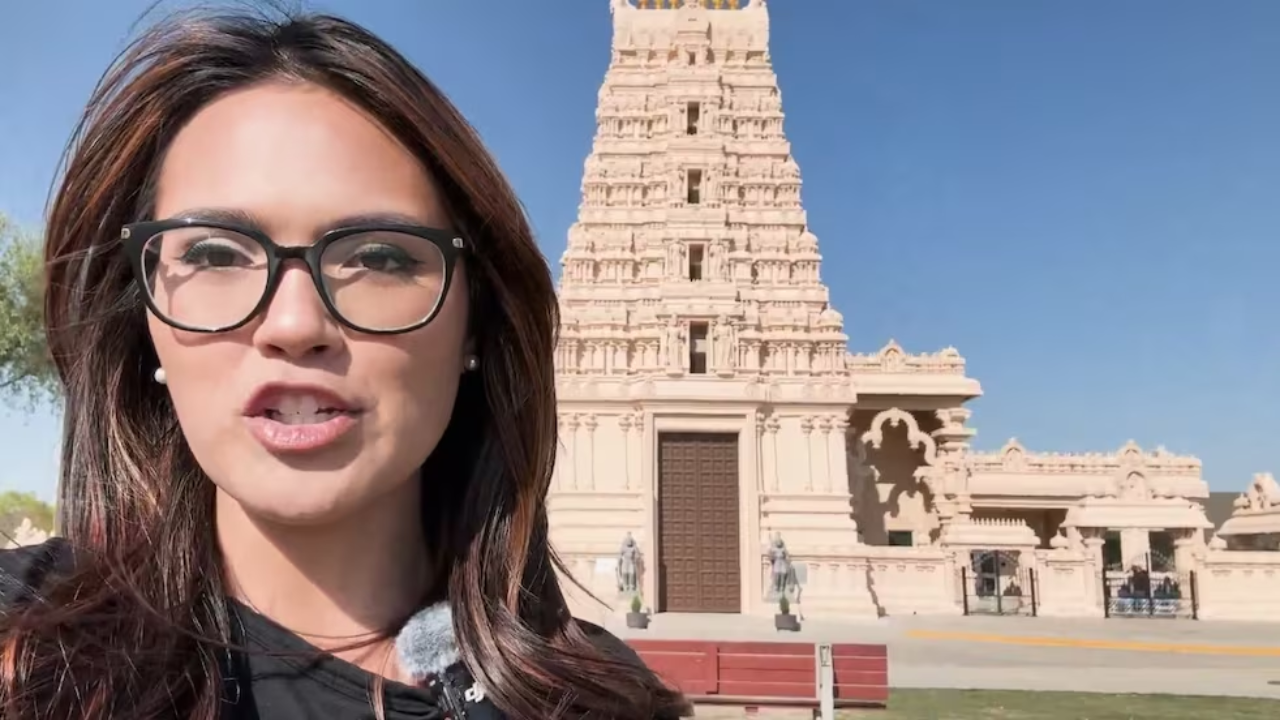
The unveiling of the Statue of Union—a 90-foot monument of the Hindu deity Lord Hanuman at the Shri Ashtalakshmi Temple in Sugar Land, Texas—has shifted from a religious milestone to a flashpoint for intense online vitriol.
Thank you for reading this post, don't forget to subscribe!The controversy peaked in early 2026 when conservative activist Carlos Turcios posted a video of the statue, labeling its presence an “invasion” and sparking a wave of xenophobic discourse.
The Catalyst: “Third World” Narrative
Turcios’s social media post framed the religious landmark not as a feat of engineering or a symbol of faith, but as a threat to American identity. In his post, he claimed:
- The “Alien” Framing: He described the local community as “Third World Aliens” and asserted that they are “slowly taking over Texas.”
- Targeting Legal Immigration: He specifically linked the temple’s existence to the H-1B visa program, suggesting that high-skilled legal immigration is a vehicle for a cultural “takeover.”
Escalation of Hate Speech
The video acted as a lightning rod for broader religious and racial intolerance. The resulting digital fallout included:
- Religious Nationalism: Figures like Texas Senate candidate Alexander Duncan condemned the monument, calling it a “false statue” and arguing that such icons have no place in a “Christian nation.”
- Xenophobic Tropes: Comments sections were flooded with rhetoric comparing legal residents to “invaders” and calls to restrict the civil rights of Indian-Americans.
- Hate Trends: Civil rights monitors noted an uptick in dehumanizing language directed at Hindu-Americans, often conflating religious practice with political loyalty.
Community and Legal Pushback
The Indian-American community and various advocacy groups have responded by emphasizing American constitutional values:
- First Amendment Protections: Legal experts noted that the statue is situated on private property and is a textbook example of the religious freedoms protected by the U.S. Constitution.
- Economic Reality: Supporters countered Turcios’s claims by highlighting that the Sugar Land community is one of the most highly educated and economically productive in the state.
- Unity vs. Division: Temple organizers maintained that the statue—named the “Statue of Union”—was intended to symbolize devotion and strength, expressing regret that a message of peace was being met with hostility.
Summary of the Conflict
| Factor | Activist Viewpoint | Community Reality |
| Origin | Framed as an “invasion” from abroad. | Built by tax-paying U.S. citizens/residents. |
| Legality | Challenged as un-American. | Fully protected by the First Amendment. |
| Impact | Claimed to be a cultural threat. | Significant economic and social contribution. |
The incident underscores a growing tension in Texas, where shifting demographics are increasingly met with “Great Replacement” rhetoric, even when the subjects are legal, integrated members of the community.