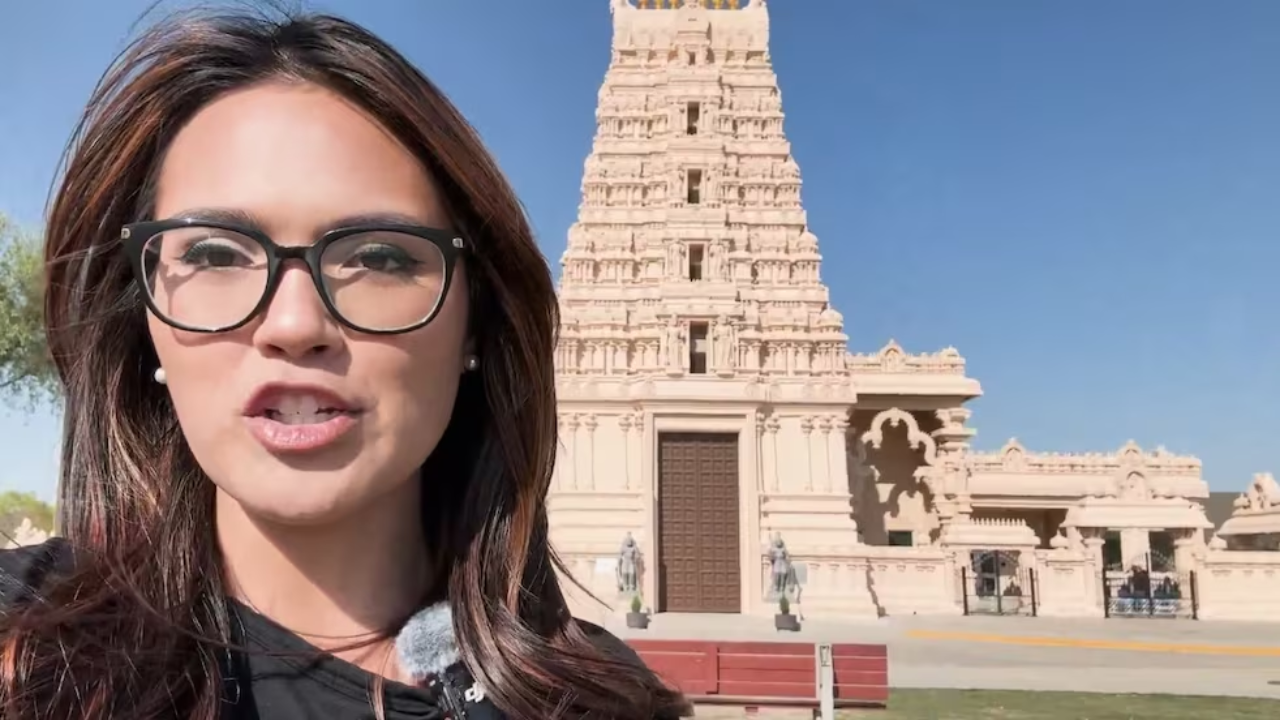
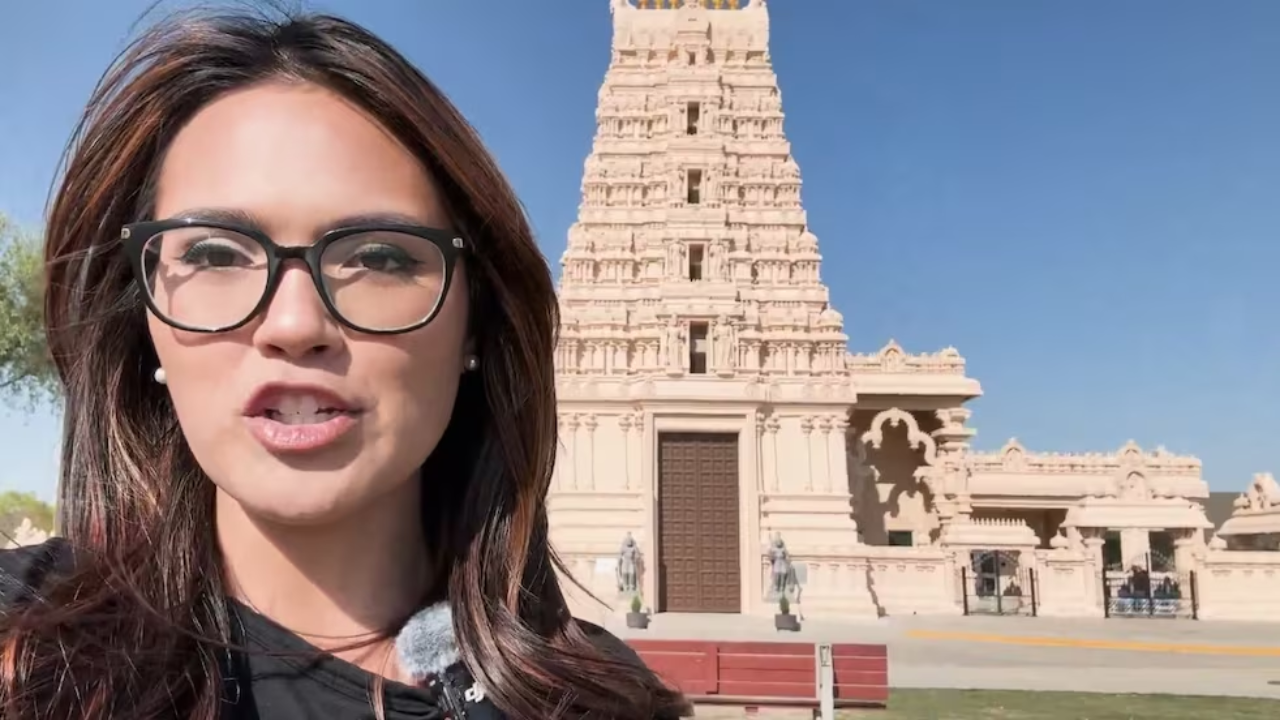
The unveiling of the Statue of Union—a 90-foot monument of the Hindu deity Lord Hanuman at the Shri Ashtalakshmi Temple in Sugar Land, Texas—has shifted from a religious milestone to a flashpoint for intense online vitriol.
The controversy peaked in early 2026 when conservative activist Carlos Turcios posted a video of the statue, labeling its presence an “invasion” and sparking a wave of xenophobic discourse.
The Catalyst: “Third World” Narrative
Turcios’s social media post framed the religious landmark not as a feat of engineering or a symbol of faith, but as a threat to American identity. In his post, he claimed:
- The “Alien” Framing: He described the local community as “Third World Aliens” and asserted that they are “slowly taking over Texas.”
- Targeting Legal Immigration: He specifically linked the temple’s existence to the H-1B visa program, suggesting that high-skilled legal immigration is a vehicle for a cultural “takeover.”
Escalation of Hate Speech
The video acted as a lightning rod for broader religious and racial intolerance. The resulting digital fallout included:
- Religious Nationalism: Figures like Texas Senate candidate Alexander Duncan condemned the monument, calling it a “false statue” and arguing that such icons have no place in a “Christian nation.”
- Xenophobic Tropes: Comments sections were flooded with rhetoric comparing legal residents to “invaders” and calls to restrict the civil rights of Indian-Americans.
- Hate Trends: Civil rights monitors noted an uptick in dehumanizing language directed at Hindu-Americans, often conflating religious practice with political loyalty.
Community and Legal Pushback
The Indian-American community and various advocacy groups have responded by emphasizing American constitutional values:
- First Amendment Protections: Legal experts noted that the statue is situated on private property and is a textbook example of the religious freedoms protected by the U.S. Constitution.
- Economic Reality: Supporters countered Turcios’s claims by highlighting that the Sugar Land community is one of the most highly educated and economically productive in the state.
- Unity vs. Division: Temple organizers maintained that the statue—named the “Statue of Union”—was intended to symbolize devotion and strength, expressing regret that a message of peace was being met with hostility.
Summary of the Conflict
| Factor | Activist Viewpoint | Community Reality |
| Origin | Framed as an “invasion” from abroad. | Built by tax-paying U.S. citizens/residents. |
| Legality | Challenged as un-American. | Fully protected by the First Amendment. |
| Impact | Claimed to be a cultural threat. | Significant economic and social contribution. |
The incident underscores a growing tension in Texas, where shifting demographics are increasingly met with “Great Replacement” rhetoric, even when the subjects are legal, integrated members of the community.

Suresh holds a Master of Commerce (M.Com) degree and is a dedicated personal finance researcher and writer. Combining his advanced academic background in commerce with deep industry research, he covers complex topics like taxation, banking systems, credit analysis, and personal finance strategies. As the founder of Tax Assistant (taxassistant.org), Suresh is committed to translating complicated financial guidelines and economic data into simple, accurate, and actionable educational resources for everyday readers.