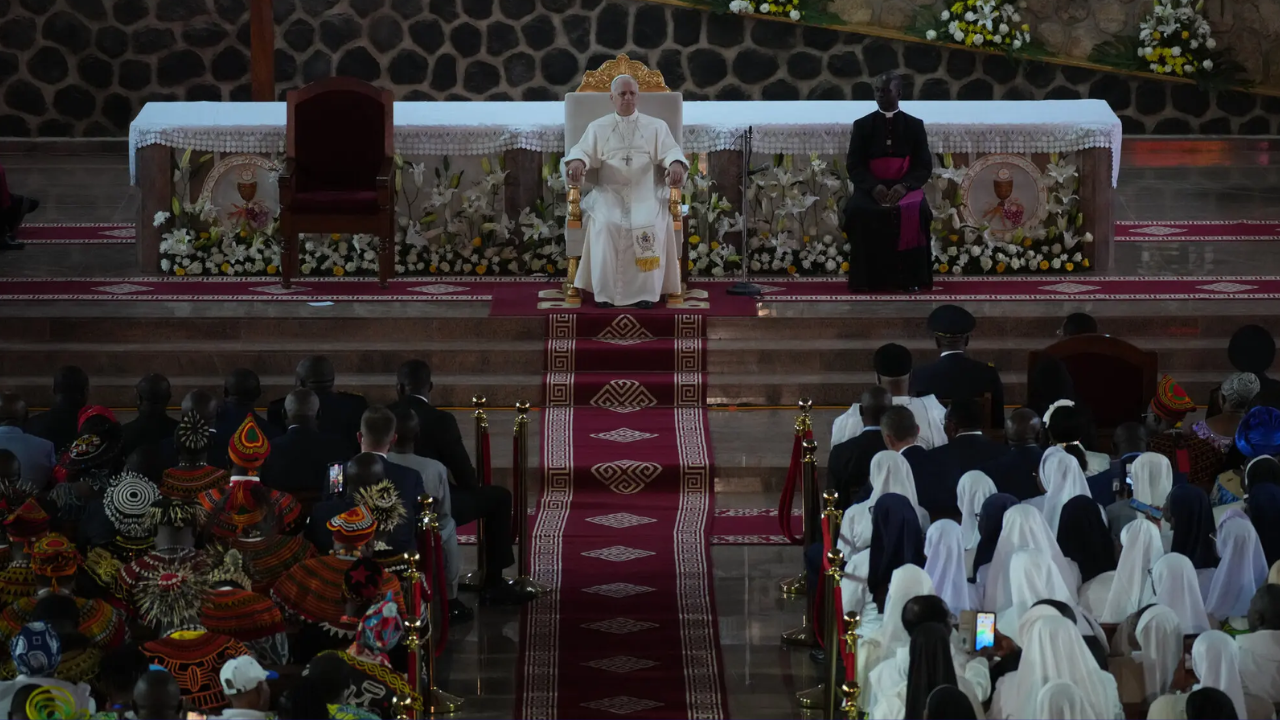
BAMENDA, CAMEROON — In what is being described as the most significant diplomatic rupture between the Holy See and Washington in a century, Pope Leo XIV issued a blistering warning to world leaders on Wednesday, declaring “woe” upon those who weaponize faith for political leverage.
“Sacred Things in Dark Places”
A Timeline of the Escalation
| Date | Event | Impact |
| March 2026 | Pope Leo XIV calls for a ceasefire in Iran. | Trump labels the Pope “a puppet of the globalists.” |
| April 2, 2026 | Trump posts AI imagery depicting himself in divine robes. | Vatican officials call the imagery “blasphemous.” |
| April 10, 2026 | U.S. halts funding to Catholic migrant aid programs. | The Church describes the move as “punishing the innocent.” |
| April 16, 2026 | The Bamenda Speech. | Global markets and diplomatic circles react to the “Woe” decree. |
The President Strikes Back
The response from the White House was swift and characteristically defiant. Posting to Truth Social shortly after the Pope concluded his mass, President Trump fired back at his fellow countryman:
“Leo is a very weak leader. He’s more interested in open borders and helping our enemies than standing up for the American people who, by the way, paid for his education. If I hadn’t made the world safe for Christianity, he wouldn’t even be in that job. Sad!”
Why This Matters
Unlike his predecessors, Leo XIV is an American who understands the nuances of U.S. domestic politics. By using the biblical “Woe,” he is not just offering a political critique; he is invoking a prophetic warning. For a President who relies heavily on the support of religious voters, a direct confrontation with the Vicar of Christ creates a massive fracture in the American cultural landscape.
As the Pope continues his African tour, the world watches to see if the Vatican will take the unprecedented step of formally censuring a sitting U.S. President.

Suresh holds a Master of Commerce (M.Com) degree and is a dedicated personal finance researcher and writer. Combining his advanced academic background in commerce with deep industry research, he covers complex topics like taxation, banking systems, credit analysis, and personal finance strategies. As the founder of Tax Assistant (taxassistant.org), Suresh is committed to translating complicated financial guidelines and economic data into simple, accurate, and actionable educational resources for everyday readers.